Telangana launches ‘New Employees Health Scheme’ for 17.88 lakh govt employees, pensioners and their family members
Source Entity
India Latest News: Top National Headlines Today & Breaking News | The Hindu
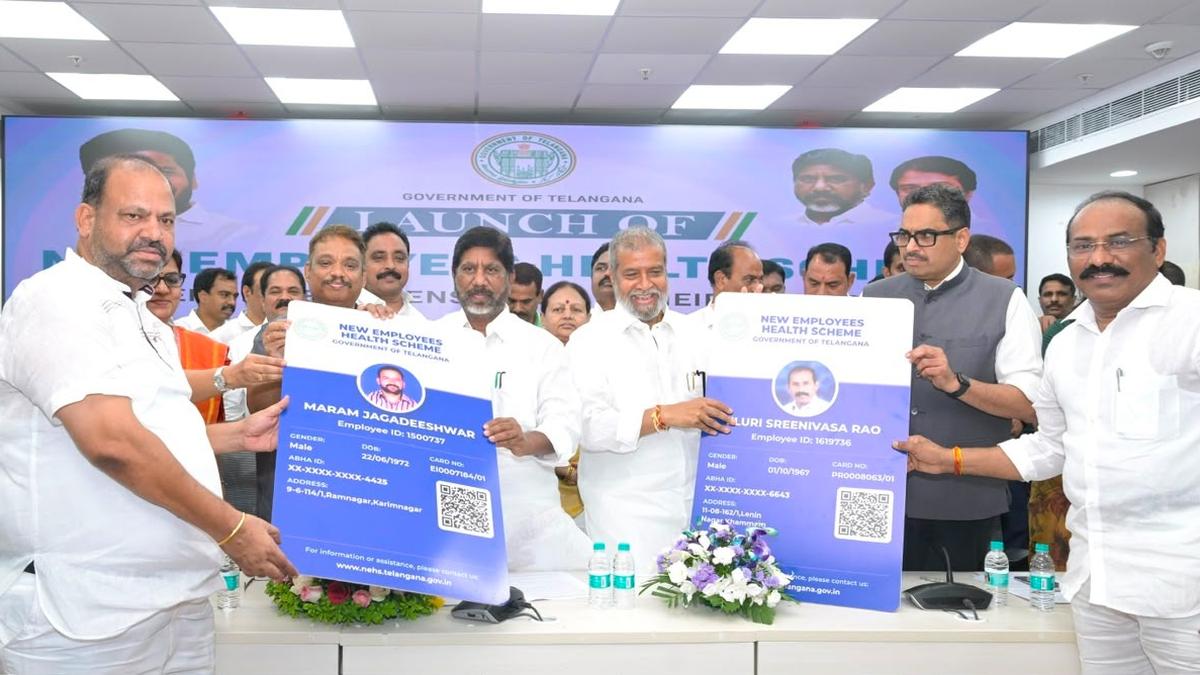
Telangana has launched the New Employees Health Scheme (NEHS) to provide cashless medical services to 17.88 lakh beneficiaries. However, the initiative faces immediate friction as private hospitals threaten to opt out, citing unviable financial rates.
Telangana’s Ambitious Healthcare Overhaul
On July 17, 2026, the Telangana government officially inaugurated the 'New Employees Health Scheme' (NEHS) at the Dr. B.R. Ambedkar Telangana State Secretariat. Led by Health Minister C. Damodar Raja Narasimha and Deputy Chief Minister Mallu Bhatti Vikramarka, the initiative aims to provide comprehensive, digitized, and cashless healthcare services to a vast demographic of 17,88,336 beneficiaries. This includes active government employees, pensioners, and their dependents, marking a significant effort to streamline public sector welfare.
Scope and Digital Integration
The NEHS is designed with scale and accessibility in mind, incorporating 1,816 distinct medical and surgical packages. By leveraging a centralized portal, the government intends to digitize the entire insurance lifecycle, from initial pre-authorization to final claim settlement. The network is impressively broad, spanning 886 private hospitals and 114 government facilities, signaling a strategic move to blend public infrastructure with private expertise to meet the healthcare needs of nearly 9.38 lakh family members alongside 4.38 lakh employees and 3.61 lakh pensioners.
The Financial Impasse: TANHA’s Stance
Despite the operational launch, the scheme faces a critical hurdle. The Telangana Aarogyasri Network Hospitals Association (TANHA), representing the private providers essential to the scheme’s success, has expressed formal opposition. Led by Dr. Vaddiraju Rakesh, the association has warned that its members may refuse to participate if the government enforces the revised Central Government Health Scheme (CGHS) package rates. TANHA argues that these rates are fundamentally unviable compared to the existing Aarogyasri and previous EHS structures.
Navigating Economic Viability
The core of the conflict lies in the tension between fiscal prudence and service quality. Private hospitals contend that the proposed CGHS rates are lower than current benchmarks, which could compromise their ability to deliver high-quality care without incurring unsustainable losses. This standoff highlights the difficulty of aligning uniform government-mandated reimbursement rates with the operational costs of specialized private healthcare facilities, a recurring challenge in state-funded health insurance models across India.
Future Implications and Policy Outlook
The ongoing negotiations between the TANHA delegation and EHS Chief Executive Officer Z. Hanumant Kondiba are pivotal. If the government cannot find a compromise on tariff structures, the efficacy of the NEHS could be severely diminished, leaving thousands of beneficiaries without the promised coverage at private institutions. The government’s ability to balance the budgetary constraints of a massive public health scheme with the market realities of private healthcare will determine the long-term sustainability of this ambitious digital welfare initiative.
Multiple Citing Sources
Verification Required?