‘National animal hunts national bird’: Viral video captures a rare moment
Source Entity
The Indian Express
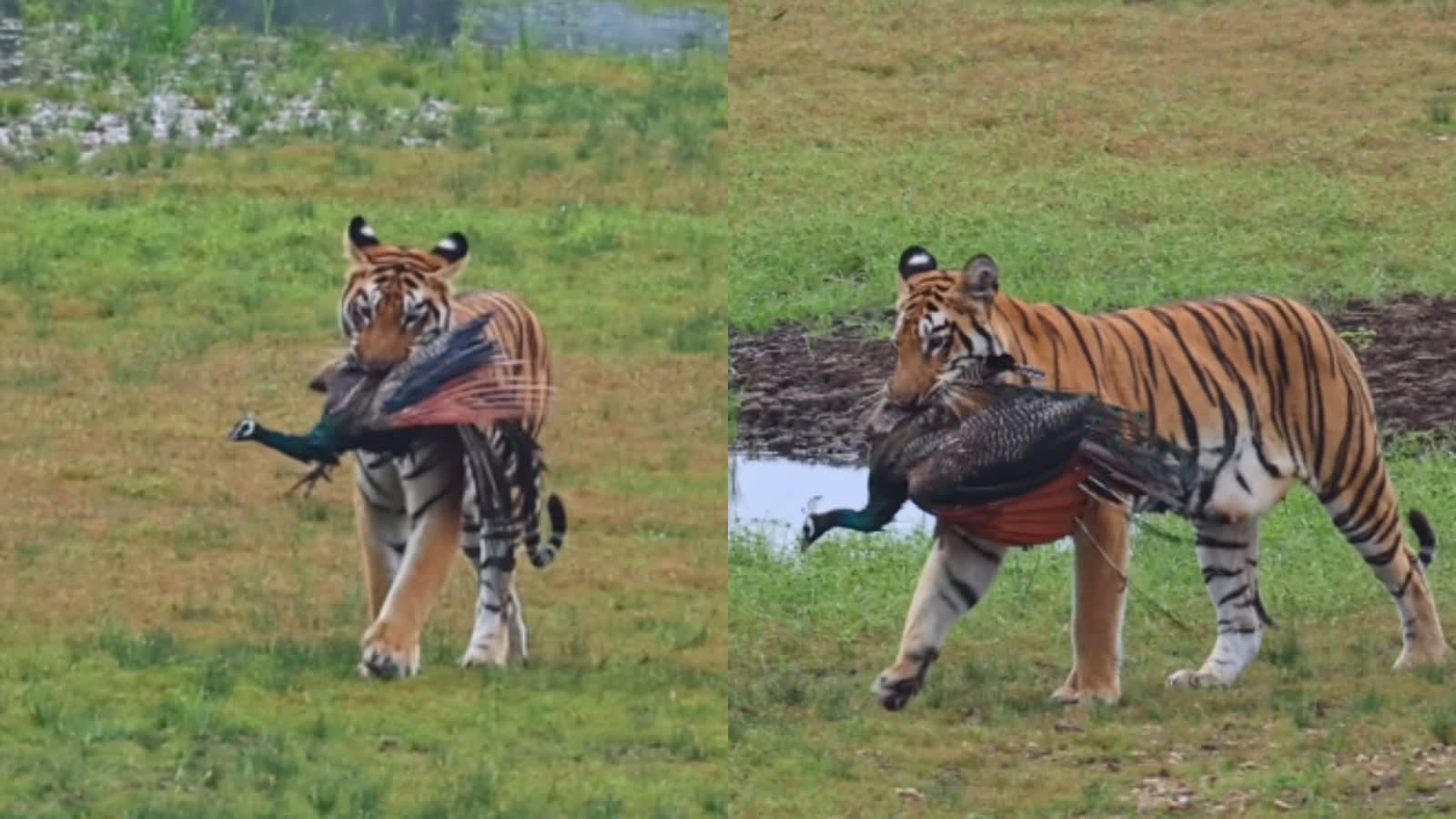
A rare wildlife encounter captured on video shows a tiger hunting a peacock, India's national animal preying on its national bird. The footage highlights the raw, unfiltered nature of predator-prey dynamics in the wild.
A Rare Encounter in the Wild: When Symbols Collide
Wildlife photography often captures the harmonious beauty of nature, but it occasionally reveals the brutal reality of the food chain. A recent viral video shared by photographer Kasthuri Rangan documents a rare and striking event: a tiger, India’s national animal, hunting a peacock, the country’s national bird. This intersection of national symbols in a life-or-death struggle has captivated audiences, serving as a visceral reminder of the untamed predator-prey dynamics that define forest ecosystems.
The Mechanics of the Predation
In the footage, the tiger is seen maintaining a firm grip on the peacock. The bird, showing clear signs of life, is captured frantically fluttering its feathers in a desperate, final attempt to escape the predator's hold. This specific behavior—the struggle against a superior apex predator—underscores the biological reality that even national icons are bound by the primal laws of survival. The tiger’s ability to secure such agile prey demonstrates its prowess as an opportunistic hunter within its habitat.
Ecological Context and Apex Predators
While tigers are primarily known for hunting ungulates like deer or wild boar, they are opportunistic carnivores. The consumption of birds, while less common, is a documented part of a tiger’s varied diet. This event provides valuable insight into the dietary flexibility of tigers. In the wild, apex predators must conserve energy while maximizing caloric intake, and the capture of a large bird like a peacock offers a significant, albeit challenging, meal.
The Role of Wildlife Documentation
Content creators like Kasthuri Rangan play a vital role in documenting these fleeting moments. Such footage is not merely for entertainment; it provides researchers and enthusiasts with authentic observations of animal behavior in their natural state. By sharing these "live kill" scenarios, the public gains a deeper appreciation for the complexities of biodiversity and the harsh realities that sustain the balance of the forest.
Broader Implications for Conservation
This incident highlights the importance of preserving the habitats where such interactions occur. For both the tiger and the peacock to exist in sufficient numbers to allow for such encounters, the underlying ecosystem must be healthy and robust. The viral nature of this video serves as a catalyst for broader conversations about wildlife conservation and the necessity of protecting the territories where these species coexist.
Conclusion: The Unfiltered Reality of Nature
Ultimately, the video of the tiger hunting the peacock is a testament to the raw, unfiltered nature of the wild. It reminds us that while we assign human-centric titles like "national animal" or "national bird" to these creatures, they remain wild beings driven by instinct. As we continue to document these encounters, our understanding of the natural world grows, fostering a greater respect for the complex, often brutal, and always fascinating web of life.