Trump is pushing a massive AI buildout. His own voters are wary of what comes with it
Source Entity
US Top News and Analysis
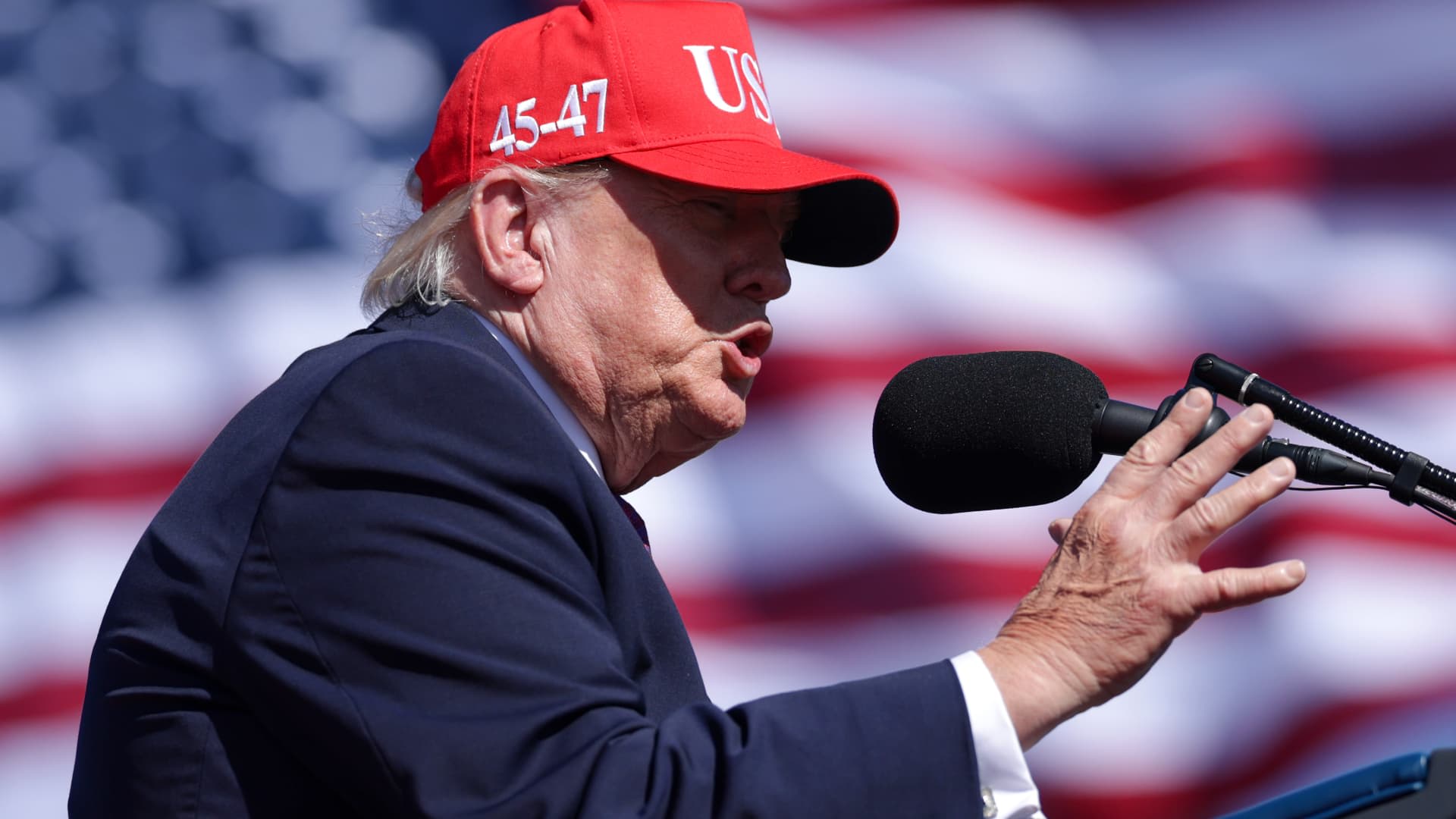
President Trump's push for rapid AI infrastructure development faces significant local opposition from his own voter base. While MAGA supporters favor AI advancement, they show deep reluctance toward hosting data centers in their immediate communities.
The AI Paradox: Trump’s Infrastructure Push vs. Voter Sentiment
President Donald Trump has positioned the rapid advancement of artificial intelligence as a critical national security priority, framing the technological race against China as a modern-day necessity. To fuel this ambition, his administration is advocating for a massive expansion of data centers and the energy infrastructure required to sustain these power-hungry facilities. However, a new CNBC All-America Economic Survey reveals a growing disconnect between this federal strategy and the preferences of his core voting base, highlighting a significant political hurdle ahead of the midterm elections.
The Support for Innovation
At the ideological level, the consensus among Trump’s supporters remains firmly pro-innovation. The CNBC survey indicates that 55% of MAGA-aligned voters believe companies should continue the development of advanced AI models while Congress focuses on crafting appropriate regulatory frameworks. Only 27% of this group favor a total pause on development. This suggests that the administration’s narrative—that American technological supremacy is essential for national security—has successfully permeated the Republican electorate.
The NIMBY Challenge
Despite the ideological support for AI progress, the practical implementation of this vision is hitting a wall known as 'Not In My Backyard' (NIMBY) sentiment. While voters are comfortable with the abstract concept of AI dominance, they are far less enthusiastic about the physical reality of the infrastructure required to support it. Data centers are massive, energy-intensive, and often require significant land use, which frequently leads to concerns about environmental impact, noise, and local utility strain among neighboring residents.
Political Risks for the Midterms
The survey results provide a stark look at the political risks involved in this buildout, as only 29% of Republican voters express support for a data center being constructed within 10 miles of their residence, compared to 40% who explicitly oppose such projects. For Republican lawmakers, this creates a precarious balancing act: they must champion the national security imperative of AI growth while simultaneously navigating the local opposition of their own constituents who fear that the infrastructure needed for progress will negatively impact their quality of life.
Future Implications and Policy Outlook
As the midterm elections approach, the tension between federal industrial policy and local community interests will likely intensify. The Republican party may find it increasingly difficult to promote an aggressive infrastructure agenda without addressing these grassroots concerns. If the administration continues to push for rapid expansion, they may face localized resistance that could force a pivot toward more decentralized data center designs or more stringent environmental and zoning policies to appease anxious voters.
Conclusion
Ultimately, the challenge for the Trump administration lies in reconciling the high-level geopolitical goal of AI supremacy with the localized realities of infrastructure development. While the electorate supports the mission of beating global competitors, the 'in my backyard' factor remains a potent political force that could complicate the execution of the administration’s technological roadmap in the coming months.