Trump replaces White House chief of staff days after Republicans suffer midterm defeats
Source Entity
BBC News
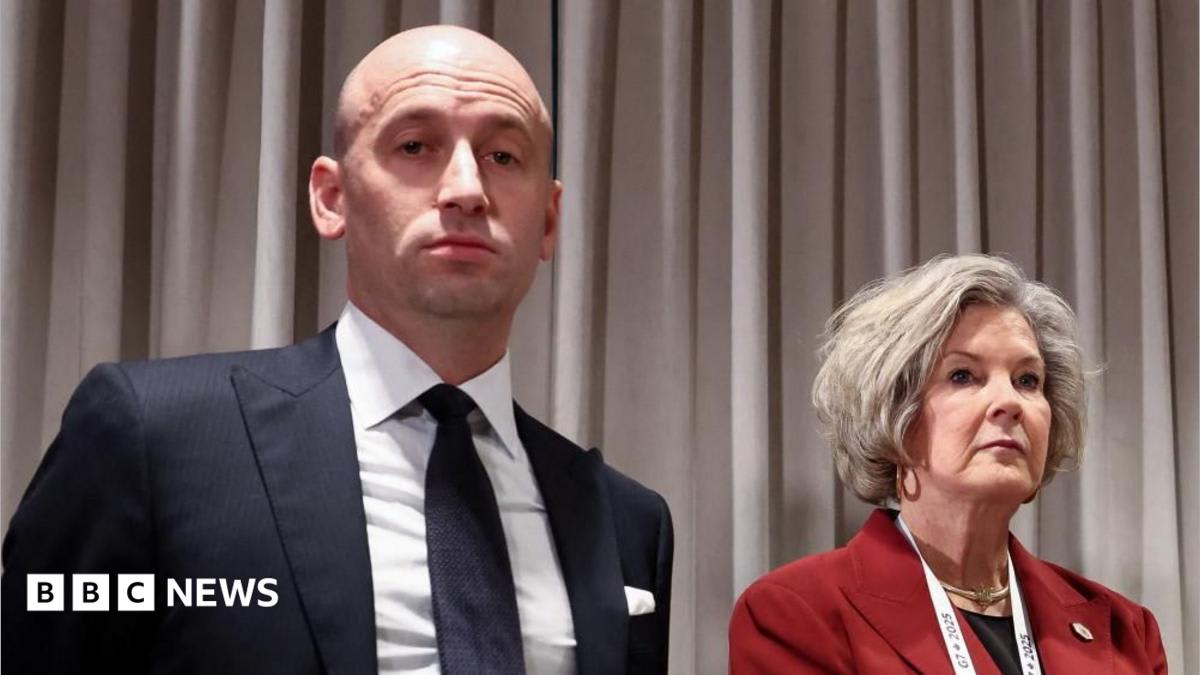
Following significant losses in the 2026 midterms, President Trump has appointed loyalist Stephen Miller as his new Chief of Staff. This transition marks a shift in strategy as the administration faces a newly empowered Democratic-controlled Congress.
A Shift in Strategy: The Miller Appointment
Following a series of major electoral defeats in the 2026 midterm elections, President Donald Trump has initiated a significant shake-up of his inner circle. By announcing that Stephen Miller, previously the deputy chief of staff and a prominent homeland security adviser, will replace Susie Wiles as White House Chief of Staff, the President is signaling a pivot toward a more ideologically driven administrative approach. Miller, widely recognized as the architect of Trump’s hard-line immigration policies, represents a return to the core base-driven strategies that defined Trump's earlier tenure.
The Context of the Midterm Rout
The decision to replace Wiles—who Trump noted did an "outstanding job" before transitioning to the "Trump Political Operation"—comes directly on the heels of a Republican legislative disaster. The party’s loss of control over both chambers of Congress has fundamentally altered the power dynamics in Washington. This electoral outcome has effectively crippled the GOP’s legislative agenda, turning the final two years of Trump’s term into a defensive struggle rather than an era of policy expansion.
Congressional Oversight and the Power Struggle
With Democrats now holding the reins of Congress, the legislative branch is poised to become the primary antagonist to the executive office. As expert commentary suggests, the primary tools available to the new majority are rigorous oversight and the power of the purse. By holding hearings, requesting sensitive information from agencies like the Department of Homeland Security (DHS) and U.S. Citizenship and Immigration Services (USCIS), and setting restrictive conditions in agency budgets, Democrats have the leverage to grind executive initiatives to a halt.
Executive Authority vs. Legislative Check
Despite the shift in congressional power, the fundamental tension between the two branches remains constrained by constitutional boundaries. While Congress can exert significant pressure through funding and investigations, it lacks the unilateral authority to cancel executive orders or existing regulations. This leaves the President with his most potent remaining weapon: the veto. This constitutional check ensures that even in a diminished state, Trump remains a formidable barrier to the Democratic agenda.
Future Trends: A Focus on Investigations
Looking ahead, Washington is expected to be dominated by aggressive investigations. Democrats are likely to prioritize high-stakes issues ranging from immigration policy to potential foreign entanglements, such as the Iran war. The Senate’s new control will also put significant pressure on all of Trump's future appointments, as the confirmation process becomes a primary venue for partisan warfare.
Conclusion: The Final Two Years
The next two years will serve as a definitive test for both political parties. For the Democrats, the challenge lies in effectively utilizing their oversight powers to challenge the administration without appearing purely obstructionist. For Trump, the appointment of Miller suggests an intent to lean into his core political identity, even as he faces a divided government. As he stated, "Today begins the great American comeback," though the path forward is clearly obstructed by the new reality on Capitol Hill.