"Indelible Stain" On Norway: Trump Calls Nobel Peace Pick "Disgraceful"
Source Entity
NDTV News Search Records Found 1000
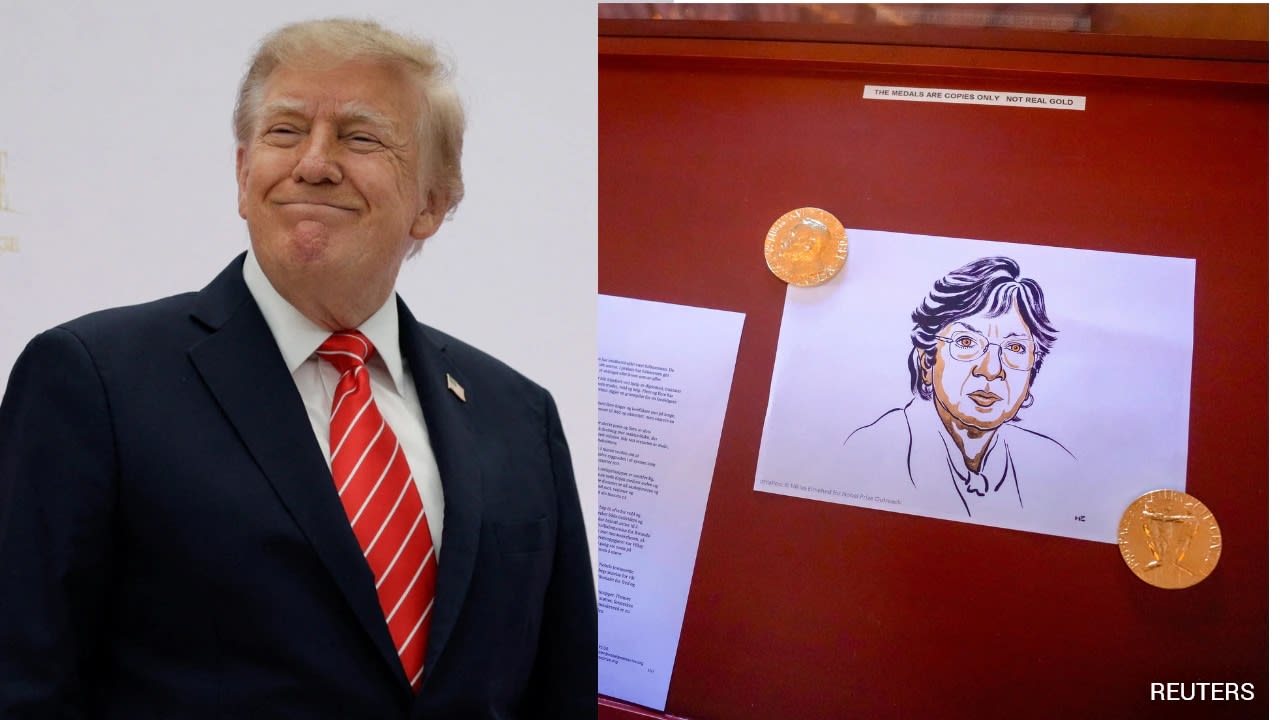
Former President Donald Trump has publicly criticized the selection of the latest Nobel Peace Prize recipient, labeling the choice a "disgraceful" stain on Norway. Despite his harsh rhetoric, he offered a perfunctory congratulation to the unknown laureate.
The Intersection of Global Honors and Political Rhetoric
The announcement of the Nobel Peace Prize often serves as a focal point for geopolitical discourse, reflecting the values of the Norwegian Nobel Committee while frequently drawing ire from global political figures. Recently, former U.S. President Donald Trump weighed in on the latest selection, characterizing the choice as an "indelible stain" on Norway and describing the decision as "disgraceful."
The Nature of the Criticism
Donald Trump’s commentary centers on a perceived disconnect between the committee's choice and his own standards for the prestigious award. By explicitly stating, "I never heard of this particular person," the former president highlights a recurring tension regarding the obscurity of some laureates versus the global profile of the award. His remarks, while dismissive, underscore a broader trend where the Nobel Prize is viewed not just as a humanitarian milestone, but as a political instrument subject to intense partisan scrutiny.
Historical Context of Nobel Controversies
Throughout its history, the Nobel Peace Prize has frequently invited controversy. From the selection of controversial political figures to the perceived exclusion of impactful global leaders, the Norwegian Nobel Committee often finds itself at the center of ideological battles. Trump’s characterization of the prize as a "stain" reflects a long-standing tradition of political leaders questioning the committee's methodology and the geopolitical leanings of its members.
Implications for Global Diplomacy
When high-profile figures criticize the Nobel process, it impacts the perceived legitimacy of the institution. The Nobel Peace Prize relies heavily on its reputation as an objective arbiter of humanitarian achievement. When a former U.S. President voices public disapproval, it signals to his supporters and international allies that the award's prestige is being questioned, potentially diminishing the diplomatic "soft power" that usually accompanies the recognition.
Future Trends in Award Recognition
As political polarization increases globally, we can expect future Nobel announcements to be met with similar levels of scrutiny. The tension between the committee's pursuit of promoting specific global causes and the political reactions of world leaders will likely intensify. Future winners may find themselves navigating a complex landscape where their recognition is immediately met with political posturing, requiring them to defend their work against the backdrop of partisan narratives.
Conclusive Summary
Ultimately, the reaction from Donald Trump serves as a reminder that the Nobel Peace Prize is not immune to the volatility of global politics. While the committee maintains its independence, the reception of these awards is increasingly filtered through the lens of national and personal political agendas. The "disgraceful" label applied by the former president highlights the enduring fragility of consensus in international recognition.
Verification Required?