As the Trump-Xi meetings unfold, investors should watch for this hidden AI trade
Source Entity
Robert Ross
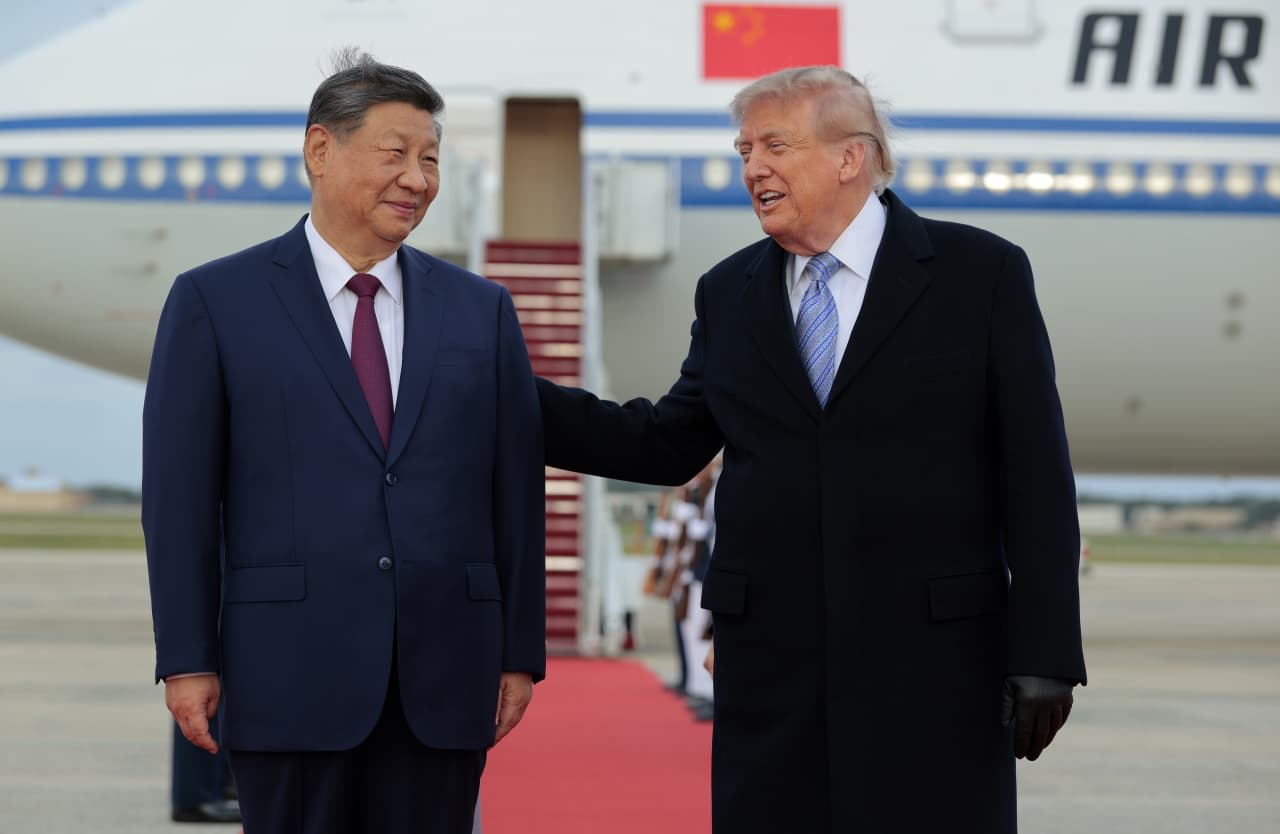
During his UNGA address, Donald Trump announced the U.S. is renaming 'Artificial Intelligence' to 'Super Intelligence' to avoid the perception that the technology is fake. The speech also addressed geopolitical stances on the ICC, Greenland, and globalist initiatives.
Trump’s UNGA Address: A Shift in Rhetoric and Global Stance
During a recent address at the United Nations General Assembly (UNGA), Donald Trump utilized the global stage to outline a series of unconventional policy shifts and rhetorical adjustments. Most notably, he declared that the United States would officially move to rename 'Artificial Intelligence' to 'Super Intelligence' (SI). Trump argued that the term 'artificial' implies the technology is fake, whereas labeling it 'super intelligence' more accurately reflects its profound capabilities. He further framed existing warnings about AI risks as a 'globalist scheme,' positioning the U.S. to take a unique approach to the development and naming of these technologies.
Redefining Technological Nomenclature
The decision to rebrand AI as 'Super Intelligence' is rooted in a desire to shift public perception. By removing the word 'artificial,' the administration aims to emphasize the reality and power of the tools currently in development. Trump’s claim that all U.S. government documents will transition to this new terminology suggests a top-down effort to normalize this nomenclature. Whether this will influence international standards remains to be seen, but it highlights a broader trend of the administration attempting to control the narrative surrounding emerging technologies.
Confronting Global Institutions
Beyond technology, Trump’s UNGA speech took a firm stance against the International Criminal Court (ICC). He categorized the body as an 'out-of-control institution' and a 'rogue' entity, explicitly stating that the U.S. would not permit service members to be subject to its jurisdiction. By calling on other nations to resign from the ICC, he signaled a departure from multilateral judicial oversight, reinforcing a commitment to national sovereignty over international legal frameworks.
Strategic Interests in Greenland
Trump also reiterated a hardline stance on Greenland, asserting that the U.S. would not allow adversaries to establish military presences or sensitive investments on the island without express approval. To secure these interests, he announced plans to develop a significant military footprint in the region, including the construction of two major military bases. This move underscores a proactive strategy to maintain regional dominance in the Arctic as global powers increasingly look toward the North Pole for strategic and resource-based advantages.
Implications for Global Governance
The synthesis of these announcements—ranging from the renaming of AI to the rejection of the ICC and the militarization of Greenland—paints a picture of a foreign policy defined by unilateralism and a rejection of traditional globalist structures. By characterizing AI warnings as 'globalist schemes' and dismissing international judicial bodies, the administration is clearly prioritizing American autonomy. As these policies take shape, they will likely force a recalibration of how international allies and adversaries engage with the United States on both technological and geopolitical fronts.
Verification Required?