Report: Trump mad RFK Jr. hasn’t cut more vaccines or proven autism link
Source Entity
Beth Mole
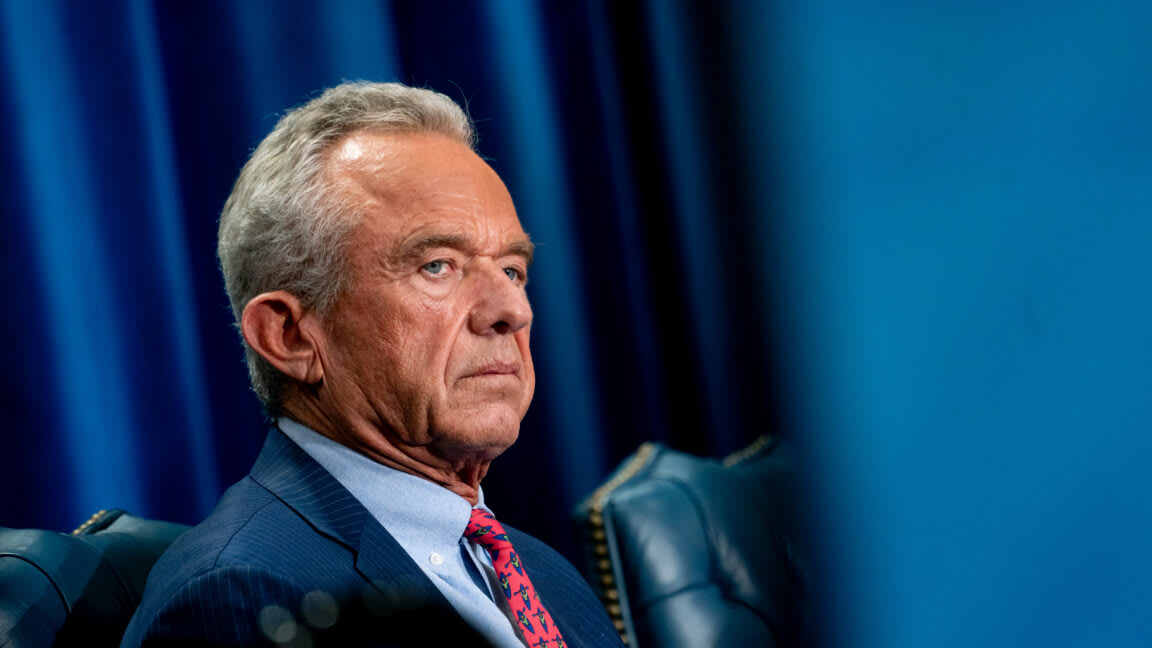
President Trump is reportedly frustrated with Health Secretary RFK Jr. for failing to aggressively dismantle federal vaccine recommendations. The administration is fixated on the debunked theory linking vaccines to autism, seeking to make its eradication a centerpiece of the president's legacy.
The Intersection of Policy and Disproven Science
The recent report from The Wall Street Journal highlights a significant friction point within the current administration regarding public health policy. President Trump’s reported dissatisfaction with Health Secretary Robert F. Kennedy Jr. centers on a perceived lack of progress in rolling back childhood vaccine recommendations. This tension underscores a broader ideological push by the administration to align federal health directives with long-debunked claims regarding the safety and efficacy of vaccines.
The Persistence of the Autism-Vaccine Myth
At the core of this conflict is the President’s personal fixation on the claim that vaccines cause autism. Despite a overwhelming scientific consensus—supported by decades of peer-reviewed research and major global health institutions—confirming no causal link between vaccinations and neurodevelopmental disorders, this narrative remains a potent force in the administration's policy planning. By attempting to tie autism outcomes directly to vaccine schedules, the administration is effectively challenging the foundational principles of modern immunology.
Implications for Public Health Infrastructure
If the administration successfully forces a reduction in federal vaccine recommendations, the consequences for national health security could be severe. Vaccines represent one of the most successful public health interventions in history, having eradicated or controlled diseases like polio, measles, and smallpox. A pivot toward restricting these recommendations risks reversing decades of progress in disease prevention, potentially leading to a resurgence of preventable illnesses and placing an undue burden on healthcare systems already struggling with resource allocation.
Political Legacy and Administrative Strategy
For President Trump, the push to curb vaccine usage appears to be framed as a legacy-defining achievement. By positioning himself as an unconventional seeker of an 'autism remedy' through the dismantling of vaccine protocols, the President is attempting to bypass established scientific bodies and appeal to a specific base that is skeptical of traditional medical expertise. This strategy places Secretary Kennedy in a precarious position, as he must navigate the demands of his executive superior while facing the reality of institutional and scientific pushback.
The Future of Federal Health Oversight
This ongoing tension suggests a future where the Department of Health and Human Services may face significant internal instability. If the President continues to prioritize the pursuit of debunked theories over evidence-based policy, it may lead to a mass exodus of career scientists and public health officials who are unwilling to compromise on established medical safety standards. The long-term impact on the credibility of federal health agencies remains a critical concern for observers of American governance.
Conclusion: A Clash of Ideology and Evidence
The reported frustration between the President and his Health Secretary highlights the dangers of using political influence to override clinical data. As the administration continues to pressure officials for results that contradict scientific reality, the divide between the White House and the medical community is likely to widen. Ultimately, the stability of the nation's public health strategy will depend on whether institutional guardrails can withstand the push to prioritize ideological narratives over proven scientific consensus.