Trump orders cut in US-South Korea drills after Seoul rejects Iran denuclearisation push
Source Entity
TOI WORLD DESK
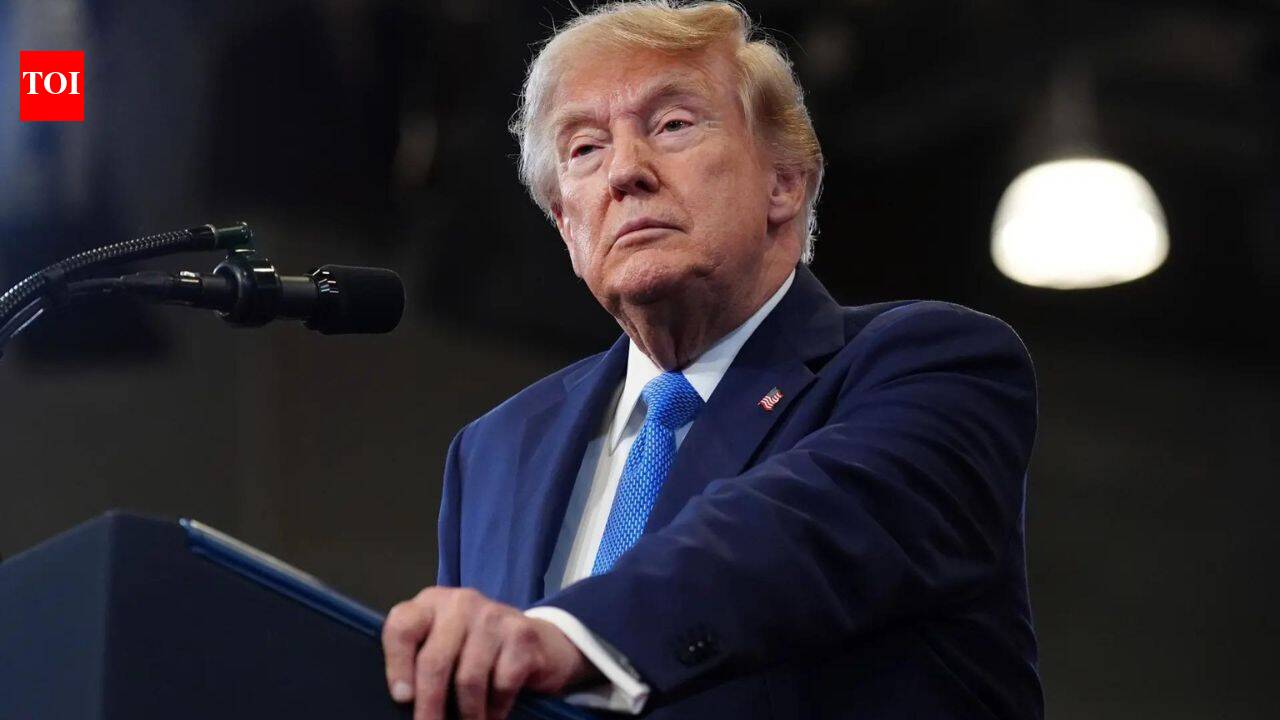
President Trump has ordered a reduction in joint military exercises with South Korea, citing Seoul's refusal to support US efforts regarding Iran. The decision also reflects his stated desire to maintain positive diplomatic relations with North Korean leader Kim Jong Un.
Strategic Realignment: The US-South Korea Military Shift
President Donald Trump has announced a substantial reduction in joint military exercises between the United States and South Korea. This pivot in military posture comes as a direct response to what the President characterizes as a lack of geopolitical alignment, specifically highlighting Seoul’s decision to decline participation in US-led initiatives aimed at the denuclearization of Iran. By linking military cooperation to broader foreign policy support, the administration is signaling a shift toward a more transactional approach in its bilateral security alliances.
The Geopolitical Calculus
The decision to scale back these exercises is framed by the administration as both a financial and diplomatic adjustment. President Trump has long criticized the fiscal burden placed on the United States for maintaining security guarantees abroad. By labeling the exercises as "costly" and "inappropriate," the White House is signaling to allies that the continuation of traditional military cooperation is contingent upon supporting the administration's global security priorities, including its hardline stance against Iran.
Impact on the Korean Peninsula
This move occurs against a backdrop of ongoing tensions with North Korea. Despite recent ballistic missile tests by Pyongyang that violate United Nations resolutions, President Trump has emphasized his "very good relationship" with Kim Jong Un. By reducing the intensity of drills—which have historically been viewed by North Korea as provocative rehearsals for invasion—the administration is attempting to prioritize diplomatic rapport over traditional military deterrence, despite potential concerns regarding the readiness of the combined US-South Korean force.
The Iran Connection
The unexpected linkage between the Korean Peninsula and the administration’s Iran policy marks a significant departure from standard diplomatic silos. By publicly citing Seoul's refusal to join the "denuclearisation" push for Iran as a reason for weakening the defense partnership, the administration is effectively using regional security as leverage for global policy objectives. This creates a complex environment for South Korea, which must navigate its reliance on the US security umbrella while balancing its own regional stability and diplomatic interests.
Future Implications for Alliances
Looking forward, this decision raises critical questions about the durability of the US-South Korea alliance. If military exercises, which serve as the bedrock of interoperability and deterrence in East Asia, are subject to fluctuations based on unrelated global policy disagreements, the strategic stability of the region may face renewed uncertainty. Furthermore, the role of Secretary of War Pete Hegseth in implementing these cuts will be closely monitored to see how the Pentagon manages the logistical transition from full-scale exercises to the "substantially reduced" state requested by the President.
Conclusion
Ultimately, the scaling back of these drills represents a fundamental recalibration of US foreign policy. By prioritizing a personalized diplomatic approach with North Korea and demanding broader ideological alignment from its allies, the administration is testing the resilience of its traditional security frameworks. The long-term impact on regional security and the future of the US-South Korea partnership remains a subject of intense scrutiny as both nations adjust to this new, more conditional security arrangement.
Multiple Citing Sources