Trump to ban the term 'artificial intelligence', wants it called 'super intelligence'
Source Entity
KANCHAN YADAV
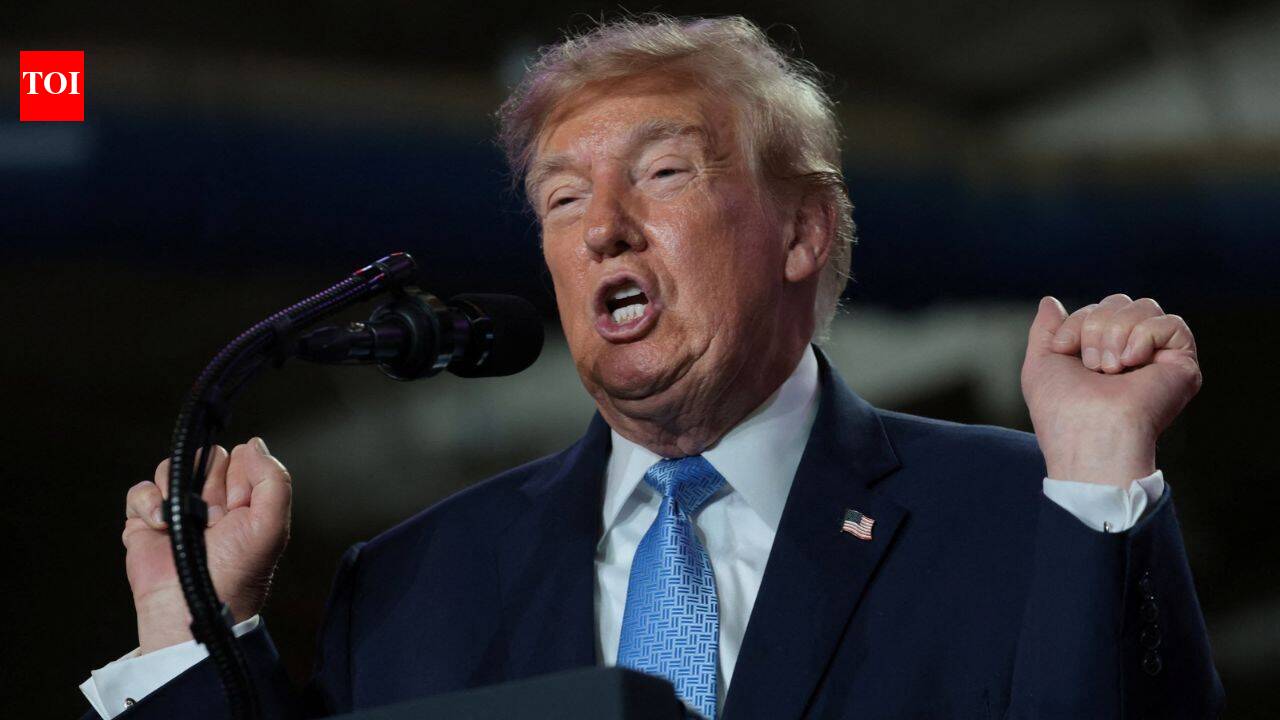
President Donald Trump has announced plans to mandate the term 'super intelligence' (SI) in official government documents, replacing 'artificial intelligence' (AI). He criticized The Wall Street Journal for continuing to use the traditional acronym, labeling it inaccurate.
The Semantic Shift: Trump's Mandate on 'Super Intelligence'
US President Donald Trump has initiated a significant linguistic pivot regarding the terminology used to describe advanced computing technologies. By declaring his intention to ban the term 'artificial intelligence' (AI) in official government documentation, the President is seeking to rebrand the field as 'super intelligence' (SI). This move, communicated via his Truth Social platform, underscores a direct challenge to established industry nomenclature.
Challenging the Industry Standard
The President’s critique extends beyond policy into the realm of media relations, specifically targeting The Wall Street Journal for its continued use of the term 'AI.' By questioning the publication's editorial choices, Trump is asserting that the current standard—'artificial'—is inherently negative or inaccurate. His preference for 'super intelligence' suggests a desire to emphasize the perceived power and transformative potential of the technology rather than its synthetic nature.
Administrative Implementation
According to the provided details, the administration plans to enforce this change across all relevant federal documents. This move represents a rare instance of an executive branch attempting to codify technical terminology through administrative directive. If implemented, government agencies would be required to strip 'AI' from official communications and replace it with 'SI,' signaling a top-down approach to linguistic governance in the tech sector.
Implications for Tech Policy
While the change may appear purely cosmetic, the shift toward 'super intelligence' could have broader implications for how federal agencies categorize research grants, regulatory frameworks, and defense initiatives. By redefining the lexicon, the administration may be attempting to align national policy with a specific vision of advanced computing that prioritizes scale and dominance over the nuances of machine learning and data processing.
Historical Context of Political Branding
Presidents have long utilized linguistic framing to shape public perception of complex issues. By attempting to replace a widely accepted global standard, Trump is engaging in a form of 're-branding' that seeks to distance the administration from the established consensus of the tech industry. This creates a tension between government-mandated terminology and the existing professional discourse among engineers, researchers, and global markets.
Future Trends and Outlook
As the administration moves to codify this change, the tech industry will face a critical decision: whether to adopt the government's preferred 'SI' nomenclature to maintain alignment with federal standards or to retain the globally recognized 'AI' acronym. This potential bifurcation could lead to a fragmented linguistic landscape where government documents diverge significantly from academic and international business standards, potentially causing confusion in public-private sector communications.