Ukraine’s surprise robot offensive exposes a vulnerability in Putin’s war machine
Source Entity
US Top News and Analysis
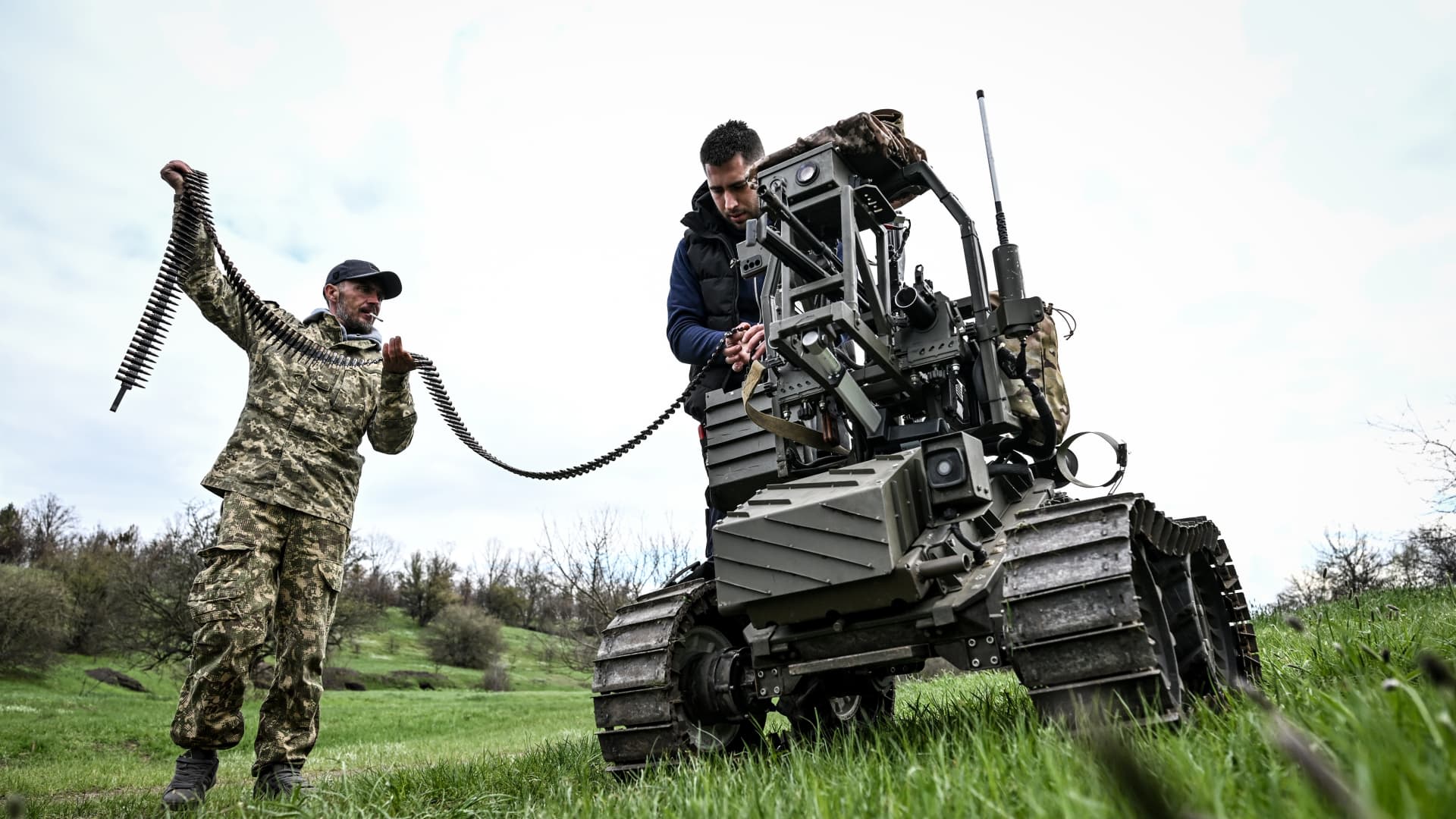
Ukraine's 'Operation Vivaldi' has utilized advanced ground robotic systems to successfully challenge Russian positions in the Donbas. This shift highlights a significant evolution in mechanized warfare, though experts caution that it is not yet a decisive strategic victory.
The Dawn of Autonomous Warfare in the Donbas
The recent emergence of 'Operation Vivaldi' marks a pivotal shift in the ongoing conflict between Ukraine and Russia. By deploying ground-based robotic systems in the eastern Donbas region, Ukrainian forces have managed to reclaim territory that had been under Russian control for over a year. This tactical pivot is not merely a localized success; it represents a fundamental change in how frontline combat is conducted, moving away from purely human-centric attrition toward a model incorporating autonomous and semi-autonomous systems.
The Mechanics of 'Operation Vivaldi'
At the core of this offensive is the integration of ground robotic complexes, as evidenced by trials conducted by personnel like the soldier known as 'Italian' and engineer Denys. These systems, which involve mounting machine guns on unmanned ground vehicles, allow Ukrainian forces to project force into high-risk zones without immediately endangering infantry personnel. By utilizing these robotic platforms, Ukraine has introduced a new layer of complexity to the battlefield that traditional Russian defensive postures were not designed to counter effectively.
Strategic Vulnerabilities and Russian Response
While this offensive has successfully reversed previous Russian territorial gains, military analysts are quick to characterize the operation as a tactical demonstration rather than a decisive, war-ending breakthrough. The vulnerability exposed in Putin’s war machine lies in its historical reliance on massed armor and infantry, which are now increasingly susceptible to the precision and tactical mobility of robotic assets. This technological asymmetry creates a significant strategic headache for Russian command, forcing them to reconsider the viability of their static defensive lines.
Implications for Modern Military Doctrine
The success of the Third Army Corps in this operation signals a broader trend in global military evolution. The ability of a smaller force to leverage cost-effective robotics to achieve strategic goals mirrors the earlier success of aerial drone warfare in the conflict. We are witnessing a transition where the 'robotization' of the frontline is becoming a necessity for survival. This trend suggests that future conflicts will be dominated by the speed at which armies can innovate and deploy autonomous hardware to the point of contact.
Historical Context and Future Outlook
Historically, the Donbas has been a site of grinding, trench-based warfare. The shift initiated in May 2026 suggests that the 'stalemate' narrative is being challenged by technological integration. Looking forward, the critical question will be whether Ukraine can scale these robotic operations sufficiently to sustain these gains against a Russian military that is likely to adapt its own electronic warfare and counter-robotic capabilities. The trajectory of the war now depends heavily on the production capacity of these robotic systems and the ability to integrate them into large-scale maneuver warfare.