On cam: US-Cuba clash at UN as Trump jokes about parachuting Rubio into Cuba for a ‘15-minute’ fix
Source Entity
Latest News: Todays Latest News Headlines from India & World | Hindustan Times | Hindustan Times
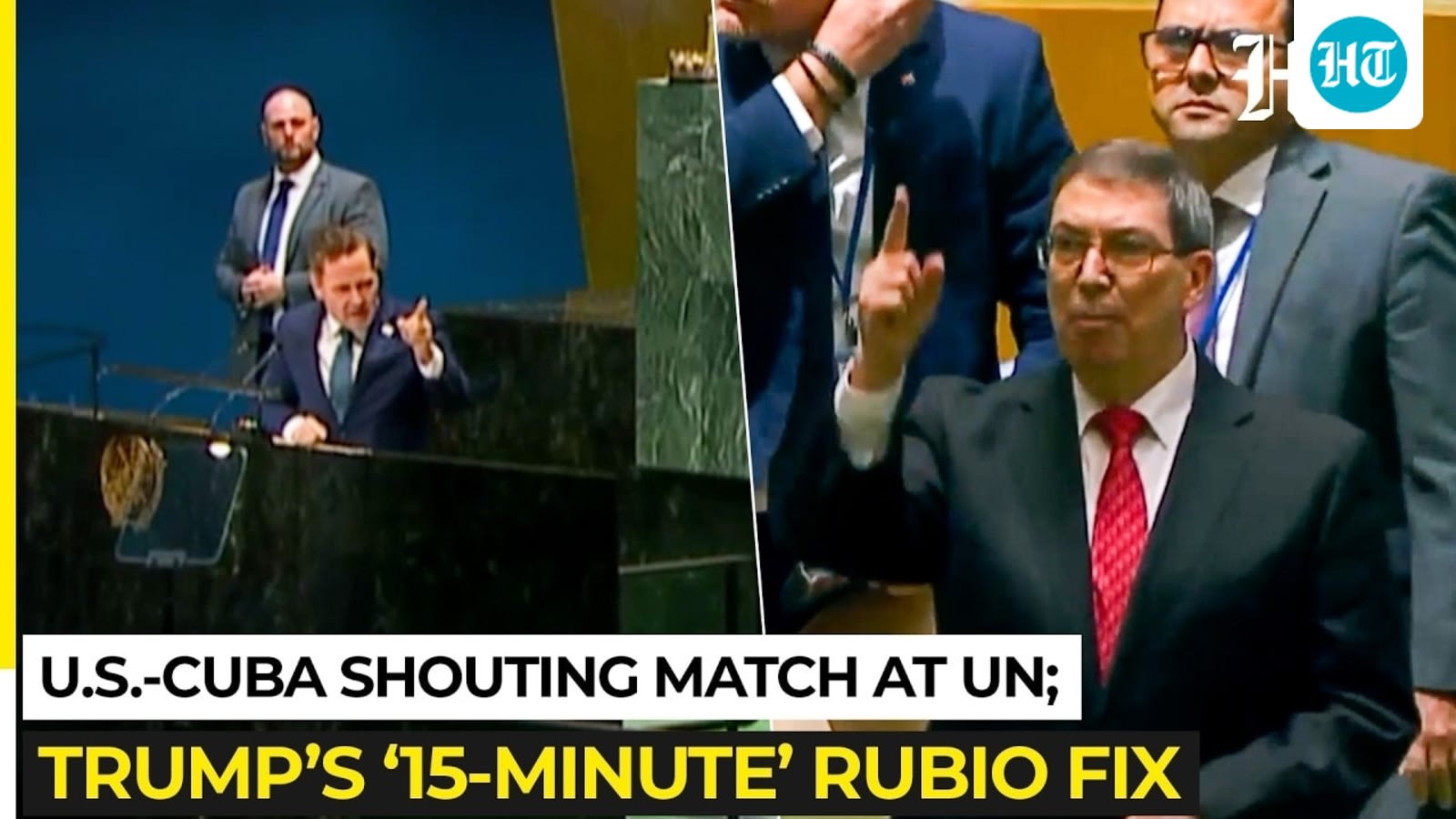
A heated verbal confrontation erupted at the UN between US Ambassador Mike Waltz and Cuban Foreign Minister Bruno Rodríguez over the long-standing US economic embargo. This diplomatic friction is punctuated by President Trump’s provocative remarks regarding Secretary of State Marco Rubio’s potential intervention in Cuba.
Diplomatic Turbulence: The US-Cuba Standoff at the UN
A dramatic escalation in international tensions occurred this week at the United Nations General Assembly, where U.S. Ambassador to the UN Mike Waltz and Cuban Foreign Minister Bruno Rodríguez Parrilla engaged in a public shouting match. This confrontation, which unfolded on the floor of the General Assembly, centered on the annual resolution regarding the decades-long U.S. economic embargo against Cuba. The intensity of the exchange highlights the profound ideological and political chasm that continues to define the relationship between Washington and Havana.
The Anatomy of the Confrontation
During his address, Ambassador Waltz centered his critique on the alleged corruption within the Cuban leadership. By contrasting the economic struggles of the Cuban populace with the opulent lifestyle of its officials—specifically highlighting photos of the late Fidel Castro wearing luxury watches and current President Miguel Díaz-Canel’s alleged wealth—Waltz sought to shift the narrative of the embargo. He argued that the country’s internal failures, rather than external sanctions, are the primary drivers of its economic crisis. In response, members of the Cuban delegation, led by Foreign Minister Rodríguez, physically protested by slamming their tables and shouting, with the Minister explicitly labeling the Ambassador a liar.
The Role of Rhetoric and Symbolic Intervention
Adding a layer of populist rhetoric to this diplomatic crisis, President Donald Trump recently joked about the prospect of parachuting Secretary of State Marco Rubio into Cuba to resolve the nation’s systemic issues in a mere “15 minutes.” While clearly hyperbolic, these remarks serve as a bellwether for the current administration’s approach to the island. By invoking the name of Rubio—a known hardliner on Cuba—the administration signals a continued commitment to a policy of pressure and confrontational rhetoric rather than diplomatic engagement.
Historical Context of the Embargo
The current shouting match is merely the latest chapter in a decades-old struggle. The U.S. embargo, which has persisted since the 1960s, remains one of the most contentious issues at the United Nations, with the vast majority of member states consistently voting to condemn it. Havana views the embargo as the root cause of its economic stagnation and fuel shortages, whereas Washington maintains that the sanctions are a necessary tool to pressure the socialist government to adopt democratic reforms.
Implications for Future Policy
The public nature of this clash suggests that the path toward any normalization of relations remains blocked. By focusing on the personal wealth of Cuban leaders, the U.S. is attempting to delegitimize the regime on the global stage, while Cuba’s aggressive response at the UN indicates a refusal to back down from its stance that the U.S. is coercing other nations to maintain the status quo. The combination of legislative pressure and inflammatory executive commentary suggests that the U.S. is doubling down on a strategy of maximalist pressure.
Conclusion
The spectacle at the UN reflects a hardening of positions that leaves little room for middle-ground diplomacy. As the U.S. continues to frame the Cuban government as a corrupt entity and the Cuban government continues to frame the U.S. as an imperialist aggressor, the humanitarian and economic costs of this standoff remain the primary reality for the people of Cuba. Without a shift toward dialogue, this cycle of verbal sparring and economic hostility is likely to persist as a permanent feature of Western Hemisphere politics.
Multiple Citing Sources
Verification Required?