Explosions near Erbil airport, strikes on bases and rising Gulf tensions: What's latest in US-Iran war?
Source Entity
Latest News: Todays Latest News Headlines from India & World | Hindustan Times | Hindustan Times
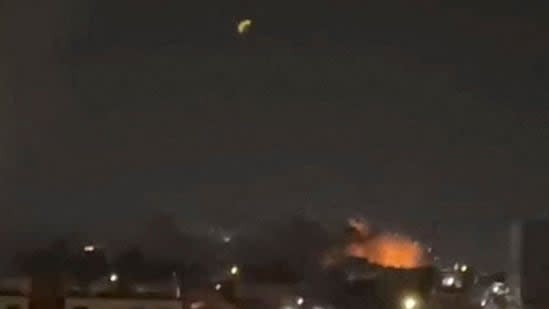
The US-Iran conflict has intensified as the US military conducts its 13th consecutive night of strikes against Iranian military facilities. Regional tensions are surging following explosions near Erbil airport and retaliatory strikes across the Gulf, including in Jordan, Bahrain, and Kuwait.
The Escalating US-Iran Conflict: A Regional Crisis
The ongoing conflict between the United States and Iran has reached a critical juncture, marked by thirteen consecutive nights of US military strikes targeting Iranian military infrastructure. These operations, aimed at neutralizing threats posed by the Islamic Revolutionary Guard Corps (IRGC) to commercial shipping, represent a significant hardening of US policy. The persistent nature of these strikes underscores the strategic importance of the Gulf maritime corridors and the lengths to which the US is willing to go to maintain the flow of global commerce.
The Strategic Chokepoint: Strait of Hormuz
At the heart of this confrontation lies the Strait of Hormuz, a vital artery for the world's oil supply. The presence of smoke plumes near Bandar Abbas serves as a stark visual reminder of the instability gripping this region. By targeting facilities that enable the disruption of shipping, the US is attempting to degrade Iran’s asymmetric capabilities. However, the recurring nature of these strikes suggests a resilient adversary, leading to a protracted cycle of violence that shows few signs of de-escalation.
Regional Spillover and Security Implications
Beyond the primary theater of operations, the conflict has rapidly bled into neighboring territories. Reports of explosions near Erbil airport in Iraq’s Kurdistan region, alongside missile and drone strikes in Jordan, Bahrain, and Kuwait, indicate that the conflict has become a regionalized affair. The attack on Kuwait’s Al-Abdali border crossing signifies that Iranian-aligned forces are actively expanding the scope of the battlefield, placing US allies in the direct line of fire.
Political Rhetoric and Global Markets
In Washington, the rhetoric has reached a fever pitch, with President Donald Trump warning of a potential "massive attack" on Iran. Such declarations, combined with the reality of sustained combat, have sent shockwaves through global financial markets, with oil prices surging past the $100 per barrel mark. This economic volatility highlights how dependent the global economy remains on the stability of the Gulf region, and how quickly geopolitical friction can translate into fiscal hardship.
Future Outlook and Strategic Risks
The current trajectory suggests a deepening entanglement. As the US continues its campaign to hold Iran accountable, the risk of miscalculation increases. With Tehran signaling its intent to retaliate and the US preparing for potentially larger operations, the region faces the prospect of a wider war. The convergence of persistent military engagement, regional spillover, and the vulnerability of global energy supplies creates a fragile environment where diplomatic off-ramps are becoming increasingly difficult to find.
Multiple Citing Sources
Verification Required?