Midterm blues: Why 'lame' duck Donald may push for a quick India-US trade deal
Source Entity
SMRITI JAIN
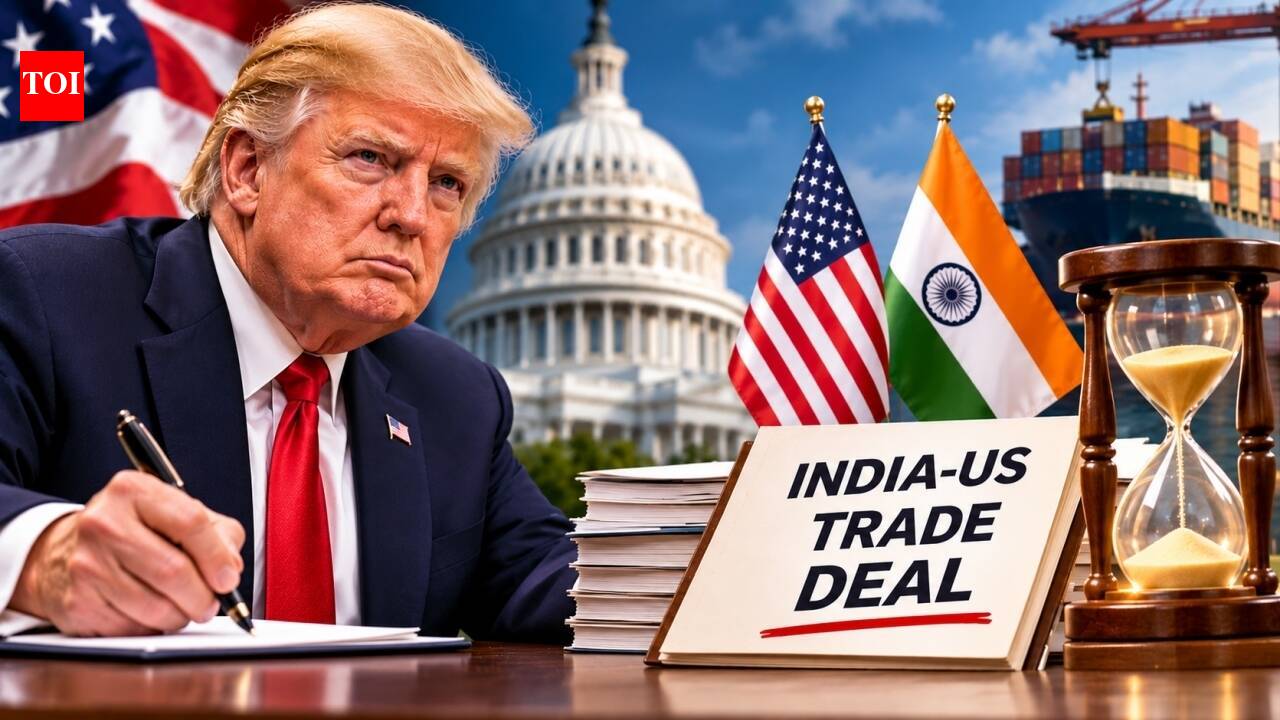
The 2026 US midterm elections will determine control of Congress for the final two years of President Donald Trump's term. Voters are weighing the GOP's MAGA agenda against economic frustrations and foreign policy concerns, with the results serving as a critical litmus test for both parties.
The 2026 Midterm Landscape: A Litmus Test for the Trump Administration
As the United States approaches the 2026 midterm elections on Tuesday, November 3, the political atmosphere is charged with anticipation. These elections represent the first major nationwide referendum on President Donald Trump’s second term, providing a crucial indicator of the American public's sentiment regarding his administration's policies. With all 435 seats in the House of Representatives, 35 Senate seats, and 36 governorships up for grabs, the outcome will fundamentally alter the power dynamics in Washington, potentially serving as a check on executive authority or a mandate for the current administration’s legislative agenda.
Evolving Battlegrounds and Split-Ticket Realities
The electoral map for 2026 reveals a complex landscape that diverges significantly from the 2024 presidential election. States like Maine and Michigan are at the center of this electoral drama. Maine, which favored the Democratic Party in the 2024 presidential contest, now faces a competitive race involving a Republican senator seeking re-election. Conversely, Michigan—a state that supported Donald Trump—is witnessing intense battles for its Senate seat, governorship, and several House districts. This trend underscores the phenomenon of split-ticket voting, where local candidate appeal and specific state-level issues can override national partisan trends.
Key Drivers: Economics and Foreign Policy
The central narratives driving the 2026 midterms are deeply rooted in the daily lives of American voters. Reports of persistent frustrations over the rising cost of living are expected to weigh heavily on the electorate, creating a challenging environment for the incumbent party. Furthermore, the geopolitical landscape, specifically the ongoing US-Israel conflict involving Iran, has introduced a layer of foreign policy uncertainty that candidates must navigate. These issues are testing whether voters are inclined to support the Republican 'Make America Great Again' (MAGA) platform or if they are seeking a shift in the legislative balance toward the Democratic Party.
The Strategic Stakes for 2028
Beyond the immediate control of Congress, the 2026 results will serve as a strategic blueprint for the 2028 presidential cycle. The outcome will force both major parties to re-evaluate which policies and messages resonate most effectively with the electorate. For Republicans, holding control of Congress is essential to advancing the President's vision; for Democrats, capturing one or both chambers would provide the necessary leverage to stall the administration’s agenda and position the party for a comeback. The performance of candidates this November will dictate the internal debates and primary strategies for the next presidential election.
Global Observation and Procedural Logistics
The global interest in these midterms is evident, with international observers monitoring the results to gauge the stability of US domestic policy. For international audiences, such as those in India, the logistical reality involves tracking the first polling stations as they close at 5:30 am IST on Wednesday, November 4. As results begin to trickle in, the global community will be watching to see if the American electorate chooses to empower the Republican legislative agenda or to shift the balance of power, thereby setting the tone for the final two years of the Trump presidency.
Multiple Citing Sources