2 US service members killed, 1 missing after Iranian attack on Jordan base
Source Entity
TOI WORLD DESK
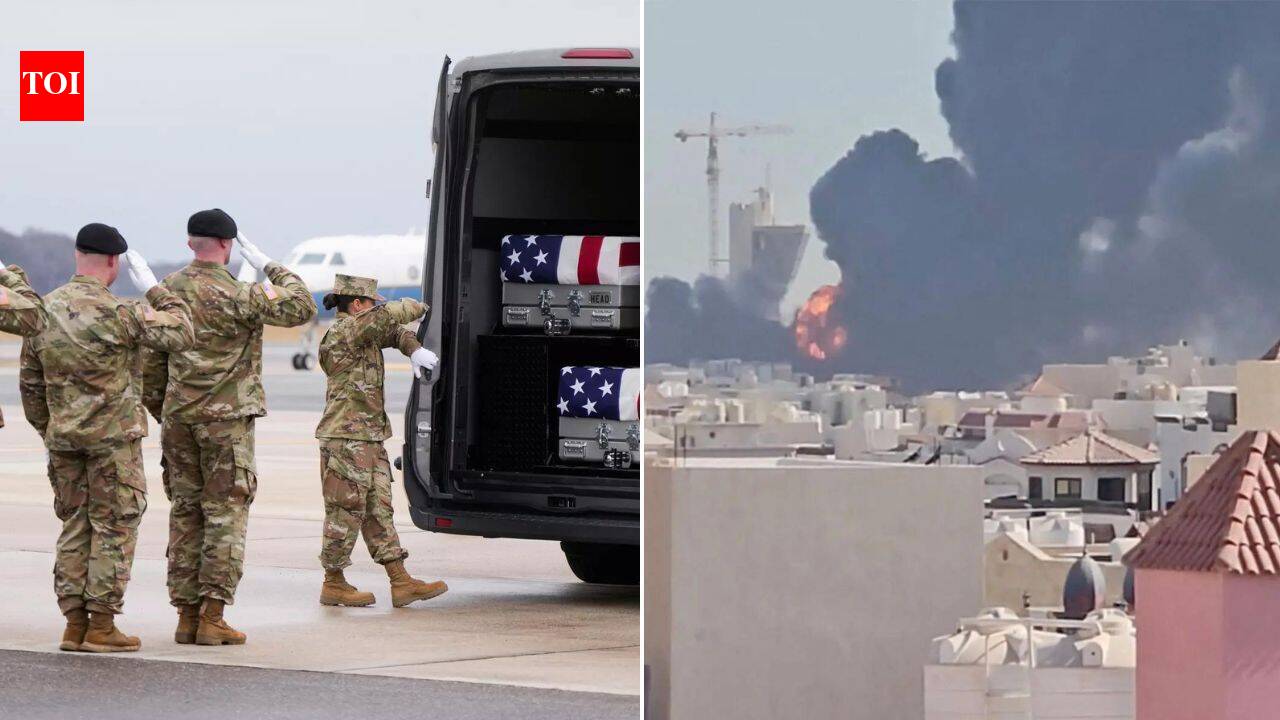
Two US service members were killed and one remains missing following Iranian ballistic missile and drone attacks on a military base in Jordan. This escalation marks the first instance of American troop deaths from direct Iranian fire since the early stages of the conflict.
Escalation in the Middle East: Analysis of Iranian Strikes in Jordan
In a significant escalation of regional tensions, the United States has confirmed the deaths of two service members and the disappearance of a third following a series of Iranian ballistic missile and drone attacks on a military base in Jordan. This incident, which occurred on a Friday, represents a critical shift in the nature of the conflict between the US and Iran, as these mark the first American troop deaths resulting from direct Iranian fire since the opening days of the war. The attack underscores the increasing volatility of the Gulf region and the precarious position of US assets stationed in partner nations.
Tactical Breakdown of the Assault
The assault involved a coordinated barrage of ballistic missiles and unmanned aerial vehicles (drones) targeting US facilities. While the US and its partner forces actively defended the base, the breach resulted in immediate casualties. Beyond the two fatalities and one missing person, four other service members required medical evacuation to Jordanian hospitals, though they have since been discharged. Other personnel sustained minor injuries but have already returned to duty. The precision and nature of the attack indicate a high level of Iranian coordination and a willingness to target US military infrastructure directly within sovereign allied territory.
Regional Defense and Interception
Jordan played a pivotal role in mitigating the potential scale of the disaster. The Jordanian military reported the successful interception of 10 Iranian missiles fired into its airspace overnight, reporting no significant damage to its own infrastructure. This highlights the importance of integrated air defense systems in the region, where US and partner forces must collaborate to neutralize high-velocity threats. However, the fact that missiles successfully struck the base despite these defenses points to the evolving capabilities of Iranian missile technology.
Geopolitical Retaliation and Strategic Warnings
The strikes were not isolated events but part of a broader cycle of aggression. Iran had previously issued a stern warning to the United States, promising "unforgettable lessons" should US operations continue. In response to the aggression in Jordan and other facilities across the Gulf, the US Central Command (Centcom) conducted targeted strikes against Iranian surveillance and infrastructure sites. This "tit-for-tat" exchange suggests a dangerous trajectory where both powers are testing the thresholds of direct engagement, moving away from the traditional reliance on proxy forces.
Economic and Global Implications
The ramifications of this conflict extend far beyond the military bases in Jordan. The instability has already begun to disrupt shipping through the Strait of Hormuz, one of the world's most critical maritime chokepoints for global oil and trade. Any prolonged instability in this corridor threatens to spike global energy prices and disrupt international supply chains, demonstrating how a localized military strike in Jordan can trigger a global economic ripple effect.
The Rising Human Cost
This incident brings the total US death toll in the current conflict to 16, including an American Navy pilot who went missing earlier this month. The lack of immediate disclosure regarding the identities of the deceased troops reflects the sensitivity of the ongoing operations. The transition from indirect skirmishes to direct fatalities increases the political pressure on the US administration to respond decisively, while simultaneously raising the stakes for potential full-scale escalation.
Conclusion and Future Outlook
The attack in Jordan serves as a stark reminder of the fragility of peace in the Middle East. With the US and Iran now engaging in direct fire and retaliatory strikes on infrastructure, the risk of miscalculation is at an all-time high. Future trends suggest a continued focus on drone warfare and ballistic missile capabilities, as well as an increased reliance on regional partners like Jordan to provide a defensive buffer. The international community now watches to see if diplomatic channels can prevail or if the "unforgettable lessons" promised by Tehran will lead to a broader regional war.
Multiple Citing Sources