Trump declares Iran has ‘very little left’ as he dedicates fresh strikes to dead US soldiers
Source Entity
Latest News: Today's Latest News Headlines from India & World | Hindustan Times | Hindustan Times
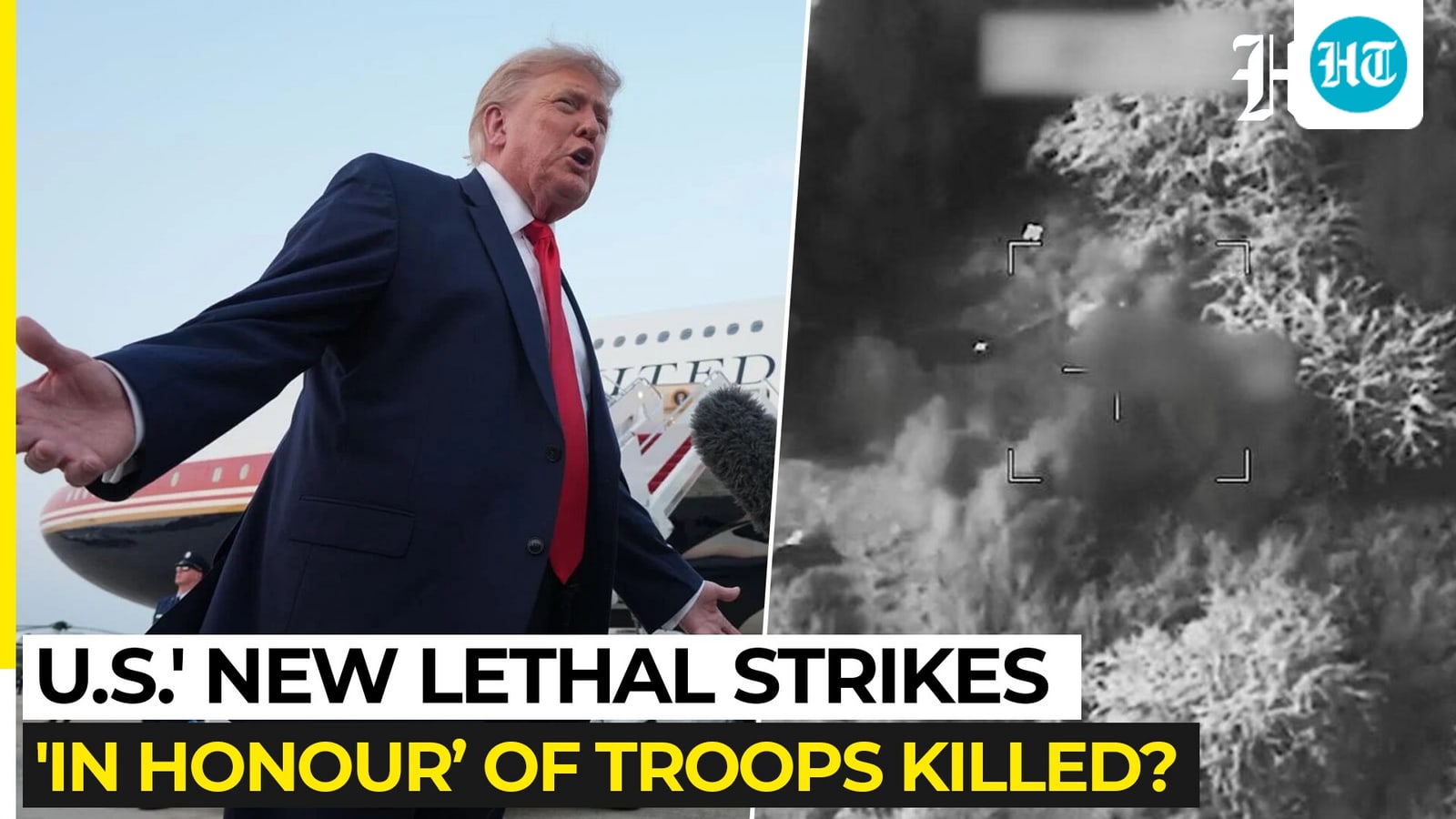
The U.S. military has conducted nine consecutive nights of strikes against Iran to neutralize threats to shipping in the Strait of Hormuz. The escalation, sparked by U.S. casualties in Iraq and Jordan, has driven Brent crude oil prices above $90 per barrel.
Escalation in the Persian Gulf: Analysis of the U.S.-Iran Military Campaign
The United States has entered a critical phase of military escalation against Iran, marking nine consecutive nights of targeted strikes. This campaign is not merely a retaliatory measure but a strategic effort by U.S. Central Command (CENTCOM) to systematically degrade Tehran's ability to disrupt commercial shipping. The primary focus of these operations is the Strait of Hormuz, one of the world's most vital maritime chokepoints, where the U.S. seeks to ensure the uninterrupted flow of global trade and energy supplies.
Strategic Objectives and Maritime Security
At the heart of this conflict is the security of the Strait of Hormuz. By conducting a sustained wave of strikes, the U.S. military aims to destroy the specific Iranian capabilities used to attack vessels transiting the waterway. The deployment of high-value assets, such as the Nimitz-class aircraft carrier USS Abraham Lincoln (CVN 72) and the Arleigh Burke-class guided-missile destroyer USS Frank E. Petersen Jr. (DDG 121), underscores the scale of the operation. These vessels, operating within the U.S. 5th Fleet area, provide the necessary air and sea superiority to maintain stability in the Middle East while executing precision strikes.
The Human Cost and Political Catalyst
The current intensity of the strikes is deeply tied to American casualties in the region. President Donald Trump has explicitly stated that the latest operations were carried out "in honor" of U.S. military personnel killed in Jordan and Iraq. A particularly poignant catalyst was the death of a U.S. service member during the controlled detonation of unexploded ordnance from a downed Iranian attack drone in northern Iraq. This sequence of events has shifted the U.S. posture from containment to active degradation of Iranian military infrastructure.
Global Economic Implications and Energy Volatility
The conflict has sent immediate shockwaves through global energy markets. As the U.S. and Iran clash, fears of a total blockade or significant disruption to oil shipments have surged. Consequently, international benchmark Brent crude for September delivery climbed above $90 per barrel, while U.S. West Texas Intermediate (WTI) crude for August delivery rose to approximately $84.49. This price volatility reflects the market's sensitivity to the geopolitical instability of the Persian Gulf, where any prolonged conflict threatens global energy security.
Long-term Strategic Goals and Nuclear Deterrence
Beyond the immediate tactical goals of protecting shipping, the U.S. is pursuing broader strategic objectives. President Trump has asserted that Iran's military capabilities have been significantly weakened, claiming the adversary has "very little left." Crucially, the U.S. administration has reiterated a firm red line regarding nuclear proliferation, stating that it will not allow Iran to obtain a nuclear weapon. This suggests that the current kinetic operations are part of a larger pressure campaign intended to force a strategic retreat by Tehran on both regional aggression and nuclear ambitions.
Conclusion: A Region at a Breaking Point
The ninth night of strikes represents a dangerous inflection point in U.S.-Iran relations. The combination of military casualties, the deployment of the 5th Fleet's most powerful assets, and the resulting spike in global oil prices creates a volatile environment. While the U.S. maintains that its goal is the restoration of maritime security and the prevention of nuclear armament, the continued cycle of strikes and casualties suggests a protracted conflict that could reshape the geopolitical landscape of the Middle East for years to come.
Multiple Citing Sources
Verification Required?