Watch: US strikes 3 Iranian oil tankers after Iran targets 2 navy warships
Source Entity
ARYAN SINGH
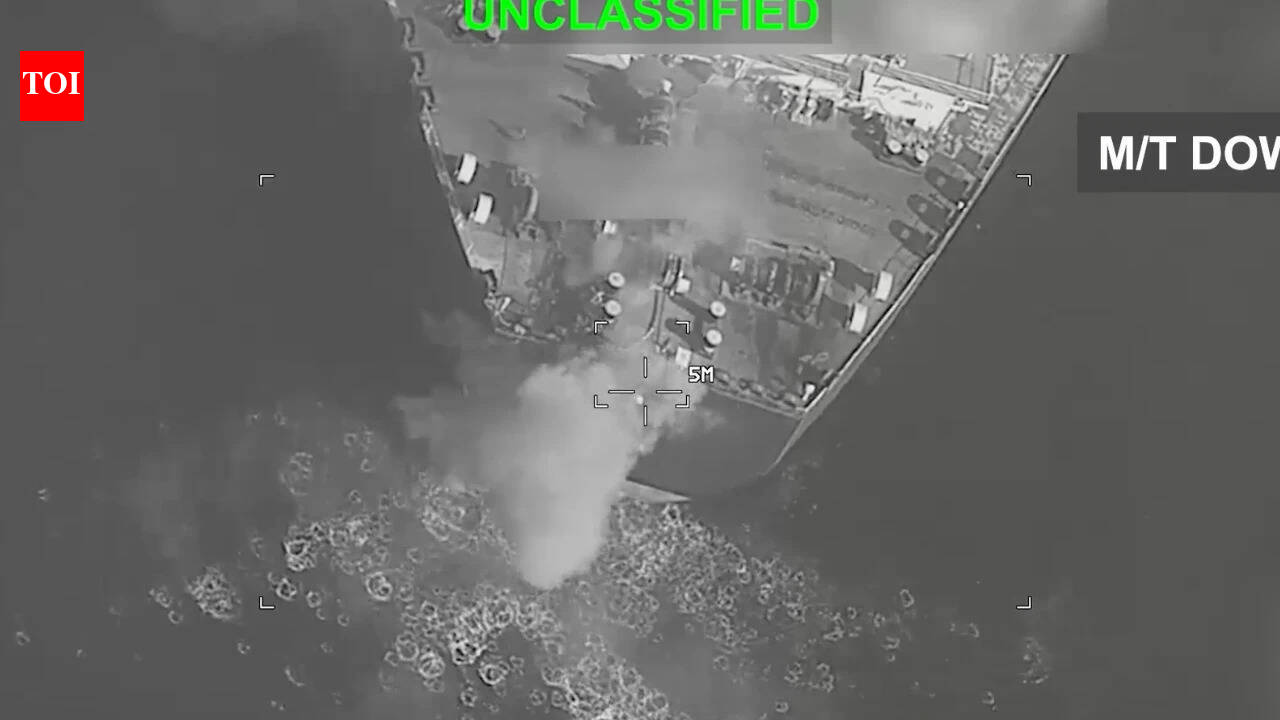
US forces successfully repelled ballistic missile attacks on two Navy warships and retaliated by destroying three Iranian oil tankers. These tankers were identified as key financial assets for the IRGC's regional operations.
Escalation in the Persian Gulf: US-Iran Maritime Confrontation
The Incident Overview
The recent maritime confrontation in the Persian Gulf marks a significant escalation in regional tensions. According to U.S. Central Command (CENTCOM), the incident began when the Islamic Revolutionary Guard Corps (IRGC) launched ballistic missiles toward two U.S. Navy vessels—an aircraft carrier and a guided-missile destroyer. The U.S. ships successfully evaded the incoming ordnance, resulting in zero casualties among American personnel. This direct targeting of U.S. naval assets represents a high-stakes provocation that necessitated a swift and decisive response from American forces.
Tactical Retaliation and Asset Neutralization
In response to the missile barrage, the U.S. military executed precision strikes against three Iranian oil tankers identified as integral to the IRGC's financial shadow network. CENTCOM confirmed that one tanker was permanently disabled near the critical oil export hub of Kharg Island, a second was disabled near Jask, and a third was completely destroyed in the Gulf of Oman following the evacuation of its crew. By targeting these vessels, the U.S. is directly attacking the economic infrastructure that funds the IRGC and its regional proxies.
The Role of the Shadow Network
The decision to strike these specific tankers highlights the strategic importance of Iran's "shadow network." These vessels are not merely commercial transport ships; they serve as a multibillion-dollar financial pipeline for the IRGC. By disrupting this network, the U.S. is attempting to impose a direct "higher economic price" on Iran for its acts of aggression. This strategy shifts the conflict from traditional military posturing to a calculated effort to erode the financial sustainability of Iran’s military operations.
Strategic Implications and Regional Stability
This exchange significantly alters the security landscape of the Gulf of Oman and the Persian Gulf. The use of ballistic missiles against U.S. warships suggests a shift in Iranian tactical doctrine, moving toward more sophisticated and lethal methods of engagement. Conversely, the U.S. response demonstrates a clear policy of "deterrence through destruction," signaling that targeting American naval assets will result in the immediate loss of high-value Iranian economic assets.
Future Trends and Geopolitical Outlook
Looking forward, the region faces a period of heightened instability. If the IRGC continues to utilize ballistic missile technology against international naval patrols, the U.S. will likely continue to target the economic lifelines of the Iranian regime. This cycle of provocation and retaliation risks further disrupting global energy markets, given the proximity of these strikes to vital shipping lanes like the Strait of Hormuz. Observers should monitor the intensity of future diplomatic backchannels, as the current "tit-for-tat" dynamic leaves little room for de-escalation without significant political concessions from either party.