Rust From Bow To Stern: What 286 Days At Sea Did To USS Abraham Lincoln
Source Entity
NDTV News Search Records Found 1000
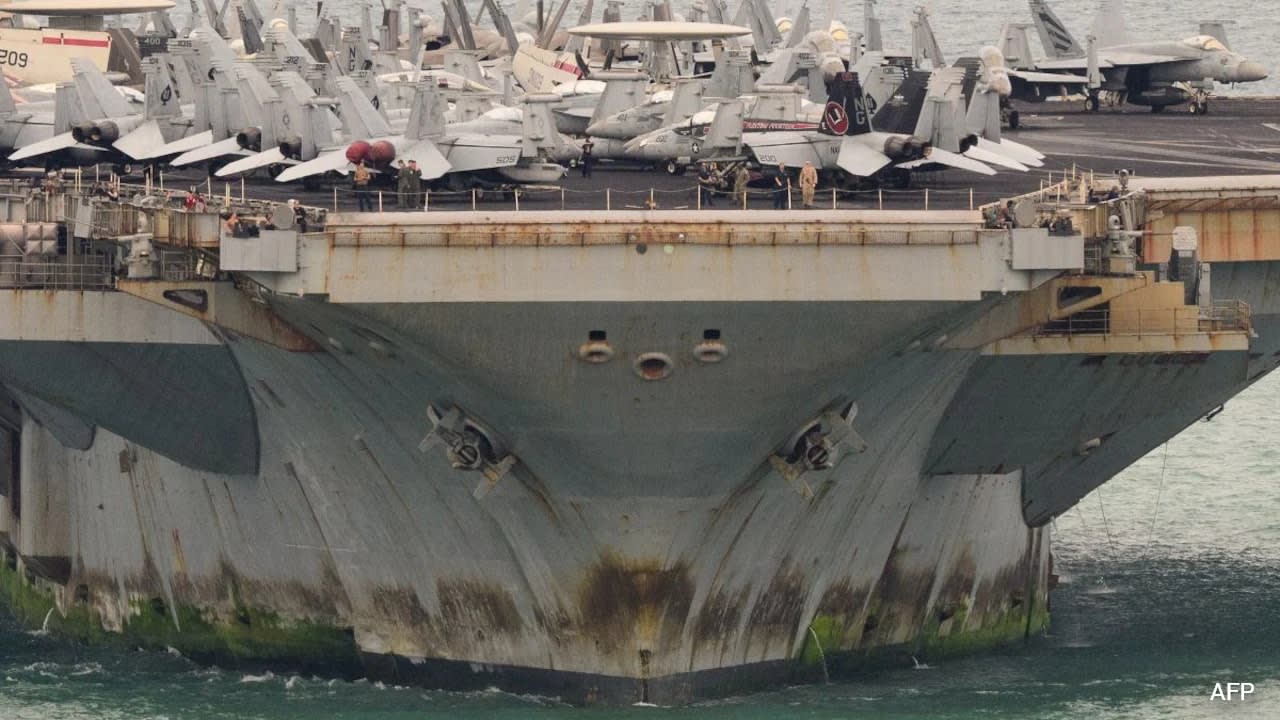
The USS Abraham Lincoln is undergoing significant maintenance to address extensive corrosion accumulated during a 286-day deployment. Repairs are expected to commence during the vessel's port call in Thailand.
The Toll of Extended Deployment on the USS Abraham Lincoln
The Impact of 286 Days at Sea
Following a grueling 286-day deployment, the USS Abraham Lincoln has returned to port showing clear signs of its prolonged exposure to the harsh maritime environment. The phrase 'rust from bow to stern' serves as a stark reminder of the physical toll that continuous operations take on modern naval vessels. Saltwater, humidity, and constant motion create a relentless corrosive environment that even the most advanced naval coatings struggle to mitigate over such an extended duration.
Strategic Maintenance Initiatives
Addressing this extensive surface degradation is a critical priority for naval readiness. The vessel’s current condition necessitates immediate intervention to prevent long-term structural damage or the compromise of sensitive onboard systems. Reports indicate that maintenance crews are already preparing to initiate restorative work during the ship's stop in Thailand. This proactive approach ensures that the vessel remains combat-ready and structurally sound for future tasking.
Operational Logistics and Repair Logistics
Performing large-scale maintenance in foreign ports requires significant logistical coordination. By utilizing the stop in Thailand to begin addressing the corrosion, the Navy is optimizing the ship's operational cycle. This allows for a head start on repairs that would otherwise consume valuable time during a return to home port, effectively balancing the need for vessel upkeep with the constraints of a global deployment schedule.
The Broader Implications for Naval Maintenance
This event highlights a larger trend in the U.S. Navy: the challenge of maintaining an aging and heavily utilized fleet. As operational tempos remain high, the time available for preventive maintenance in dry docks becomes increasingly scarce. The reliance on expeditionary maintenance—conducting repairs while forward-deployed—is becoming a standard necessity to keep the fleet operational in contested or distant waters.
Looking Ahead: Future Trends in Fleet Readiness
Moving forward, the Navy is likely to invest more heavily in advanced anti-corrosion technologies and predictive maintenance analytics. The case of the USS Abraham Lincoln serves as a case study for why real-time monitoring of ship hull integrity is essential. Future fleet management will depend on the ability to minimize downtime while ensuring that vessels like the Abraham Lincoln can withstand the rigors of nearly a year at sea without suffering critical degradation.
Verification Required?