Sibal asks Shah if Modi as CM, Vajpayee as PM sang full version of Vande Mataram
Source Entity
India Latest News: Top National Headlines Today & Breaking News | The Hindu
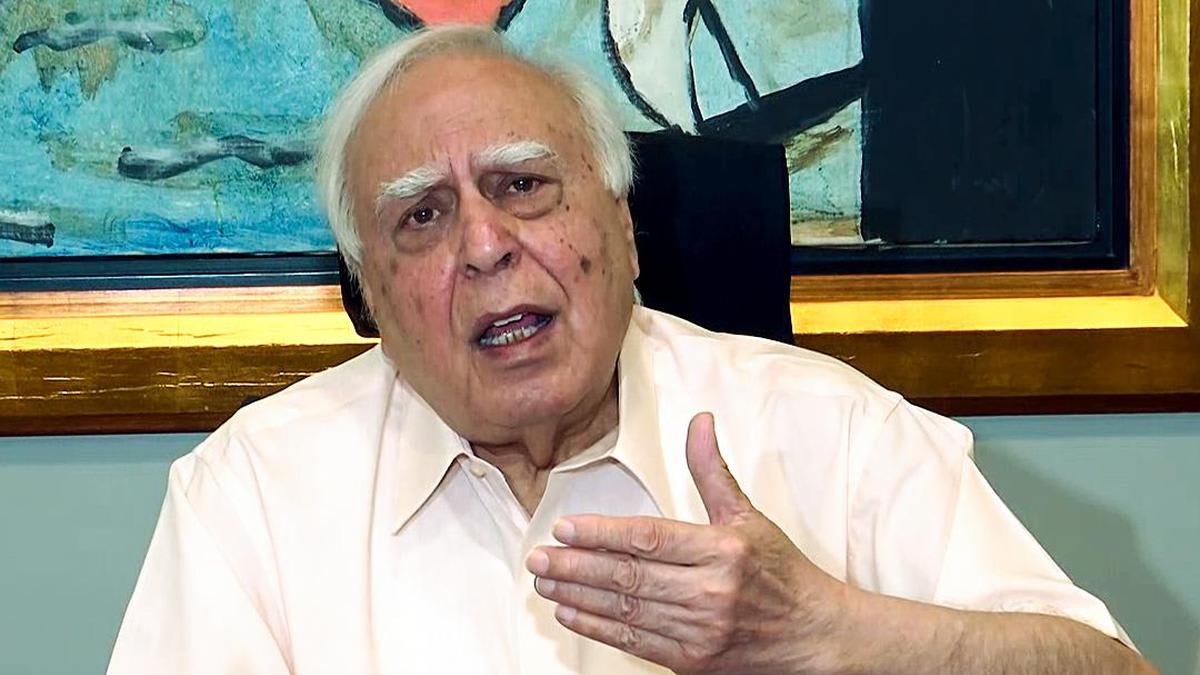
The Congress party's decision to sing only the first two stanzas of Vande Mataram has sparked a heated political row. Union Home Minister Amit Shah branded the move 'anti-national' and 'vote-bank appeasement,' while Congress leaders and critics questioned the BJP's own historical record on the matter.
The Vande Mataram Controversy: A Political Firestorm
The political landscape in India has been reignited following the Congress Working Committee (CWC) decision to limit the rendition of Vande Mataram to its first two stanzas at party events. This decision, which mirrors a historical stance taken by the party in 1937, has been met with immediate and fierce condemnation from the ruling Bharatiya Janata Party (BJP), specifically from Union Home Minister Amit Shah.
The BJP’s Stance: National Identity and Allegations
Union Home Minister Amit Shah has framed the Congress decision as an act of "anti-national" sentiment. He argues that this move is a cynical play for "vote-bank appeasement," suggesting that the party is prioritizing electoral gains over national unity. Shah’s critique is rooted in the assertion that the full song holds a specific significance in the Indian cultural and political consciousness, and that truncating it violates the spirit of laws enacted regarding the rendition of national symbols.
Internal Dissent and Legal Nuance
Within the Congress party, the decision has not been met with universal approval. There is an emerging sense of unease among party ranks, with some leaders expressing concern that the leadership failed to handle the issue with the necessary political nuance. Notably, Abhishek Manu Singhvi, head of the party’s legal wing, provided an interpretation of the law that distinguishes between public and private functions, reflecting a desire to avoid the political vulnerability created by this controversy. This internal friction is further complicated by the fact that several Congress-ruled states, such as Himachal Pradesh, Karnataka, and Telangana, recently performed the full version during Independence Day events.
The Counter-Attack: Questioning Historical Precedent
Independent MP Kapil Sibal has challenged the BJP’s narrative by shifting the focus to historical consistency. Sibal publicly questioned whether prominent BJP figures, including former Prime Minister Atal Bihari Vajpayee and Narendra Modi during his tenure as Chief Minister of Gujarat, consistently sang the full version of the song at all events. By posing this query, Sibal aims to highlight what he describes as hypocritical rhetoric, suggesting that the "anti-national" label is a political tool rather than a reflection of a consistent national standard.
Broader Implications for Political Discourse
This debate underscores the deep-seated polarization in Indian politics regarding the use of national symbols. The controversy highlights how historical resolutions—in this case, the 1937 Congress resolution—are weaponized in modern political discourse to define patriotism. As both parties continue to trade accusations, the incident serves as a case study in how cultural markers are utilized to consolidate support bases and challenge the legitimacy of political opponents.
Future Trends in Symbolic Politics
Looking forward, this event suggests that cultural and symbolic issues will continue to be at the forefront of the Indian political agenda. As the BJP continues to emphasize its nationalist platform, opposition parties will likely face increasing pressure to balance their historical traditions with modern expectations of patriotic performance. The ongoing disagreement suggests that the definition of "nationalism" will remain a contested space, with parties continuously forced to defend their actions against accusations of undermining national identity.
Verification Required?