Vijayan demands withdrawal of circular allowing colleges to increase seats without Keralam Govt nod
Source Entity
India Latest News: Top National Headlines Today & Breaking News | The Hindu
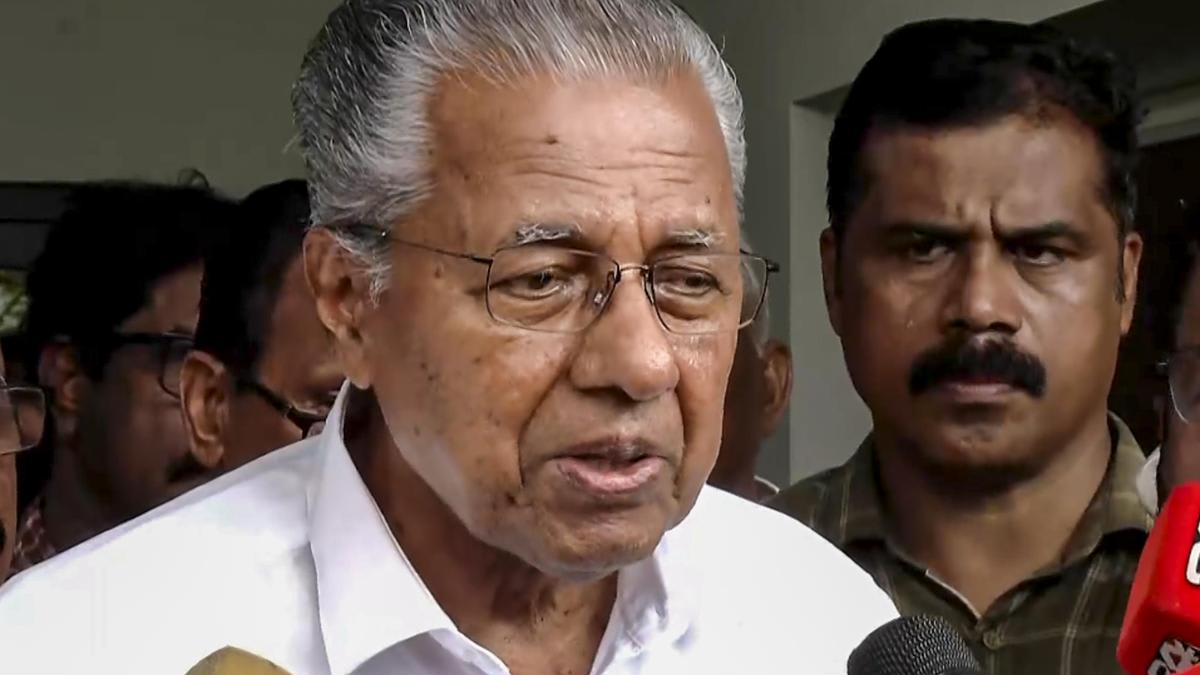
Opposition leader Pinarayi Vijayan has demanded the withdrawal of a circular allowing private and autonomous colleges to increase seats without government approval. He alleges the move facilitates the commercialization of education under pressure from private college managements.
Controversy Over College Seat Expansion in Kerala
The Core Dispute
Opposition leader in the Kerala Assembly, Pinarayi Vijayan, has launched a sharp critique against the state government regarding a recent policy shift in higher education. At the heart of the controversy is a government circular that permits autonomous, aided, and self-financing colleges to increase student seat capacity without obtaining prior governmental approval. Vijayan has publicly demanded the immediate withdrawal of this directive, characterizing it as a significant policy failure that undermines regulatory oversight.
Concerns Over Commercialisation
Vijayan’s primary contention is that the move is a catalyst for the unchecked commercialisation of the education sector. By bypassing the necessity for government vetting, he argues that the state is effectively relinquishing its role as a regulator. The concern is that private and autonomous institutions will prioritize profit-driven expansion over the quality of education and the maintenance of academic standards. This shift, according to the opposition, signals a surrender to the interests of private college managements rather than the public good.
The Shift from Previous Norms
There is a notable discrepancy between the government’s latest stance and its earlier administrative guidelines. As highlighted by Vijayan, a circular issued by the Higher Education Department on September 11 had explicitly mandated that all government, aided, and autonomous colleges must secure prior government approval before introducing new courses or increasing seat capacities. The sudden relaxation of these norms has sparked questions regarding the government's motivations and the transparency of its decision-making process.
Pressure from Private Interests
Central to Vijayan's argument is the allegation that the government is operating under undue pressure from the managements of private colleges. He has openly questioned whose interests the current administration is serving by granting such sweeping concessions. The opposition leader suggests that the removal of the requirement for government scrutiny effectively removes a critical barrier that prevents the exploitation of students through inflated seat counts and potentially substandard educational infrastructure.
Broader Implications for Education Policy
This event highlights a recurring tension in Indian state politics between the autonomy of higher education institutions and the state’s responsibility to maintain regulatory control. If the government continues to favor deregulation in this manner, it risks setting a precedent where private interests dictate the growth of the academic landscape. The debate reflects a larger, ongoing struggle to balance institutional flexibility with the need for equitable access and quality assurance in higher education.
Future Outlook
Given the intensity of the opposition's stance, the government is now faced with significant pressure to justify its policy shift. Future developments will likely involve intense legislative scrutiny and potentially legal challenges if the administration does not provide a clear rationale for the relaxation of these norms. The outcome of this dispute will likely dictate the future of academic regulation in Kerala, serving as a litmus test for how much influence private management groups wield over state-level educational policy.
Verification Required?