One killed as violence, rigging claims mar first phase of PoK polls
Source Entity
TOI WORLD DESK
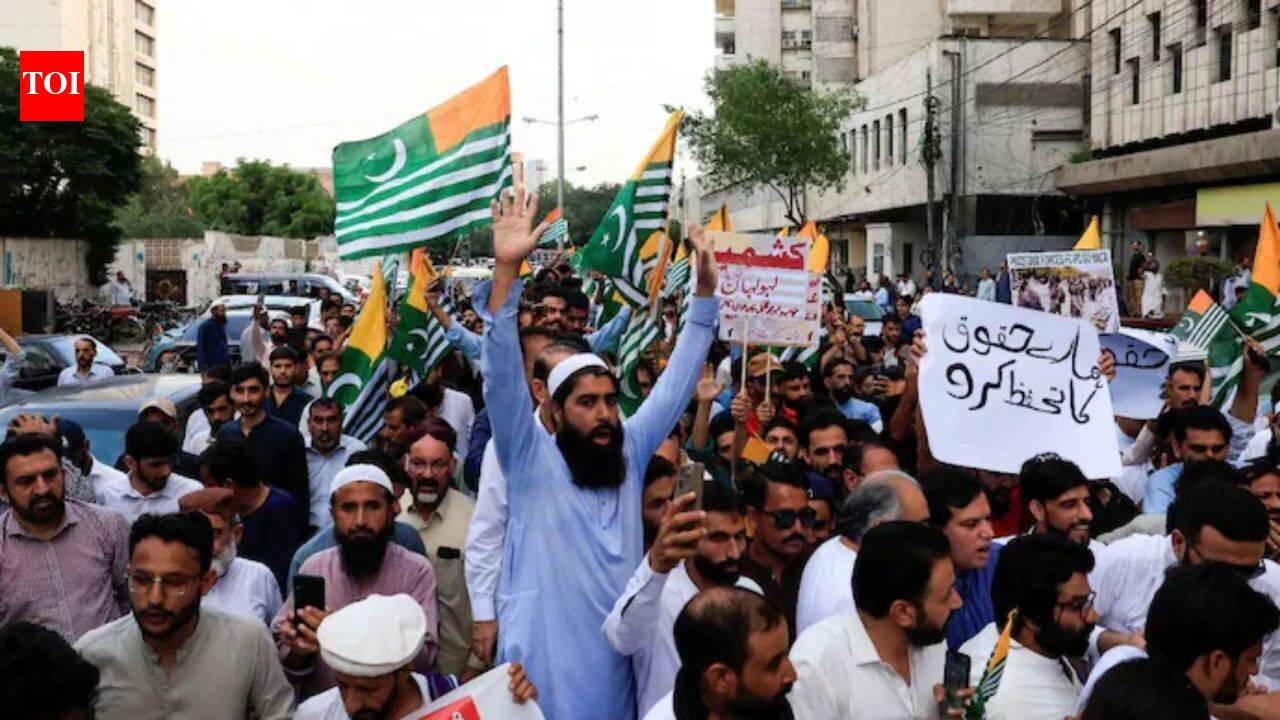
Violent clashes during the first phase of elections in Pakistan-occupied Kashmir resulted in one death and multiple injuries. The Pakistan Peoples Party has accused the PML-N of orchestrating the violence, sparking widespread concerns over electoral integrity.
Election Violence Erupts in Pakistan-occupied Kashmir
The first phase of the legislative assembly elections in Pakistan-occupied Kashmir (PoK) has been marred by significant turmoil, resulting in the tragic death of 35-year-old Pakistan Peoples Party (PPP) worker Mukhtar Younus. Reports confirm that the violence, which occurred on July 27, 2026, involved gunfire in the Nikyal area of Kotli district, leaving several others injured. This escalation of political instability follows weeks of civil unrest and protests that necessitated the restructuring of the voting process into a three-phase schedule, spanning from July 27 to August 10.
Political Allegations and Institutional Scrutiny
The PPP has directly accused supporters of the Pakistan Muslim League-Nawaz (PML-N) of initiating the deadly firing, leading to immediate public outrage. Party Chairman Bilawal Bhutto-Zardari has publicly challenged the efficacy of the Election Commission, questioning the failure of relevant authorities to maintain order and ensure a secure environment for voters. Beyond the immediate loss of life, the incident has fueled widespread allegations of electoral rigging, casting a shadow over the credibility of the legislative process in the region.
Historical and Geopolitical Context
It is essential to view these events through the lens of long-standing geopolitical tensions. India maintains a firm stance that Pakistan remains in illegal possession of the Indian Union Territories of Jammu and Kashmir and Ladakh. Consequently, the legitimacy of any electoral process conducted by Pakistan in this region is fundamentally contested by New Delhi, which views these actions as a violation of its sovereign territory. This international dispute adds a layer of complexity to the domestic political friction currently unfolding within the territory.
The Impact of Fragmented Voting
The decision to split the polling into three phases was a direct response to the persistent volatility and protests that plagued the region in the lead-up to the election. However, the violence witnessed during the first phase suggests that this administrative adjustment has failed to mitigate the deep-seated political rivalries. The burning of ballot boxes and active physical confrontations indicate a breakdown in the electoral infrastructure, raising concerns about the safety of voters and the fairness of the outcome in the subsequent phases.
Future Trends and Stability Concerns
Looking ahead, the stability of the remaining two phases of the election remains highly uncertain. If the current trajectory of violence and accusations of rigging continues, the legitimacy of the incoming legislative assembly will likely be severely compromised, both domestically and internationally. The inability of the local administration to prevent such high-profile violence points to a systemic failure that could lead to further civil unrest. Observers will be closely monitoring whether the Election Commission can implement more robust security measures or if the remaining phases will succumb to the same cycle of partisan conflict.
Multiple Citing Sources