Wabi, the AI agent that builds mini apps, now valued at $1.25B after latest round
Source Entity
Sarah Perez
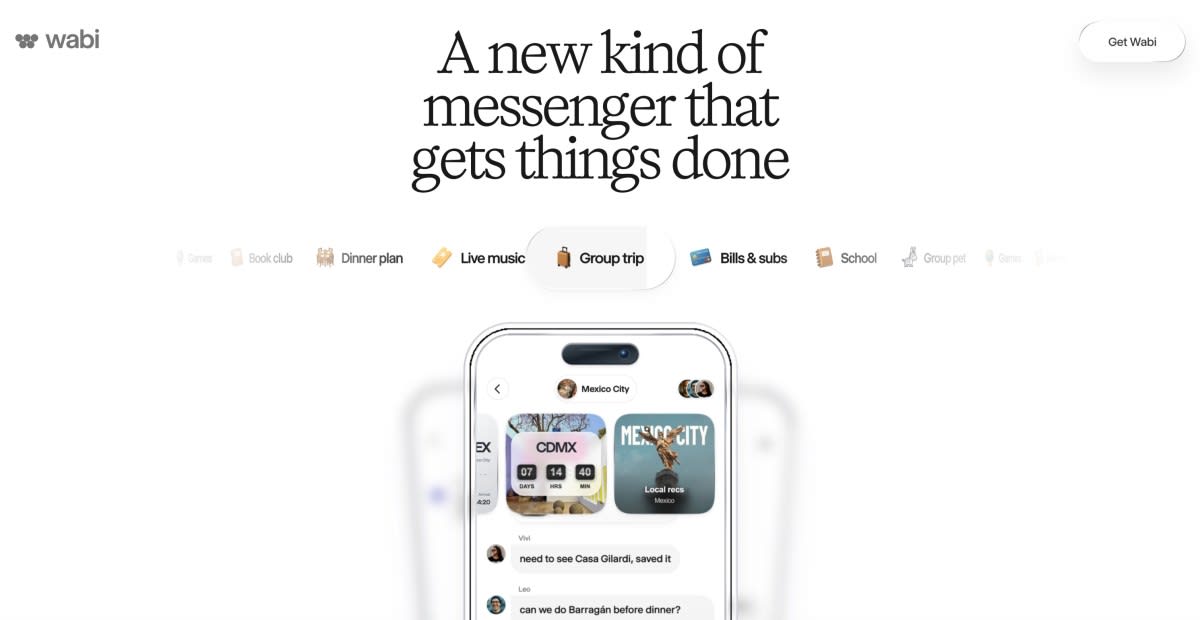
AI startup Wabi has achieved unicorn status with a $1.25 billion valuation after raising $55 million. The company is pivoting from a no-code app builder to a personal AI agent capable of generating custom interfaces for daily tasks.
The Rise of Wabi: A New Era for Personal AI Agents
Achieving Unicorn Status
On Thursday, the AI sector witnessed another significant milestone as Wabi, an emerging player in the artificial intelligence landscape, officially reached a $1.25 billion valuation. By securing $55 million in its latest funding round, the company has solidified its position as a 'unicorn,' reflecting the intense investor appetite for transformative AI technologies. This influx of capital highlights the broader industry trend where venture capitalists are aggressively diversifying their portfolios to capture the 'winning' AI assistant, betting on the next generation of user-centric digital tools.
The Strategic Evolution of Wabi
Founded by Eugenia Kuyda, a veteran in the space who previously established the AI companion startup Replika, Wabi has undergone a notable transformation. Originally envisioned as a toolset that allowed users to build functional applications simply through natural language prompts, the platform is now shifting its focus. The company has announced a transition toward becoming a 'personal agent,' a move internally referred to as 'Wabi 2.0.' This pivot represents a strategic shift from being a general-purpose creation tool to a specialized utility designed to act on behalf of the user within a messaging environment.
Redefining the User Interface
The core value proposition of Wabi 2.0 lies in its ability to dynamically generate interfaces. Rather than forcing users to navigate through static menus or conventional apps, Wabi aims to build the necessary interface for a specific task in real-time. By functioning as an AI messenger, the platform can interpret complex user intents and provide a tailored digital environment to execute those requests. This approach suggests a future where the 'app store' model might be replaced by on-demand, transient interfaces built specifically for the user's immediate needs.
Practical Applications and Utility
As the company articulates its vision, the potential applications for Wabi are centered on simplifying daily life. The platform is designed to facilitate highly personalized tasks, such as creating detailed meal plans, curating lists of local restaurants, or organizing logistics for date nights. By bridging the gap between conversational AI and functional application building, Wabi aims to reduce the friction inherent in digital task management, turning abstract requests into actionable mini-apps without requiring any technical expertise from the user.
Future Trends and Market Implications
The success of Wabi underscores a critical shift in the AI market: the move from passive chatbots to active agents. As the industry moves beyond simple text generation, the focus is increasingly on 'agentic' capabilities—the ability of software to perform multi-step operations autonomously. If Wabi successfully executes this vision, it could fundamentally change how individuals interact with software. As AI continues to integrate into our daily routines, the ability to generate custom, context-aware interfaces on the fly may become the gold standard for personal digital assistants, setting a high bar for competitors in the AI space.