Martyrs' Day rally: Bury differences and unite against BJP, Mamata tells INDIA bloc parties
Source Entity
India Latest News: Top National Headlines Today & Breaking News | The Hindu
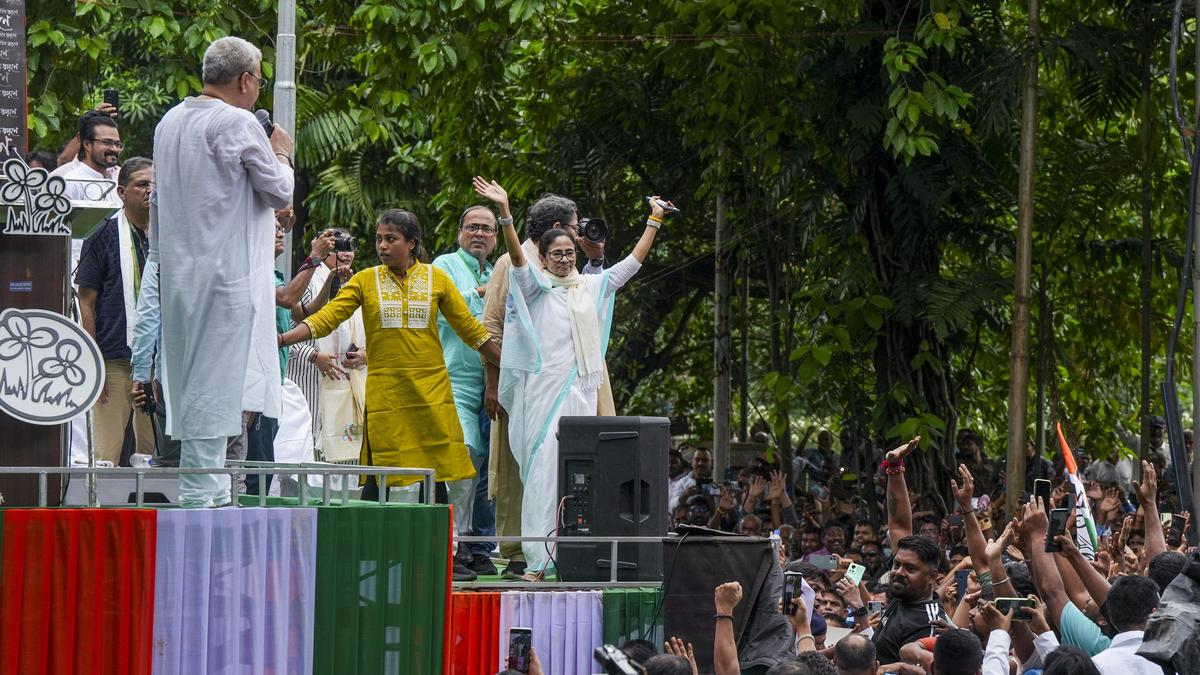
The public release of the 1993 police firing report by CM Suvendu Adhikari has reignited political tensions in West Bengal. The findings, which condemn the incident as worse than Jallianwala Bagh, are being used to challenge Mamata Banerjee's historical narrative and governance.
The 1993 Martyrs’ Day Firing: A Historical Reckoning
The recent tabling of the Justice Susanta Chatterjee commission report regarding the July 21, 1993, police firing has brought a decades-old tragedy back to the forefront of West Bengal politics. The report, which characterizes the police action that claimed the lives of 13 Youth Congress supporters as an event "worse than Jallianwala Bagh," serves as a critical indictment of the administrative failures of the era. By recommending a compensation of Rs 25 lakh for each bereaved family, the commission has sought to address a long-standing grievance, though the timing of the report's release has intensified the current political climate.
Political Implications and Accountability
West Bengal Chief Minister Suvendu Adhikari’s decision to make the report public has shifted the focus toward the accountability of the previous administration. Adhikari has specifically criticized Mamata Banerjee for failing to implement the commission’s recommendations or release the document during her tenure, despite receiving it in 2014. This move effectively challenges the narrative surrounding the 1993 incident, in which Banerjee, then a Youth Congress leader, was herself injured. The accusation that she was never questioned by the commission as a primary witness adds a layer of complexity to the ongoing discourse regarding transparency.
Institutional Indictments
The commission’s findings do not stop at policy critique; they specifically indict several Indian Police Service (IPS) officers for their involvement in the firing. This suggests a systemic failure within the law enforcement apparatus of 1993. The severity of the language used by the commission—comparing the event to one of the darkest chapters in colonial Indian history—underscores the gravity of the excessive force used against demonstrators. The push for compensation is a direct attempt to provide long-overdue justice to the families of the victims.
Shifting Ground: Martyrs’ Day Dynamics
The release of this report occurred on the eve of the annual Martyrs’ Day rally, creating a volatile backdrop for the state's political factions. The current landscape is marked by a fragmented Trinamool Congress, with rival factions holding separate events across Kolkata. While Mamata Banerjee continues to draw significant crowds, the presence of "rebel" factions and a resurgent Congress party suggests that the political monopoly once held by the TMC is undergoing a significant transformation under the current BJP-led government.
Future Trends and Political Stability
As the state grapples with these revelations, the future of West Bengal politics appears increasingly tied to how these historical grievances are settled. The "Martyrs’ Day" narrative, once a unifying symbol for the opposition against the Left Front, has now become a point of contention between the current government and the opposition. The ability of the current administration to navigate the fallout of this report—while managing the internal turmoil within political parties—will likely define the political trajectory of the state leading up to the next election cycle.
Multiple Citing Sources
Verification Required?