MCP Explained
Source Entity
Hacker News
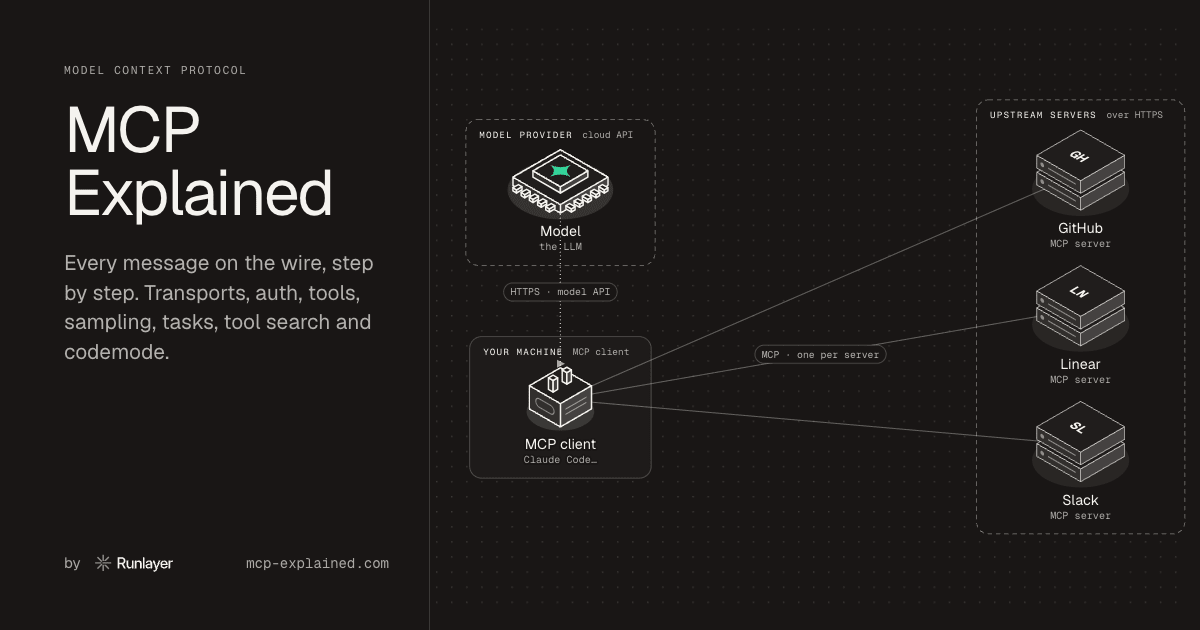
The Model Context Protocol (MCP) is an emerging open standard designed to facilitate seamless integration between AI applications and external data sources or tools. By standardizing how AI models interact with servers, it simplifies the architecture for building agentic AI systems.
Understanding the Model Context Protocol (MCP)
The Model Context Protocol (MCP) represents a significant shift in how artificial intelligence applications interface with external environments. At its core, MCP is an open standard designed to bridge the gap between AI models and the vast array of data, tools, and prompts required to perform complex tasks. By creating a unified language for these interactions, MCP aims to solve the fragmentation that currently exists in the AI ecosystem, where every integration often requires custom, bespoke development.
The Architecture of Interoperability
The architecture relies on a clear separation of concerns between the AI application (the host), the model itself, and the server providing the resources. In this model, the AI application—such as Claude, Cursor, or ChatGPT—acts as the interface. The server functions as a small, specialized program that exposes specific tools, data, or prompts. Crucially, the model never interacts directly with a server; instead, the application orchestrates the communication. When a model determines that it needs external data, the application calls the server and relays the result back to the model, ensuring a secure and manageable flow of information.
Breaking Away from REST
Unlike traditional web architectures that rely heavily on REST or standard JSON-RPC over HTTP, MCP provides a more flexible approach. It utilizes protocols over stdin/stdout or a single HTTP endpoint, allowing for more dynamic interactions. This design choice is particularly important because it enables servers to communicate back to the application, moving beyond a simple request-response cycle. This bidirectional capability is essential for modern AI agents that need to be reactive and context-aware.
Implications for AI Development
The introduction of an open standard like MCP could drastically reduce the technical debt associated with building AI-powered tools. Developers currently spend significant time building individual integrations for different AI models and platforms. By adopting a universal protocol, developers can build a single server that works across any MCP-compliant application, effectively democratizing access to data for AI agents.
Future Trends and Adoption
As the industry moves toward more autonomous, agentic AI, the demand for standardized protocols will only increase. We can expect to see a growing library of MCP servers that allow models to interact with everything from local file systems to complex enterprise databases. This standardization will likely accelerate the transition from simple chatbots to sophisticated agents capable of executing multi-step workflows across diverse software environments.
Conclusion
The Model Context Protocol is a foundational step toward a more modular and interoperable AI landscape. By establishing a clear, standardized framework for how models access external context, MCP empowers developers to build more capable agents without the burden of proprietary integration silos. As this standard matures, it will likely become a cornerstone of the next generation of AI application development.