World Cup audience stayed bipartisan despite Trump's prominent role, CNBC survey finds
Source Entity
US Top News and Analysis
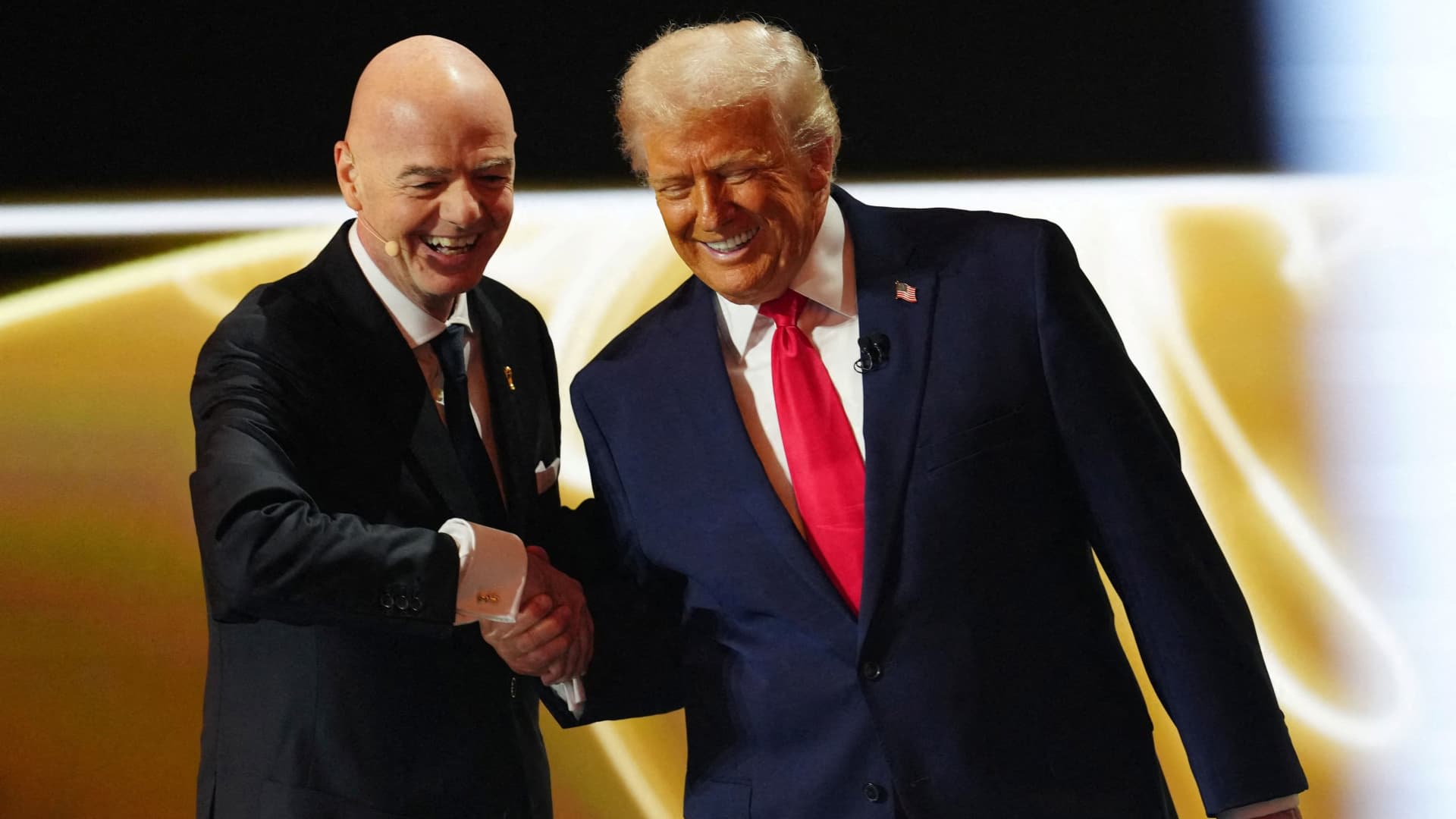
A CNBC survey reveals the 2026 World Cup achieved high, bipartisan viewership across the U.S. despite President Trump's prominent role in the event. Income and education levels proved to be stronger indicators of viewership than political party affiliation.
The 2026 World Cup: A Rare Point of Bipartisan Convergence
The 2026 FIFA World Cup has emerged as a unique cultural phenomenon, successfully transcending the deep political polarization currently defining the American electorate. According to the latest CNBC All-America Economic Survey, nearly half of all registered voters tuned into the tournament, a figure that remained remarkably consistent across the political spectrum. Despite President Donald Trump utilizing the tournament as a prominent political stage—notably appearing alongside FIFA President Gianni Infantino at the John F. Kennedy Center—the data suggests that the spectacle of global sport remains largely insulated from partisan influence.
Analyzing the Demographic Divide
While political affiliation failed to create a significant divergence in viewership, the survey highlights that traditional socioeconomic markers remain the primary drivers of sports engagement. The data indicates that income and education levels are far more predictive of whether an individual watched the games than their party registration. This suggests that the barrier to entry for the World Cup is governed more by professional and economic accessibility than by the political messaging surrounding the host nation’s leadership.
The Presidential Role in Global Sport
President Trump’s involvement in the 2026 draw underscored his administration's desire to leverage the World Cup as a vehicle for national branding. By placing himself at the center of the event at the Kennedy Center, the President signaled the tournament's importance to his second-term agenda. However, the fact that 51% of Democrats, 47% of Republicans, and 47% of independents watched the tournament suggests that the public’s appetite for international competition often overrides personal political grievances against the head of state.
Implications for Political Unity
As noted by pollster Jay Campbell of Hart Research, the World Cup serves as one of the few remaining 'neutral' grounds in a fragmented media landscape. In an era where cultural events are frequently weaponized in the 'culture wars,' the ability of the World Cup to maintain a bipartisan audience is a significant anomaly. This trend indicates that while politics permeates most aspects of American life, the unifying power of major global athletic events retains a unique, cross-party appeal that defies typical polling trends.
Looking Toward Future Trends
Moving forward, the success of the 2026 tournament as a non-partisan anchor for the public may influence how future administrations approach large-scale international events. If political leaders can successfully associate themselves with events that the public views as 'apolitical' or 'unifying,' they may find a more receptive audience than through traditional campaign messaging. The 2026 data serves as a compelling case study for the resilience of sports as a cultural bridge, proving that even in a highly charged political climate, the appeal of the game remains paramount for the American public.