Young Drivers Are Going ‘Psycho’ On the Road—and Filming It
Source Entity
Latest News: Today's Latest News Headlines from India & World | Hindustan Times | Hindustan Times
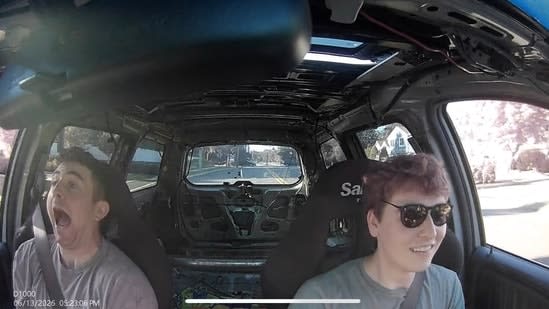
A growing trend sees young drivers transforming dash cameras from safety tools into content-creation devices, filming reckless and aggressive driving behavior to gain social media traction.
The Digitalization of Road Rage: Dashcams as Content Engines
For years, the dash camera was viewed as a pragmatic insurance policy—a silent, boring utility designed to provide objective evidence in the event of a collision. However, a disturbing shift is occurring among younger generations of drivers who are repurposing this technology. Rather than using cameras for protection, they are utilizing them as production tools to capture 'high-adrenaline' moments of reckless driving. This transition from utility to entertainment reflects a broader societal trend where the pursuit of digital clout outweighs physical safety and legal boundaries.
The Algorithmic Incentive for Danger
The core of this phenomenon lies in the economy of attention. Social media platforms like TikTok, Instagram Reels, and YouTube Shorts prioritize high-energy, shocking, or controversial content to maximize user engagement. When young drivers 'go psycho' on the road—engaging in aggressive weaving, extreme speeding, or provocative road rage—they are essentially creating a product for the algorithm. The immediate gratification of likes, shares, and viral fame acts as a powerful psychological reward, reinforcing dangerous behaviors that would otherwise be deterred by the fear of accidents or police intervention.
The Gamification of Public Infrastructure
This trend represents a dangerous gamification of the public square. By filming their exploits, drivers detach themselves from the reality of the road; they no longer see other motorists as human beings but as 'NPCs' (non-player characters) or props in their digital narrative. This psychological dissociation reduces the perceived risk and empathy associated with reckless driving. The road is no longer a shared utility for transportation but has been reimagined as a cinematic set where the goal is to produce the most 'insane' clip possible, regardless of the potential for catastrophic real-world consequences.
Legal and Societal Ramifications
The implications for public safety are severe. As aggressive driving becomes a curated performance, the frequency of near-misses and actual collisions is likely to rise. Furthermore, this trend creates a paradoxical situation for law enforcement. While the dashcam footage provides an airtight record of the crime, the act of uploading the video serves as a public confession. However, the sheer volume of such content can overwhelm local authorities, and the 'glamorization' of these acts may inspire copycat behavior among peer groups, leading to a systemic decline in road etiquette and safety standards.
The Role of Technology and Accessibility
The accessibility of high-definition, wide-angle cameras and the seamless integration of mobile uploading have accelerated this trend. Modern dashcams are no longer clunky peripherals; they are streamlined devices that can sync directly to smartphones. This technical ease removes the friction between the act of reckless driving and the act of publishing, creating a real-time feedback loop of validation. The 'content-creation machine' is now integrated into the vehicle's dashboard, turning every commute into a potential filming session.
Future Outlook and Regulatory Potential
Looking forward, it is probable that insurance companies will be the first to react to this trend. We may see the emergence of 'social media risk' assessments, where insurers scan for public evidence of reckless driving to adjust premiums or deny coverage. Additionally, there may be a push for social media platforms to implement stricter community guidelines regarding 'dangerous activities' to demonetize and shadow-ban road-rage content. Ultimately, unless there is a systemic shift in how digital validation is sought, the road will continue to be a site of conflict between traditional safety norms and the relentless demand for viral content.
Summary: The evolution of the dashcam from a safety tool to a content-creation device highlights a worrying intersection of technology and behavioral psychology, where the drive for viral fame incentivizes life-threatening behavior on public roads.
Verification Required?