Zelensky tries to fix crisis over removal of defence minister and counts the cost
Source Entity
BBC News
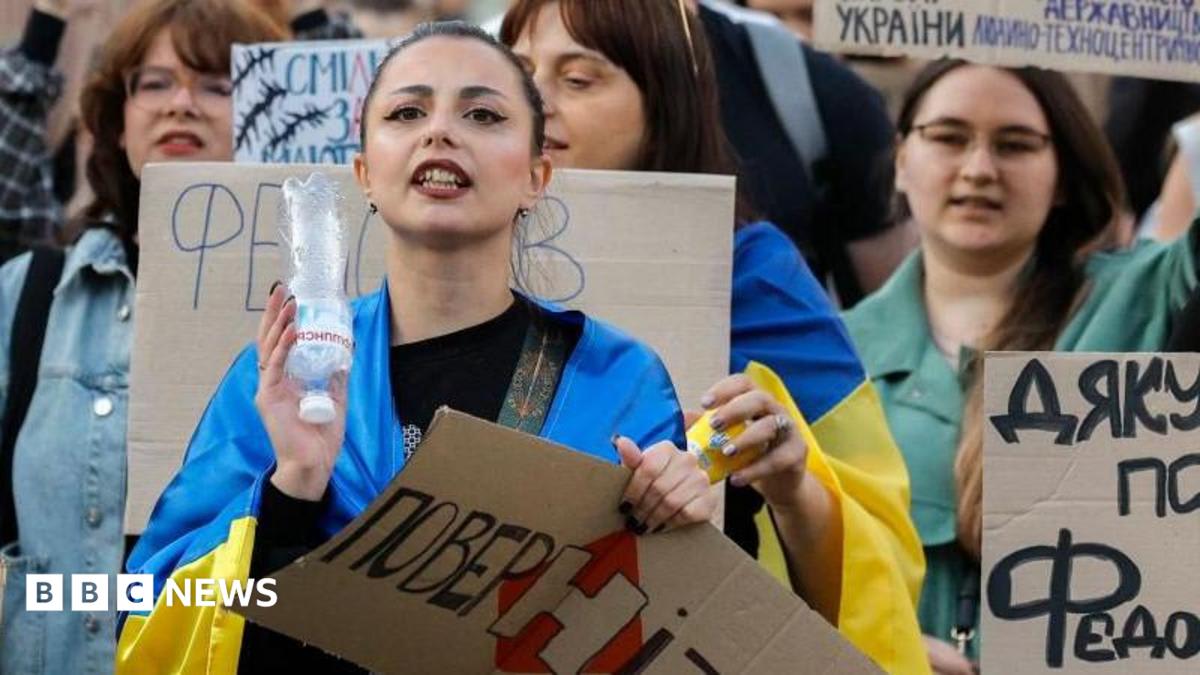
President Zelensky faces ongoing political unrest following his decision to exclude innovator Mykhailo Fedorov from his cabinet. Despite the appointment of new military leadership, the move has sparked public protests and raised concerns over the administration's stability.
The Political Fallout of Ukraine's Cabinet Reshuffle
President Volodymyr Zelensky is currently navigating a period of significant domestic instability following his decision on 15 July to exclude Mykhailo Fedorov from his cabinet. While the broader reshuffle was intended to consolidate control by installing a new commander-in-chief and an acting defence minister, the move has instead triggered a persistent political crisis. The decision not to re-appoint Fedorov, a figure widely regarded as the architect of Ukraine’s rapid technological modernization, has exposed a growing rift between the presidential administration and a vocal segment of the population that prioritizes innovation as a pillar of national defense.
The Role of Mykhailo Fedorov in Modern Ukraine
Mykhailo Fedorov’s popularity stems from his role in spearheading the country’s digital transformation, which has become inextricably linked to the military effort. His supporters, largely composed of younger, tech-savvy citizens, view his removal as a setback to the momentum of Ukraine's technological advancement. The daily street protests in Kyiv highlight a public sentiment that fears the loss of a key visionary during a time of existential conflict. By rejecting alternative government posts, Fedorov has signaled a refusal to be sidelined, further complicating the administration's efforts to present a unified front.
Challenges Amidst Kinetic Warfare
This domestic political tension is occurring against the backdrop of an active, brutal conflict. Even as air raid sirens sound and the military remains engaged in intercepting Russian drones and missiles, the attention of the populace remains divided between frontline survival and political accountability in Kyiv. The juxtaposition of daily protests with the harsh realities of aerial bombardment underscores the precarious nature of Zelensky's current standing. The administration is now tasked with managing a morale crisis at home while simultaneously maintaining the focus of the armed forces on the battlefield.
Broader Implications for Governance
Critics and political commentators suggest that Zelensky’s political capital has been damaged by this decision. In a time of war, the stability of the cabinet is often viewed as a barometer for the nation’s overall resilience. By creating a vacuum in leadership that has alienated a significant portion of the reform-minded electorate, Zelensky faces the risk of fracturing his support base. The protest movement serves as a reminder that even during a state of emergency, the government remains subject to the expectations of a highly engaged and vocal civil society.
Future Trends and Outlook
Looking ahead, the administration’s ability to resolve this crisis will likely depend on its willingness to bridge the gap between traditional military governance and the innovative, tech-driven approach represented by Fedorov. If the street protests continue to gain momentum, Zelensky may be forced to reconsider his cabinet strategy or find a way to re-integrate key innovators into the policy-making apparatus. The outcome of this standoff will not only define the immediate future of the Ukrainian government but also influence how the state manages the intersection of technological development and national security in the long term.