'He's a war criminal': Mayor Zohran Mamdani mulls Israeli PM Netanyahu's arrest during UNGA in New York
Source Entity
Latest News: Today's Latest News Headlines from India & World | Hindustan Times | Hindustan Times
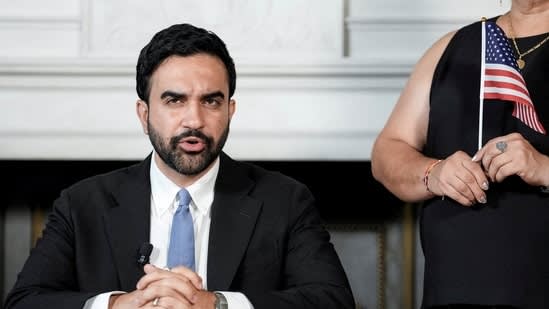
New York City Mayor Zohran Mamdani has sparked controversy by suggesting he would consider arresting Israeli Prime Minister Benjamin Netanyahu during the UN General Assembly. The mayor cited ICC allegations of war crimes, though he acknowledged potential legal limitations regarding his authority over the NYPD.
The Diplomatic Firestorm: Mamdani vs. Netanyahu
New York City Mayor Zohran Mamdani has ignited a significant diplomatic controversy by publicly stating that his administration is evaluating the possibility of arresting Israeli Prime Minister Benjamin Netanyahu during his upcoming visit for the United Nations General Assembly (UNGA). Citing the International Criminal Court’s (ICC) focus on the Prime Minister regarding alleged war crimes in Gaza, Mamdani has positioned himself as an advocate for international accountability, asserting that "Netanyahu belongs in The Hague."
Legal Ambiguity and Executive Authority
Central to this discourse is the fundamental question of jurisdictional authority. While Mamdani has expressed a desire to enforce international legal standards within his city, he has openly admitted uncertainty regarding his ability to command the New York Police Department (NYPD) to detain a sitting foreign head of state. Typically, matters of diplomatic immunity and the arrest of foreign dignitaries fall under the purview of federal jurisdiction and the U.S. Department of State, rather than municipal authorities.
The Impact of International Tensions
This rhetoric arrives amidst heightened global scrutiny of the ongoing conflict in Gaza. By invoking the ICC’s standing, Mamdani is attempting to bridge the gap between local governance and international humanitarian law. However, his comments have triggered a sharp rebuttal from Netanyahu’s camp, reflecting the deeply polarized nature of the discourse surrounding the Israeli-Palestinian conflict and the role of American cities in global foreign policy debates.
Historical Context of Diplomatic Immunity
Historically, the UN Headquarters Agreement provides specific protections for visiting foreign leaders, which inherently complicates any attempt by local law enforcement to execute warrants against them. The struggle between municipal political stances and federal international treaty obligations highlights a growing trend where city leaders are increasingly vocal on global issues, often testing the boundaries of their traditional administrative roles.
Future Trends and Political Fallout
As the UNGA approaches, this situation serves as a bellwether for how local officials may attempt to exert influence over international affairs in the future. Whether this remains purely symbolic or evolves into a sustained legal challenge will depend on the interplay between Mamdani’s office and federal legal experts. The incident underscores the tension between individual political conviction and the established protocols of international diplomacy.
Conclusion
In summary, Mayor Mamdani’s pledge to arrest Netanyahu represents a provocative intersection of municipal politics and global justice. While the mayor emphasizes operating within legal bounds, the practical impossibility of bypassing federal diplomatic protocols suggests that this narrative is as much about political signaling as it is about enforcement. The situation remains a potent example of how the Gaza conflict continues to influence domestic policy and rhetoric across the United States.
Verification Required?