‘Swimming pool at Talkatora Stadium’: AAP mocks BJP over waterlogging at Nabin event
Source Entity
YASHASVI VASISTHA
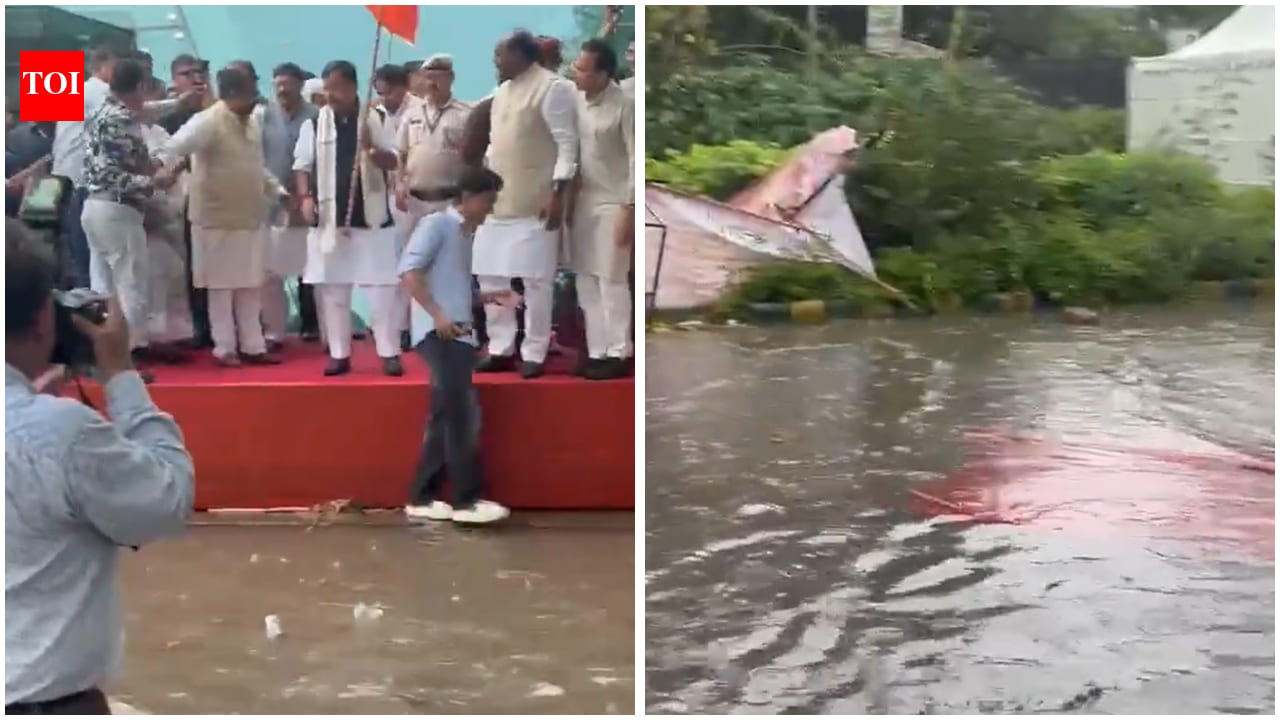
The Aam Aadmi Party has mocked the BJP after waterlogging at Delhi's Talkatora Stadium disrupted a political event. The incident occurred during a procession honoring Sant Ravidas, leading to sharp political exchanges between the two parties.
Political Fallout Over Talkatora Stadium Waterlogging
Recent events at the Talkatora Stadium in Delhi have ignited a sharp political confrontation between the Aam Aadmi Party (AAP) and the Bharatiya Janata Party (BJP). The controversy erupted after heavy waterlogging turned the venue into a site of public embarrassment during a high-profile BJP event. AAP leaders, notably MLA Kuldeep Kumar, seized the opportunity to highlight the state of the infrastructure, sarcastically labeling the venue a 'swimming pool' in social media posts that have since circulated widely.
The Context of the Event
The BJP had organized the gathering at Talkatora Stadium to formally flag off the 'Pavan Mati Kalash' processions. These processions were intended to commemorate the birth anniversary of the revered poet-saint Sant Ravidas, an event of significant cultural and political importance. The campaign's stated objective was to disseminate the teachings and social messages of Sant Ravidas across society, aiming to foster inclusivity and spiritual reflection. However, the logistical failure caused by the waterlogging shifted the narrative focus from the religious commemoration to the administrative failures of the organizers.
AAP’s Critique and Political Sarcasm
The critique launched by AAP was pointed and tactical. By sharing video footage of the flooded grounds, AAP MLA Kuldeep Kumar sought to undermine the organizational capabilities of the BJP. The inclusion of a sarcastic congratulatory message directed at BJP leader Rekha Gupta was a calculated political move intended to highlight a perceived disconnect between the party's grand public messaging and its ground-level execution. This incident serves as a classic example of 'political optics,' where environmental factors—such as waterlogging—are weaponized by opposition parties to question the governance standards of their rivals.
Broader Implications of Infrastructure Governance
This incident underscores the ongoing tensions regarding urban infrastructure management in Delhi. In a city where monsoon preparedness and drainage maintenance are perennial points of contention, any failure to manage water drainage at a prominent public venue becomes a symbol of broader civic negligence. For the BJP, the incident was an unfortunate distraction from their outreach campaign. For the AAP, it provided a platform to challenge the BJP’s credibility, suggesting that the party struggled to manage even a controlled stadium environment.
Historical and Future Trends
Historically, political events in Delhi have frequently served as battlegrounds for such rhetorical combat. As political parties continue to leverage social media to document and amplify the failures of their opponents, the threshold for public embarrassment remains low. Moving forward, such incidents are likely to increase in frequency as both parties prepare for future electoral cycles. The 'Pavan Mati Kalash' event, while intended to be a moment of cultural unity, will now be remembered in the political discourse primarily for the logistical challenges that overshadowed its spiritual intent.
Conclusion
Ultimately, the Talkatora Stadium incident highlights the volatile nature of political communication in the digital age. While the BJP aimed to project a message of social harmony through the legacy of Sant Ravidas, the reality of the stadium conditions provided the AAP with a potent counter-narrative. The event serves as a reminder that in the high-stakes arena of Delhi politics, administrative details are just as critical as ideological messaging, and any lapse in the former can effectively sabotage the latter.