Action sought against Periyar University professor for participating in DMK function
Source Entity
India Latest News: Top National Headlines Today & Breaking News | The Hindu
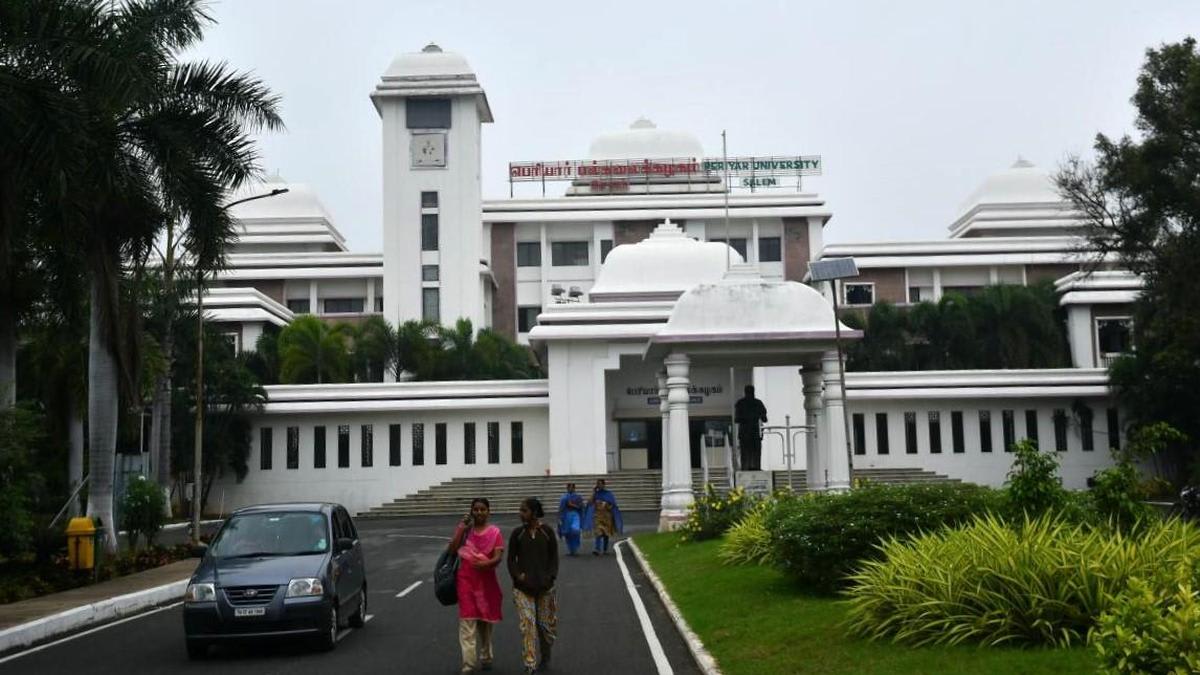
A former university association president has petitioned for action against a professor who attended a DMK political function. The complaint alleges a violation of professional conduct standards for faculty members.
Allegations of Political Involvement at Periyar University
The academic landscape in Tamil Nadu has recently been stirred by a formal complaint filed against R. Subramani, the Head of the Department of Journalism and Mass Communication at Periyar University. On October 27, 2026, V. Vaithianathan, the former president of the Periyar University Teachers Association (PUTA), submitted a petition to the university’s Registrar (in-charge), V. Raj, calling for disciplinary action against Professor Subramani. The core of the complaint centers on the professor's alleged participation in a political event organized by the Dravida Munnetra Kazhagam (DMK) party.
The Nature of the Complaint
According to the petition, the incident in question occurred on October 15, 2026, in the Perambalur district. Evidence provided to the administration includes photographic documentation showing Professor Subramani attending an event held to unveil a portrait of a local DMK functionary. The petition highlights that the professor shared the dais with high-profile political figures, specifically former Union Minister A. Raja. Furthermore, the complainant asserts that the interaction between the academic and the politician extended beyond a mere public appearance, noting that the two engaged in private conversation in a separate room, which the complainant argues demonstrates an inappropriate level of political alignment.
Ethical and Professional Implications
This incident raises significant questions regarding the intersection of academia and partisan politics. In many public university systems, faculty members are subject to conduct codes that mandate political neutrality to ensure that educational institutions remain spaces for objective learning. By participating in a party-specific function, critics argue that a professor risks compromising the perceived impartiality of their department. The involvement of a department head, who holds a position of leadership and influence, exacerbates these concerns, as it may be interpreted as an official endorsement by the university staff of a specific political agenda.
Institutional Governance and Accountability
The submission of the petition to Registrar V. Raj places the onus of institutional integrity on the university administration. The university now faces the delicate task of evaluating whether the professor’s actions constitute a breach of service rules. This process involves examining existing bylaws that govern the conduct of university employees regarding political activities. The outcome of this inquiry will serve as a precedent for how Periyar University balances the fundamental right of individuals to hold political opinions against the collective duty of staff to maintain institutional neutrality.
Broader Context and Future Trends
Historically, the involvement of academics in political movements has been a hallmark of the intellectual culture in Tamil Nadu. However, as administrative oversight becomes more stringent, universities are increasingly pushed to define the boundaries between civic engagement and partisan participation. The ongoing developments at Periyar University reflect a broader trend where teachers' associations are playing an active role in monitoring administrative and faculty conduct. As this case moves forward, the administration’s response will likely be scrutinized by both political observers and the academic community to determine whether the university will adopt a stricter stance on the political activities of its faculty members.
Verification Required?