Sowing the seeds of a solar power intervention
Source Entity
India Latest News: Top National Headlines Today & Breaking News | The Hindu
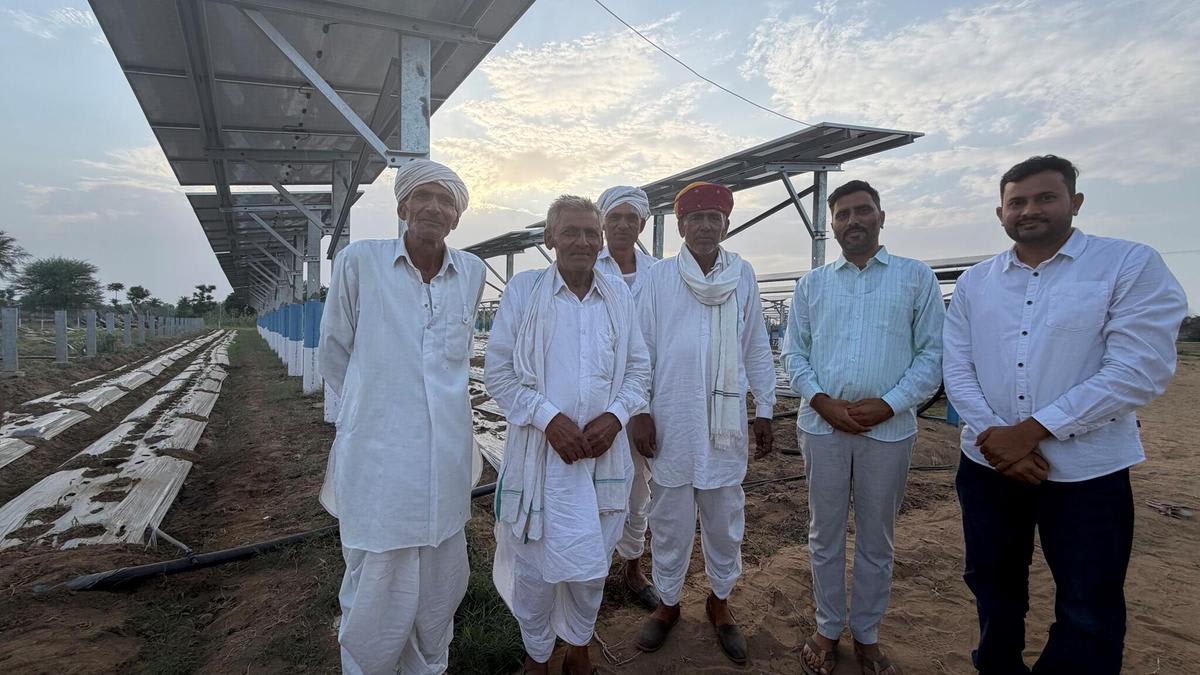
India is piloting an agrivoltaics model in Rajasthan that integrates solar energy generation with crop cultivation on the same land. While promising for farmer income diversification, the technology currently faces significant hurdles regarding high initial costs and inconsistent policy support.
The Emergence of Agrivoltaics in India
The integration of solar energy generation with agricultural production, known as agrivoltaics or agriPV, represents a transformative shift in land-use efficiency. By installing ground-mounted solar panels above active crop fields, farmers like Kojadmal Jat in Rajasthan’s Kundanpura village are pioneering a dual-use model that maximizes the economic output of a single plot of land. This approach moves beyond the traditional binary choice of dedicating land either to food security or energy production, offering a symbiotic potential where panels provide partial shade that can reduce water evaporation, while crops mitigate the heat-induced efficiency losses of the solar modules.
Scaling the Pilot Projects
Kojadmal Jat’s involvement with the Indian Council for Research on International Economic Relations (ICRIER) highlights the role of research-led pilot projects in validating the feasibility of this technology. These pilots are essential for gathering data on crop yields under varying degrees of solar coverage and panel height. By cultivating maize beneath these panels, farmers are demonstrating that land previously considered exclusively for solar farms can remain productive for agriculture, thereby preserving rural livelihoods while contributing to India’s national renewable energy targets.
The Economic Barrier to Adoption
Despite the clear advantages of diversifying farm income, the transition to agrivoltaics is currently stifled by daunting financial realities. The upfront capital expenditure required to set up these systems is significantly higher than that of conventional ground-mounted solar arrays, as the infrastructure must be elevated to allow for farming equipment and crop growth. This creates a high barrier to entry for small and medium-scale farmers who lack access to specialized financing or favorable credit terms, effectively keeping the technology within the realm of isolated, research-backed pilots.
Policy Gaps and Infrastructure Challenges
Beyond the initial costs, the sector suffers from uneven policy support that fails to address the unique intersection of energy and agriculture. Current frameworks often categorize land as either agricultural or industrial, creating bureaucratic hurdles for farmers seeking to integrate solar panels on arable land. Without a cohesive national or state-level policy that incentivizes agrivoltaics through subsidies, tax breaks, or streamlined grid-connection processes, the technology struggles to move from successful demonstration to widespread commercial adoption.
Future Outlook and Sustainability
For agrivoltaics to become a mainstream solution in India, the focus must shift toward mitigating financial risks and standardizing installation practices. If the government can align agricultural development goals with solar expansion targets, the potential for rural economic resilience is immense. The success of future deployments will depend on whether policymakers can design financial instruments that reduce the burden on farmers and provide the necessary technical support to ensure that solar infrastructure does not hinder, but rather enhances, agricultural productivity.
Verification Required?