Will AI help you do your job or replace you?
Source Entity
BBC News
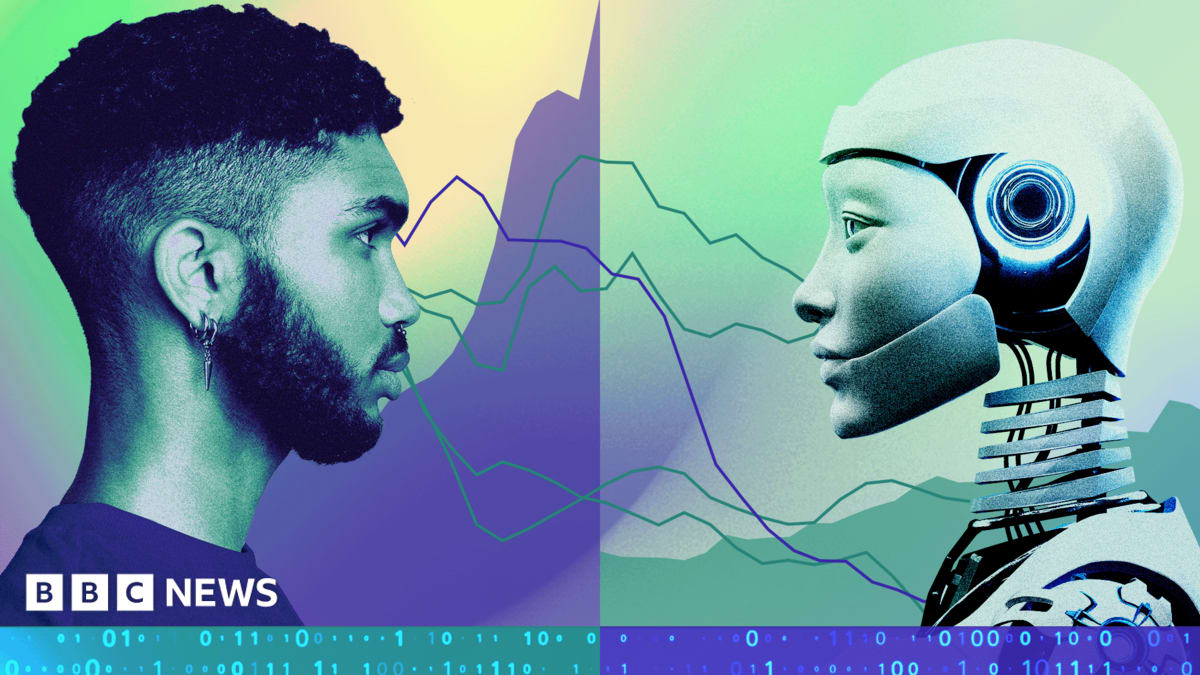
Artificial intelligence is reshaping the modern workforce as companies pivot from human recruitment to AI agents. While some roles will be automated, others will be augmented, forcing a global shift in labor market expectations.
The Great Workforce Transition: AI as Agent or Replacement
Artificial Intelligence (AI) has transitioned from a speculative technological frontier to a central pillar of corporate strategy. As AI companies propagate bold claims regarding the displacement of human labor, the reality of the modern workplace is undergoing a profound metamorphosis. Leaders of the world’s largest enterprises are currently funnelling massive capital into these technologies, driven by a dual incentive: operational efficiency and the potential to significantly reduce headcount costs.
The Shift Toward 'Flat' Organizations
Corporate philosophy is currently experiencing a paradigm shift where "flat is the new up." In previous cycles, growth was synonymous with hiring; today, investors are pressuring firms to favor the deployment of "AI Agents" over human recruitment. These virtual workers are being designed to handle specific, often skilled roles that were previously the exclusive domain of human employees. This represents a fundamental change in how firms scale, suggesting that future growth may become decoupled from traditional workforce expansion.
Automation Versus Augmentation
The narrative surrounding AI often oscillates between two extremes: total replacement or seamless augmentation. While the fear of displacement is palpable, the current reality suggests a hybrid future. Certain tasks are being fully automated, effectively removing the human element from repetitive or data-heavy processes. Conversely, other roles are being 'augmented,' where AI serves as a force multiplier, enhancing the output of existing employees. The critical question remains: will the productivity gains from augmentation be enough to offset the loss of roles to full automation?
Economic Implications and Global Warnings
The scale of this transition is vast, reaching across almost every professional sector. Nobel prize-winning economists have already begun to issue warnings regarding the trajectory of this technological integration. The concern is not merely about individual job loss, but the systemic risk posed to labor markets if the transition happens faster than the workforce can adapt. These experts suggest that the global community must prepare for a future where the traditional career path is no longer guaranteed.
Looking Toward a Digital Future
As we look ahead, the impact of AI on our careers appears inevitable and perhaps imminent. The shift toward virtual agents marks a new epoch in labor economics, where "headcount" is increasingly viewed as a variable cost that can be replaced by software. Whether this leads to a utopian era of increased leisure or a period of significant social and economic disruption will likely depend on how effectively policy makers and corporations manage this transition in the coming years.