Who’s afraid of the big, bad GPU?
Source Entity
Justine Calma
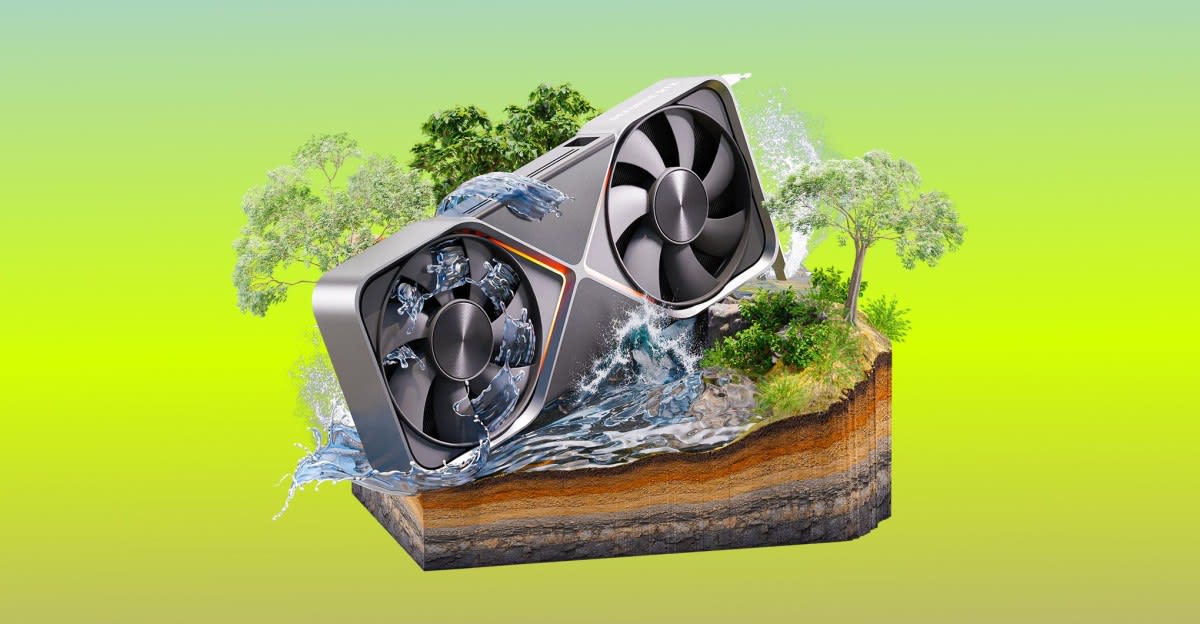
The rapid rise of generative AI has shifted the role of GPUs from graphics rendering to the backbone of machine learning. This transition has sparked significant concerns regarding the environmental cost of data centers and the actual utility of current AI hardware investments.
The GPU Evolution: From Pixels to Processing Power
For decades, the Graphics Processing Unit (GPU) was the unsung hero of the digital age, quietly working in the background to render the visual elements of our computing experience. Originally designed as a specialized companion to the Central Processing Unit (CPU), the GPU was tasked with handling the heavy lifting of graphical rendering. By processing multiple tasks in parallel across complex pipelines, GPUs transformed how we interact with software, from early video games to high-fidelity creative applications. This architectural advantage—the ability to perform massive parallel computations—is precisely what eventually positioned the GPU as the indispensable engine of the current artificial intelligence boom.
The Shift Toward Generative AI
While the GPU was engineered for pixels, its underlying ability to execute thousands of simultaneous calculations proved serendipitous for the development of generative AI. Today, these units are the foundation upon which large language models and generative algorithms are built. However, as the focus has shifted from rendering frames to training complex models, the industry has entered a period of intense scrutiny. The pivot from a consumer-focused component to a data-center essential has forced a reevaluation of the value proposition behind these chips, as companies race to acquire massive amounts of compute power to maintain their competitive edge in the AI landscape.
Environmental Costs and Resource Strain
Beyond the technical utility, the massive scaling of GPU-dependent data centers has introduced profound environmental challenges. The operation of these high-density computing clusters requires significant electricity, leading to increased carbon output, and consumes billions of gallons of water for cooling purposes. As the demand for generative AI grows, the sustainability of this infrastructure is becoming a critical point of contention. The environmental footprint of maintaining these 'big, bad GPUs' is no longer a secondary concern; it is now a central part of the dialogue regarding the responsible development of future technologies.
The Anxiety of AI Integration
Society currently finds itself at a crossroads regarding AI adoption. On one hand, there is the promise of 'vibe-coding' our smart homes and automating complex tasks to improve efficiency. On the other, there is a palpable anxiety regarding the hidden costs of this convenience. When consumers consider the environmental degradation tied to the data centers powering their AI tools, the excitement surrounding new features is increasingly tempered by questions about long-term consequences. This tension highlights a growing awareness of the physical reality behind the virtual magic of generative AI.
Future Trends and Critical Reassessment
As we look forward, the industry will likely face a reckoning regarding the 'actual value' of the massive GPU compute clusters currently being deployed. If the utility of generative AI does not scale proportionally with its environmental and financial cost, we may see a shift toward more specialized, energy-efficient hardware or a consolidation of AI training methods. The future of AI development will depend on balancing the raw power of GPUs with the necessity of sustainable computing practices. Ultimately, the industry must move beyond the current 'arms race' mentality to ensure that the hardware powering our future does not compromise the environment that hosts it.