Akhilesh Yadav questions Amit Shah over crimes against women, Dalits in U.P.
Source Entity
India Latest News: Top National Headlines Today & Breaking News | The Hindu
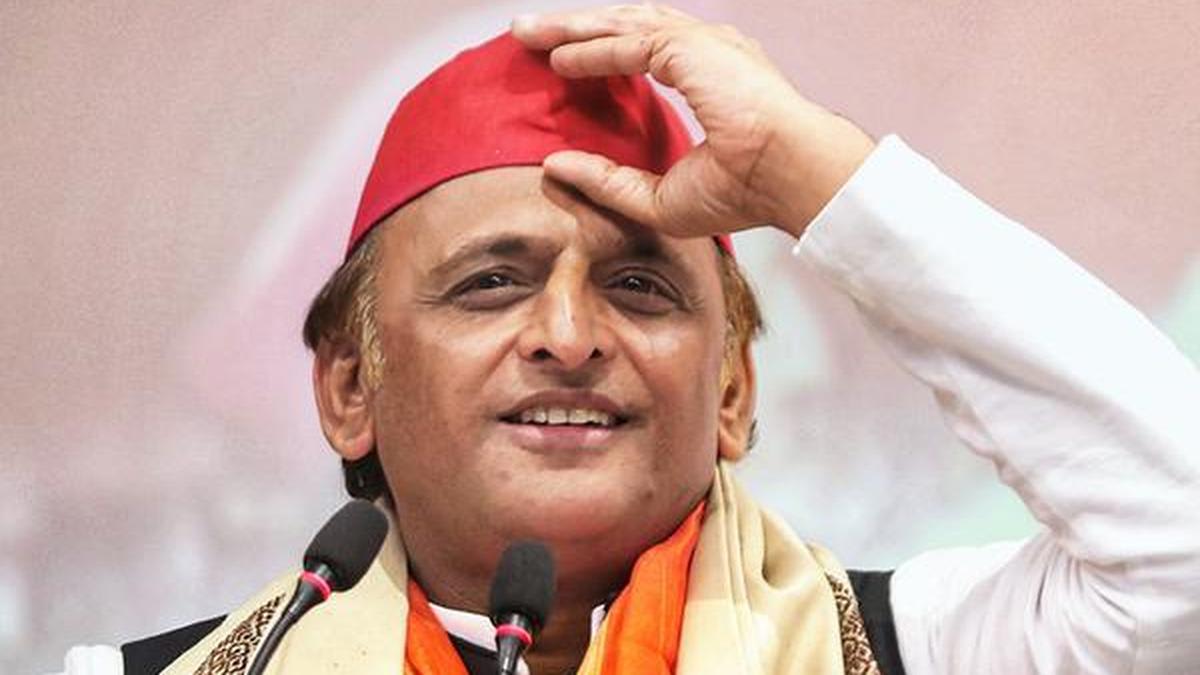
Samajwadi Party leaders Akhilesh Yadav and Awadhesh Prasad have challenged Union Home Minister Amit Shah's claims of BJP's political stability in Uttar Pradesh. The opposition is highlighting rising crime rates against marginalized groups while strategically attempting to expand their base among Brahmin and Bania communities.
Political Turbulence in Uttar Pradesh: The SP vs. BJP Standoff
Recent political discourse in Uttar Pradesh has intensified as Samajwadi Party (SP) president Akhilesh Yadav and party MP Awadhesh Prasad launched a blistering critique against Union Home Minister Amit Shah. The confrontation stems from Shah’s recent characterization of the BJP’s hold on the state as being akin to 'Angad’s foot'—a mythological reference implying a position that cannot be moved or dislodged. This metaphor has become the focal point of a heated debate regarding the actual strength of the ruling party in the wake of recent electoral setbacks.
The Opposition’s Critique on Law and Order
Akhilesh Yadav has pivoted his narrative toward the state’s deteriorating law and order situation, specifically citing the alarming frequency of crimes against women and the Dalit community. By questioning the Union Home Minister directly on why Uttar Pradesh continues to witness high rates of violence and injustice, the SP leadership is attempting to shift the public conversation away from ideological rhetoric and toward the tangible realities of governance. This focus on the vulnerable, particularly the Dalit demographic, serves as a cornerstone of the SP’s strategy to consolidate its core voter base.
Challenging the 'Unshakeable' Narrative
MP Awadhesh Prasad has directly countered Amit Shah’s 'Angad’s foot' analogy, arguing that the BJP’s political footing has already been compromised. By pointing to recent electoral defeats, the Samajwadi Party is seeking to dismantle the perception of the BJP’s invincibility. This narrative of a 'weakened' BJP is designed to boost opposition morale and suggest that the political landscape in Uttar Pradesh is far more fluid than the central leadership acknowledges.
Strategic Expansion: The Brahmin and Bania Outreach
Beyond the critique of law and order, Akhilesh Yadav is actively attempting to expand the SP’s traditional voter base by courting the Brahmin and Bania communities. By framing the current state administration as 'anti-Brahmin' and 'anti-Bania,' the SP is attempting to exploit perceived internal friction within the BJP. This is further evidenced by Yadav’s 'Gorakhpur vs. Kashi' narrative, which seeks to sow discord by alleging that the central BJP leadership prioritizes specific regional interests over others, thereby alienating traditional support groups.
Policy Conflicts and Future Implications
Adding to the complexity of the political environment is the BJP’s declared intent to implement the Uniform Civil Code (UCC) in Uttar Pradesh. This policy objective is being woven into the broader debate, as the opposition views it as an attempt to re-assert control over the state’s political agenda. The interplay between these policy goals, the rising crime allegations, and the shifting caste-based alliances indicates that the upcoming political cycle in Uttar Pradesh will be defined by an intense struggle for legitimacy and demographic support.
Conclusion
The ongoing war of words between the Samajwadi Party and the Union Home Minister reflects a state in political flux. As the SP continues to challenge the 'unshakeable' image of the BJP through a combination of social justice advocacy and strategic outreach to influential merchant and priestly classes, the political stability of Uttar Pradesh remains a critical subject of national debate. Whether these critiques will translate into significant electoral shifts remains the central question for the future of the state's governance.
Verification Required?