Drug menace next target, says Amit Shah; eyes 2029 deadline
Source Entity
TNN
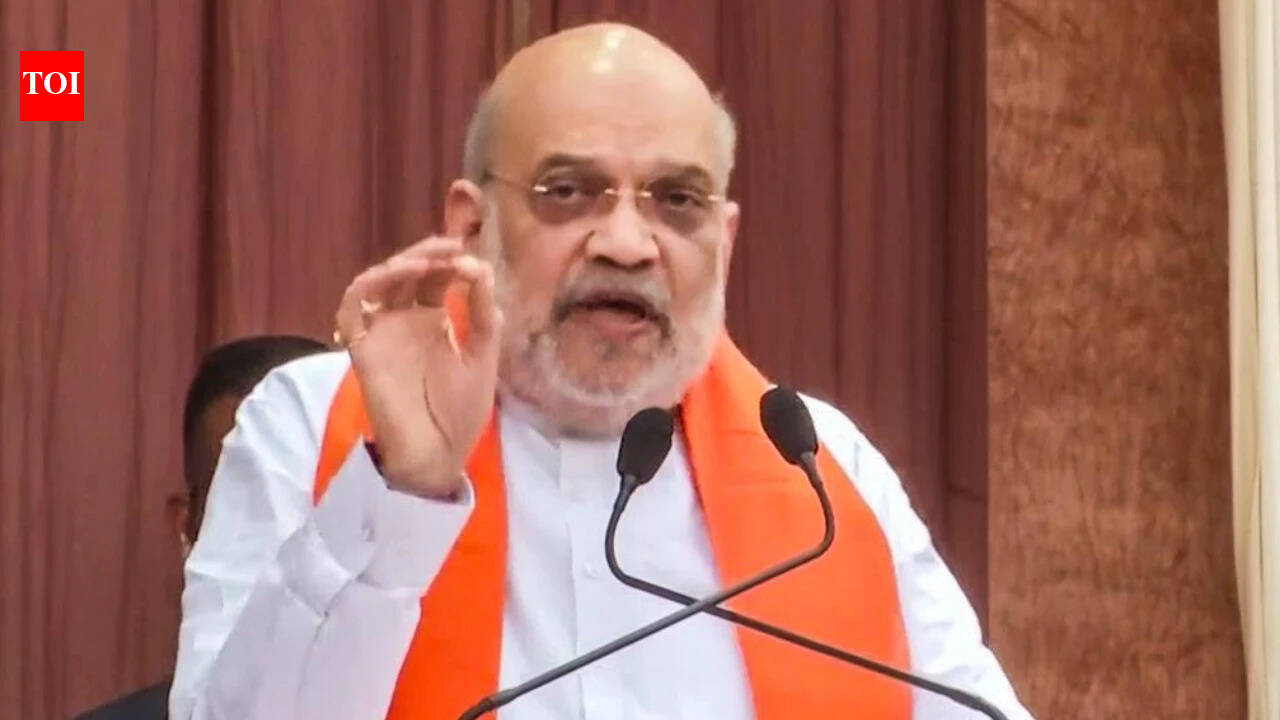
Union Home Minister Amit Shah has announced a new national priority to eradicate the drug menace by 2029. This follows successful security operations in Kashmir, the Northeast, and Left-Wing Extremism (LWE) affected regions.
A New Strategic Frontier: The War on Drugs
Union Home Minister Amit Shah has officially signaled a major shift in India’s internal security priorities, pivoting from traditional insurgent threats to the growing challenge of the drug menace. Following significant strides in stabilizing historically volatile regions, the Ministry of Home Affairs is setting a clear, time-bound objective: to rid the nation of drug abuse and trafficking by 2029. This ambitious deadline underscores the government's intent to treat narcotics as a primary threat to national sovereignty and public health.
Success in Security and Stability
The pivot toward the drug menace is made possible by the measurable success in pacifying regions that were once hotspots for violence. Shah highlighted the emergence of a development-conducive environment in Kashmir, the Northeast, and areas plagued by Left-Wing Extremism (LWE). By neutralizing these security challenges, the state has cleared the path to address non-traditional threats that undermine the social fabric of these newly stabilized territories.
The Role of Specialized Forces
A critical component of this transition is the proven efficacy of India’s paramilitary infrastructure. Shah specifically lauded the Central Reserve Police Force (CRPF) and its elite CoBRA (Commando Battalion for Resolute Action) unit, alongside the Chhattisgarh Police, for their decisive role in curbing LWE. The operational success of these forces provides a blueprint for how the government intends to tackle the drug trade: through intelligence-led, high-intensity interventions that disrupt supply chains at the source.
The 2029 Roadmap
The timeline announced by the Home Ministry—covering the remainder of 2026 and the subsequent three years—indicates a sustained, multi-year campaign. This structured approach suggests that the government views the drug problem not merely as a law-and-order issue, but as a systemic crisis requiring long-term resource allocation. By setting a 2029 goal, the administration is committing to a period of intense enforcement, legislative tightening, and inter-agency coordination.
Broader Implications and Future Trends
Moving forward, the focus on the drug menace will likely necessitate increased international cooperation, particularly regarding border security and the monitoring of illicit maritime and land routes. As the government pivots, we can expect significant investments in forensic technology, narcotics control infrastructure, and cross-border intelligence sharing. The success of this initiative will be vital for protecting the demographic dividend, as drug abuse remains a direct threat to the productivity and health of India’s youth population.
Conclusion
The declaration by Amit Shah marks a definitive transition in India’s internal security doctrine. Having established a firmer grip on physical security in LWE and conflict-hit zones, the state is now leveraging that stability to confront the more insidious, pervasive threat of narcotics. If the results achieved in the fight against LWE are any indicator, the next three years of this anti-drug campaign will likely define the effectiveness of India’s internal security apparatus for the next decade.