Anna Hazare begins maun andolan in support of protesting students
Source Entity
TOI CITY DESK
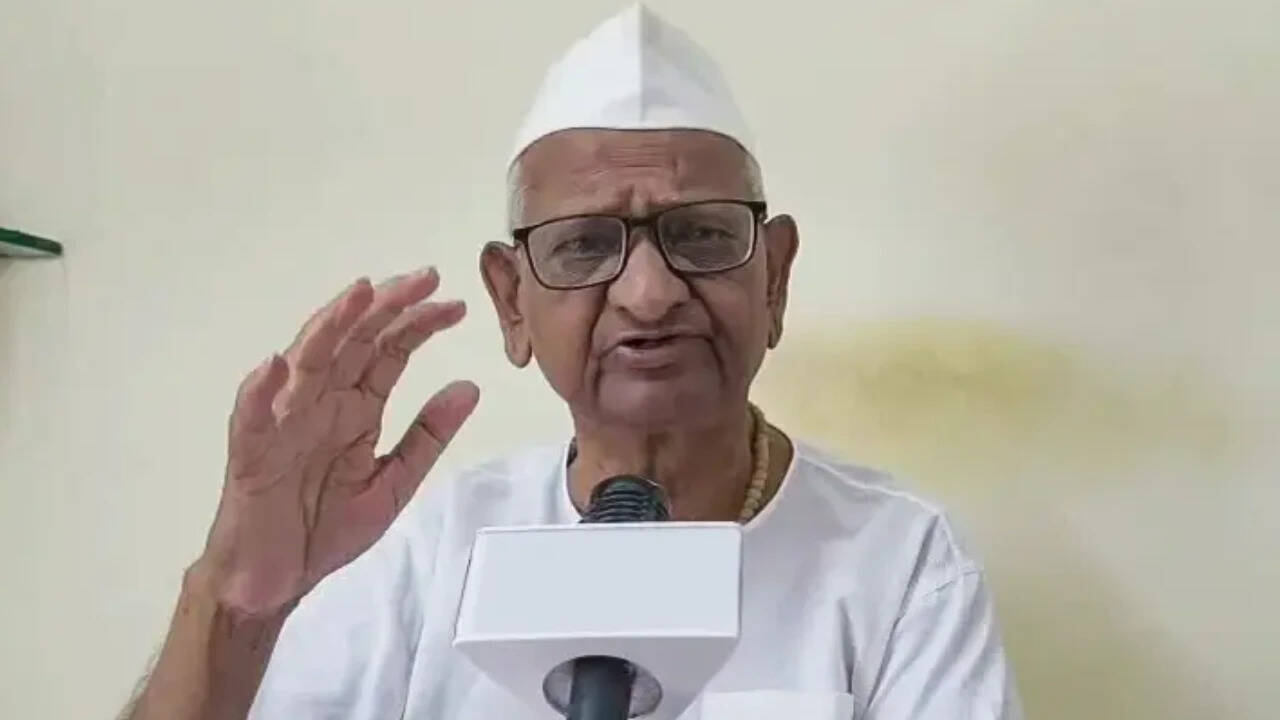
Social activist Anna Hazare held a silent protest in Ahilyanagar to support students demonstrating against NEET paper leaks. He has formally called for the resignation of Education Minister Dharmendra Pradhan, citing the government's failure to address student grievances.
Anna Hazare Leads Silent Protest Over NEET Irregularities
A Stand for Academic Integrity
Social activist Anna Hazare, a prominent figure in Indian civil society, recently undertook a two-hour maun andolan (silent protest) in Ahilyanagar, Maharashtra. This act of civil disobedience was performed in solidarity with students currently protesting in Delhi against alleged irregularities and paper leaks in the NEET examination process. By choosing the statue of Mahatma Gandhi as the backdrop for his protest, Hazare invoked the traditional methods of non-violent resistance that have long been his hallmark in Indian political discourse.
Demanding Ministerial Accountability
The core of the unrest stems from widespread allegations of examination malpractice. The protesting students, supported by Hazare and other groups like the Cockroach Janta Party, have explicitly demanded the resignation of Union Education Minister Dharmendra Pradhan. Hazare’s public endorsement of this demand—stating unequivocally that "He should resign"—marks a significant escalation in the pressure faced by the Ministry of Education. Hazare argues that the situation should not be dismissed merely as a law and order issue, but rather recognized as the legitimate agony and expectation of the nation’s youth.
The Human Cost of Protest
The situation in Delhi has been marked by significant volatility. Reports indicate that clashes erupted between demonstrators and police forces, leading to multiple injuries and the registration of FIRs against unidentified individuals for rioting and damaging public property. Hazare, upon viewing posters detailing the students' struggles at the protest venue, was visibly moved, breaking down in a moment that highlighted the emotional toll these systemic failures have taken on the student body.
Diplomatic Appeals and Institutional Response
Prior to his physical protest, Hazare addressed a letter to Prime Minister Narendra Modi on July 22, 2026, expressing deep distress over the reports of police violence against students. His outreach highlights a recurring theme in his career: bridging the gap between grassroots discontent and the highest levels of government. The broader context of these protests also includes the ongoing hospitalization of activist Sonam Wangchuk, who has been engaged in a separate, prolonged hunger strike, further signaling a period of heightened civil unrest regarding national policy and accountability.
Future Implications for Student Agitation
As the government faces mounting pressure to address the NEET examination irregularities, the involvement of a veteran activist like Hazare may serve to unify disparate student groups under a single banner of reform. The combination of legislative demands for ministerial resignation and the continued scrutiny of police conduct suggests that the government will struggle to contain this narrative. Whether the administration chooses to engage in dialogue or maintain a hardline stance will likely dictate the trajectory of student movements in the coming months, potentially setting a precedent for how examination integrity is handled in the future.
Multiple Citing Sources