Privacy law doesn’t infringe upon press freedom: IT & I&B minister
Source Entity
TNN
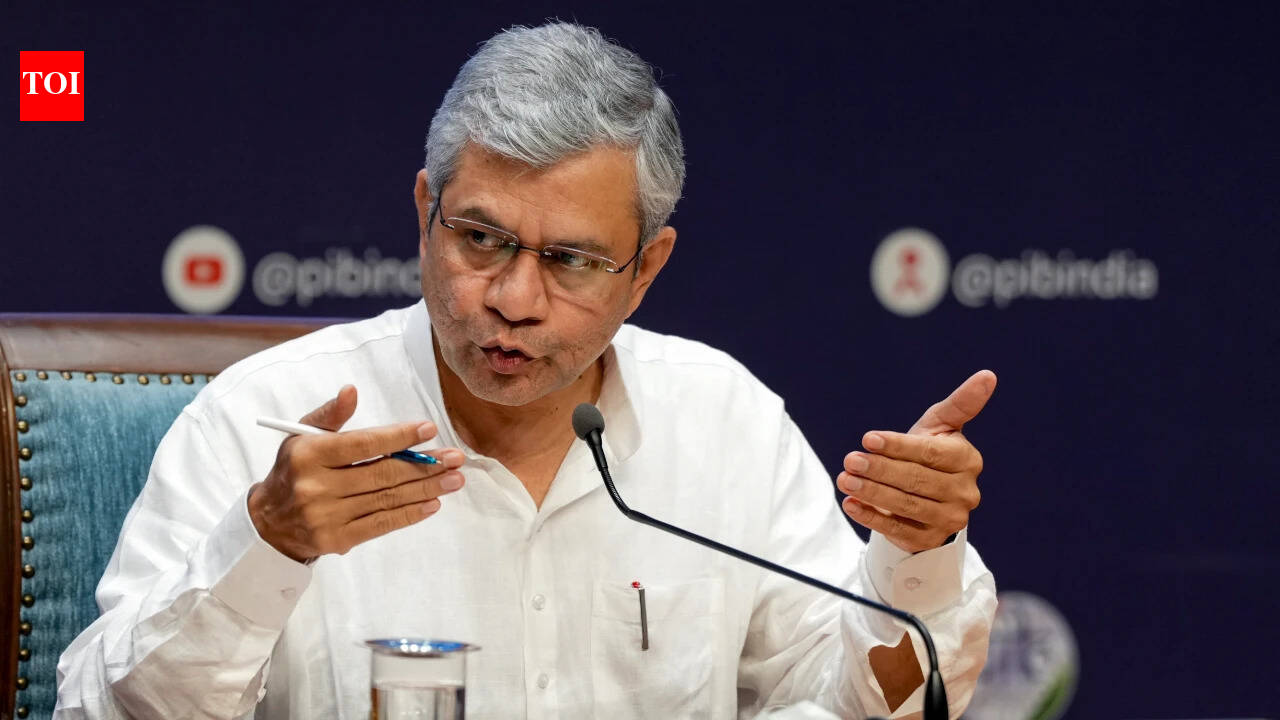
Union Minister Ashwini Vaishnaw has reaffirmed that the current privacy legislation does not compromise press freedom. He maintains that the government's approach balances individual data protection with the operational requirements of the media.
The Intersection of Data Privacy and Press Freedom in India
The Minister's Stance on Regulatory Frameworks
Union Minister for Railways, Information & Broadcasting, and Electronics & IT, Ashwini Vaishnaw, has articulated a firm position regarding the compatibility of modern privacy laws with the foundational principles of a free press. By asserting that the existing legislative framework does not infringe upon journalistic independence, the Minister seeks to address growing concerns among media stakeholders. The government's narrative suggests that the implementation of data protection standards is intended to secure citizen privacy rather than restrict the investigative capacity or publishing rights of news organizations.
Balancing Individual Rights and Collective Security
At the core of this debate is the challenge of harmonizing the constitutional right to privacy with the democratic necessity of a robust, unfettered media. Minister Vaishnaw’s commentary reflects a broader governmental strategy to modernize India’s digital landscape. By framing privacy laws as essential infrastructure rather than regulatory hurdles, the administration aims to reassure the media industry that the state's intent is to curb data misuse rather than to impede the flow of information that is critical to public discourse.
The Role of Technology in Modern Governance
As the minister overseeing both Information & Broadcasting and Electronics & IT, Vaishnaw occupies a unique position to influence the intersection of media policy and digital regulation. This dual responsibility highlights the government's recognition that media operations are now inextricably linked to digital platforms. The Minister's assurance implies that the digital architecture being built in India is designed to support, not suppress, the various stakeholders who rely on data-driven reporting to hold power to account.
Historical Context and Future Trends
Historically, the relationship between state regulation and the press in India has been a subject of intense scrutiny and debate. As the nation moves toward a more digitized economy, the legal framework must evolve to protect against global cyber threats and data exploitation. The current administration appears to be betting on the idea that clear, codified rules will ultimately provide a more stable environment for journalists, as it reduces the ambiguity that often leads to legal conflicts between media houses and government entities.
Strategic Implications for the Media Industry
Looking ahead, the media sector will need to adapt to these regulatory requirements by prioritizing data security and ethical handling of information. While some critics argue that any form of regulation carries the risk of "chilling effects" on investigative reporting, the government maintains that the legislative guardrails are necessary for the digital age. The ultimate success of this policy will depend on the transparent and non-discriminatory application of these privacy laws, ensuring that they serve the public interest without becoming tools for censorship.
Conclusive Summary
In summary, the statement from Union Minister Ashwini Vaishnaw serves as a pivotal clarification of the government's regulatory philosophy. By explicitly separating the objectives of privacy protection from the constraints on press freedom, the administration is attempting to build a consensus around its digital agenda. Moving forward, the industry will continue to monitor whether these assurances manifest as practical protections for journalists in an increasingly complex digital ecosystem.