Assam Floods: 6 More Deaths In 24 Hours, Over 7 Lakh People Affected
Source Entity
NDTV News Search Records Found 1000
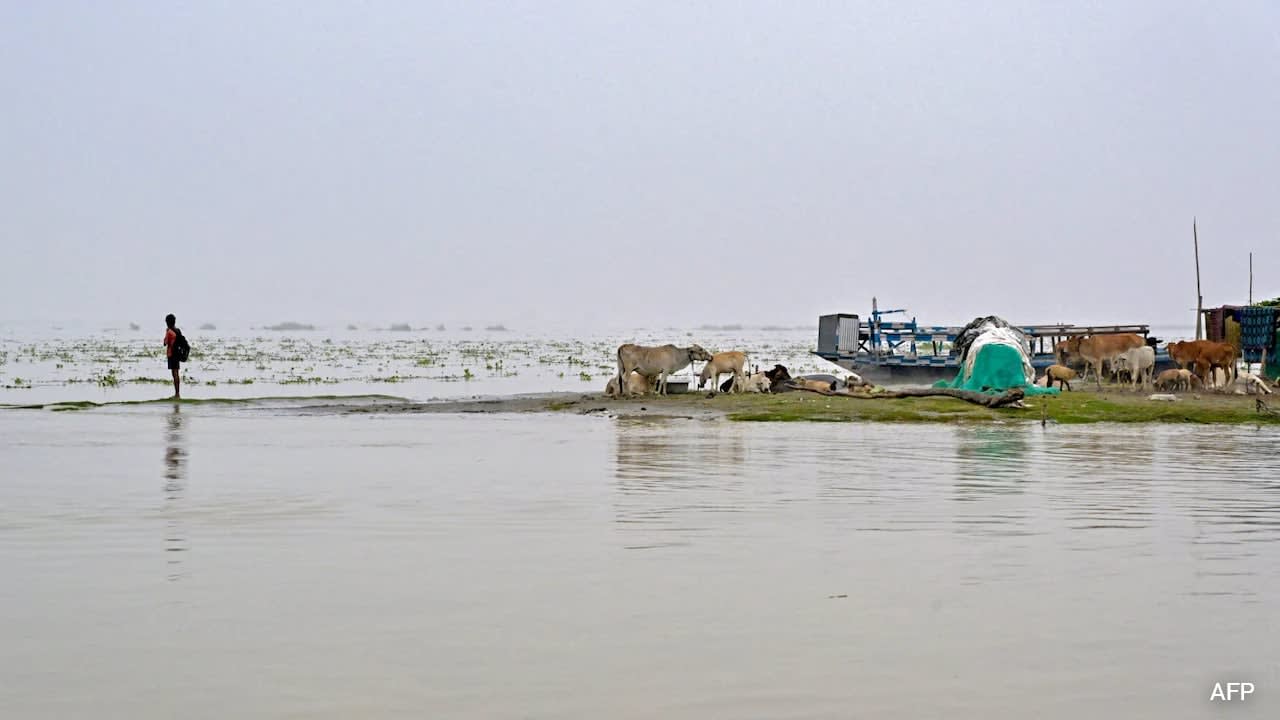
Assam is grappling with an unprecedented flood crisis that has claimed 47 lives and affected over 7 lakh people. The disaster, fueled by extreme rainfall and upstream cloudbursts, has struck districts previously considered safe from severe flooding.
The Unprecedented Crisis in Assam: An Analysis
Assam is currently facing a catastrophic humanitarian crisis as floodwaters of an "unimaginable scale" have swept through the state. As of July 23, 2026, the official death toll has reached 47, with six fatalities reported in a single 24-hour period across the districts of Sivasagar and Charaideo. With over 7.21 lakh people affected and 883 villages submerged, the sheer magnitude of the displacement has forced more than 24,000 individuals into 103 state-run relief camps.
A Departure from Historical Norms
Historically, Assam’s monsoon flooding is synonymous with the banks of the Brahmaputra and its traditional tributaries. However, the current event marks a significant and dangerous shift. Districts such as Sivasagar, Charaideo, Jorhat, and Golaghat—areas that have not traditionally faced high-flood risk—are bearing the brunt of the destruction. This shift suggests that the state’s current flood management infrastructure, largely designed around predictable riverine patterns, is ill-equipped for these new hydrological realities.
Meteorological Drivers and Upstream Impact
Chief Minister Himanta Biswa Sarma has identified a dangerous combination of factors contributing to this disaster: localized heavy rainfall recorded at 436% above normal levels and severe cloudbursts occurring upstream in Nagaland. The resulting "wall of water" from Nagaland’s Mon district bypassed traditional drainage channels, surging over embankments and carving new paths across open terrain. This erratic flow pattern has effectively neutralized conventional flood defense mechanisms.
Challenges in State Response and Preparedness
While the government has characterized the event as one for which "no one could have been prepared," critics argue that the static nature of the state’s response does not match the evolving nature of the climate crisis. The reliance on legacy disaster management protocols appears insufficient when faced with flash floods that move outside the basin of the Brahmaputra. The state's inability to adapt its infrastructure to these shifting flood trajectories highlights a critical gap in regional disaster resilience.
Broader Implications and Future Trends
This crisis serves as a grim indicator of how climate change is altering regional weather patterns. When extreme weather events like 436% above-average rainfall become the new baseline, the distinction between "flood-prone" and "safe" zones begins to vanish. Future disaster mitigation efforts in Assam must move beyond traditional embankment maintenance and toward comprehensive, landscape-level hydrology planning that accounts for upstream triggers and unpredictable water movement across open plains.
Conclusion
The situation in Assam remains volatile as water continues to drain across non-traditional paths. With over 7 lakh people currently suffering the consequences of this disaster, the immediate priority remains search, rescue, and the provision of basic humanitarian aid. However, the long-term challenge for the administration will be reconciling its static disaster response framework with a rapidly changing environmental reality that no longer adheres to historical flood maps.
Verification Required?