Pakistan signs Badr accord with Turkey, Qatar & Indonesia; what it means for India
Source Entity
AADRITA HALDER
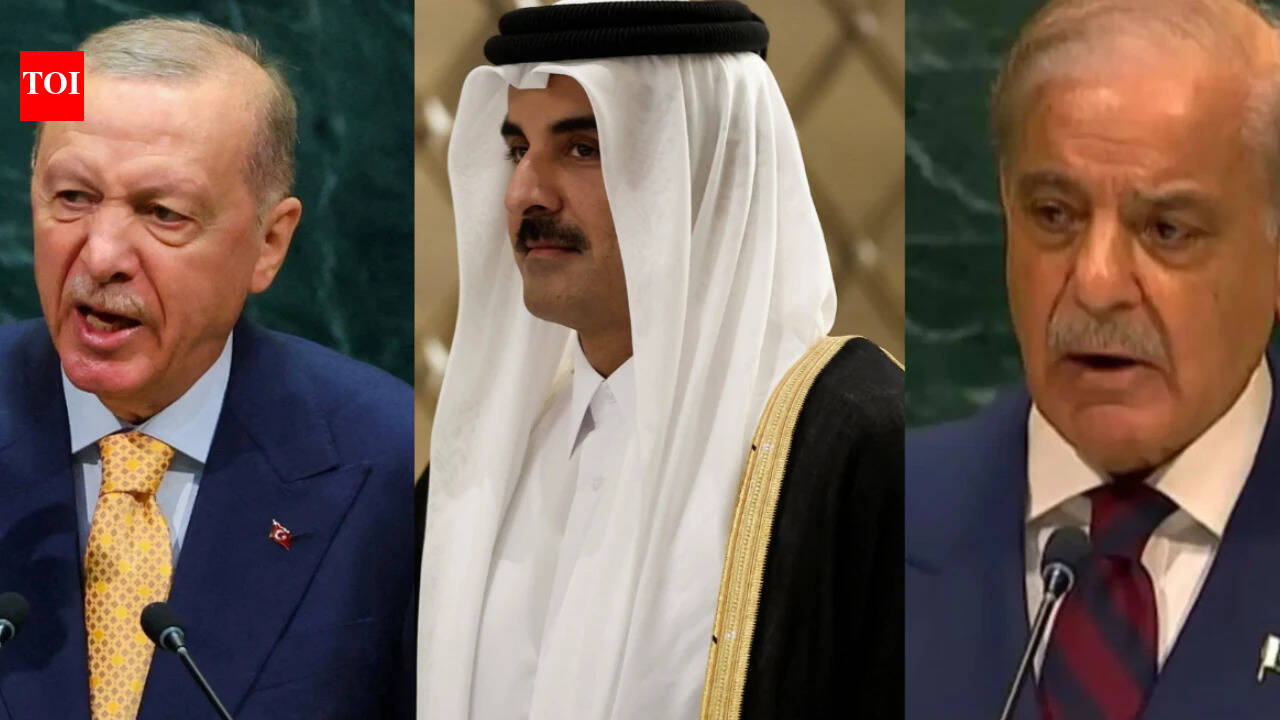
Turkey, Pakistan, Qatar, and Indonesia have signed the Badr memorandum to foster joint defence production and strategic cooperation. Analysts suggest this pact may evolve into an intelligence-sharing network similar to the Five Eyes alliance rather than a traditional military bloc.
The Badr Memorandum: A New Paradigm in Defence Cooperation
The signing of the Badr memorandum in Doha marks a significant shift in the geopolitical architecture of the Muslim-majority world. By bringing together Turkey, Pakistan, Qatar, and Indonesia—four nations with distinct regional strategic interests—the agreement aims to foster joint defence production and deeper strategic partnerships. This development, confirmed by the Turkish National Defence Ministry, reflects a growing trend among middle powers to seek self-reliance in military technology and reduce dependence on traditional Western-led supply chains.
Moving Beyond Traditional Alliances
While observers are quick to compare the Badr memorandum to a NATO-like structure, the reality of the agreement appears more nuanced. Unlike a formal collective defence treaty that mandates mutual military intervention, the Badr pact focuses primarily on industrial cooperation and technical synergy. By pooling resources for joint production, these nations are attempting to build an indigenous defence industrial base that can sustain their long-term security requirements without external bottlenecks.
The 'Five Eyes' Analogy: Intelligence as the Core
An emerging school of thought suggests that the true utility of the Badr pact may lie in intelligence integration rather than hardware manufacturing. Just as the Five Eyes alliance—comprising the US, UK, Canada, Australia, and New Zealand—functions primarily through the sharing of signals and human intelligence, the Badr group could evolve into a regional hub for clandestine data exchange. This would allow the four signatories to monitor regional threats and political shifts with a unified, localized perspective, bypassing the need for Western oversight in sensitive security matters.
Geopolitical Implications for India
For India, the emergence of this bloc warrants careful observation. The inclusion of Pakistan and Turkey, both of which have historically held positions at odds with Indian foreign policy, suggests a potential for increased strategic coordination that could challenge Indian interests in the Indian Ocean Region and beyond. However, the diverse nature of the signatories—ranging from Indonesia’s focus on regional stability in Southeast Asia to Qatar’s energy-centric diplomacy—means that the group may struggle to maintain a unified stance on issues that directly conflict with New Delhi's core interests.
Future Trends and Strategic Autonomy
The Badr memorandum is a bellwether for the 'post-Western' security era. As global power dynamics shift toward multipolarity, nations are increasingly prioritizing 'minilateral' agreements that offer flexibility and specific outcomes. We can expect to see more such arrangements in the coming decade, where countries leverage their comparative advantages—such as Turkey's drone technology, Qatar's financial capital, and Pakistan's military infrastructure—to create regional security umbrellas that function independently of historical superpowers.
Conclusion
The Badr memorandum represents a calculated move toward strategic autonomy by its four signatories. While it is unlikely to become a monolithic military alliance in the short term, its potential to evolve into an intelligence-sharing network makes it a noteworthy development in international relations. Whether this cooperation leads to tangible military parity or remains a framework for political signaling will depend heavily on the internal cohesion of the four member states and their ability to navigate the complex geopolitical pressures of the modern era.