Why the latest ‘Bageshwar Baba’ controversy could complicate BJP’s UP plans
Source Entity
Anand Mohan J
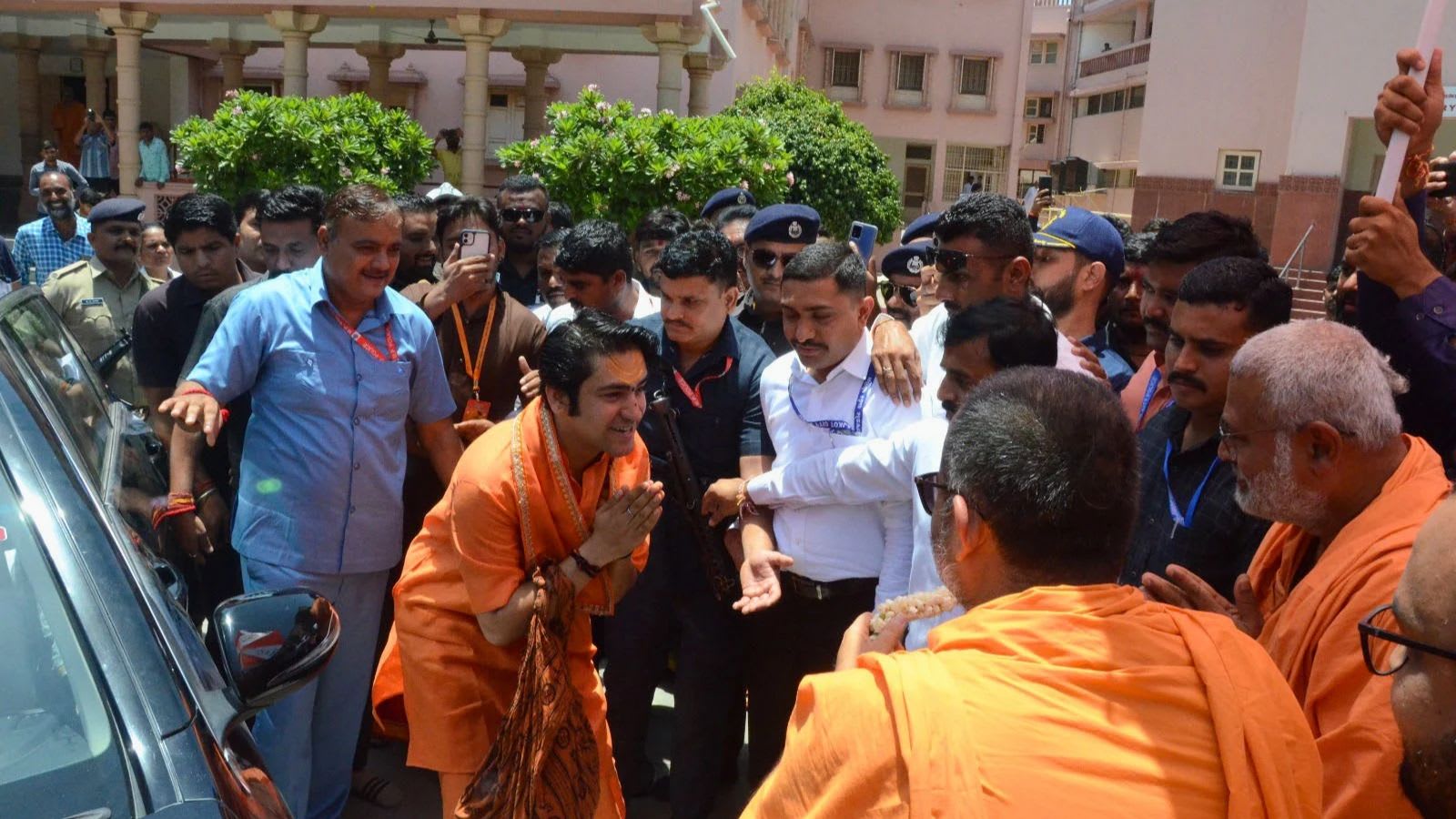
Dhirendra Shastri’s controversial remarks on Hindu deities have sparked a political firestorm in Uttar Pradesh. The Samajwadi Party is leveraging the issue to challenge the BJP, accusing the preacher of being a tool for political agendas.
The Bageshwar Baba Controversy: A New Political Fault Line in Uttar Pradesh
The Catalyst for Conflict
The recent controversy surrounding Dhirendra Shastri, widely known as 'Bageshwar Baba,' has ignited a significant political confrontation within the volatile landscape of Uttar Pradesh. The dispute stems from a viral video recorded during a Ram Katha event in Karera, Shivpuri district, where Shastri offered descriptive comparisons between the physical mannerisms of Lord Ram and Lord Krishna. These remarks, which touched upon the theological and cultural representations of central Hindu deities, have transcended religious discourse to become a weaponized political issue.
Political Polarization and the Samajwadi Party’s Stance
Samajwadi Party (SP) president Akhilesh Yadav has seized upon the viral footage to launch a direct offensive against the ruling Bharatiya Janata Party (BJP). By demanding the nationwide cancellation of Shastri’s events, the SP is attempting to frame the preacher as a polarizing figure whose rhetoric is allegedly influenced by 'political masters.' This move is a strategic effort to consolidate opposition support and cast doubt on the BJP’s alignment with religious figures who court controversy.
The Impact on Uttar Pradesh’s Electoral Dynamics
Uttar Pradesh remains the most critical battleground in Indian politics, and this controversy introduces a new layer of complexity to the state's poll-bound environment. The SP’s decision to label the situation as an act of 'anti-Sanatana elements' acting under political patronage suggests a shift in narrative strategy. By highlighting the potential for religious rhetoric to alienate sections of the electorate, the opposition is testing the BJP's ability to distance itself from controversial allies while maintaining its core support base.
Religious Rhetoric and Political Accountability
The intersection of popular religious preachers and mainstream political discourse has historically been a double-edged sword in Indian politics. When figures like Bageshwar Baba make public statements that deviate from traditional interpretations, the resulting friction often forces political parties to take a stand. In this instance, the demand for government intervention in religious programming highlights the tension between the freedom of speech and the potential for public order disturbances during an election cycle.
Future Implications and Strategic Risks
Looking ahead, the fallout from this incident may force both the BJP and the SP to recalibrate their messaging regarding religious influence in politics. For the BJP, the challenge lies in balancing the influence of popular spiritual leaders with the need to avoid unnecessary electoral baggage. For the Samajwadi Party, the strategy carries the risk of being perceived as anti-religious if not managed carefully. The ongoing debate serves as a microcosm of the broader struggle for ideological dominance in Uttar Pradesh.
Conclusion
The Bageshwar Baba controversy is more than a theological disagreement; it is a calculated political maneuver in a high-stakes environment. As the discourse continues, the ability of political parties to navigate these cultural sensitivities will likely play a role in shaping the electoral narrative in the state.