BJP accuses Rahul Gandhi of hypocrisy over women’s empowerment
Source Entity
India Latest News: Top National Headlines Today & Breaking News | The Hindu
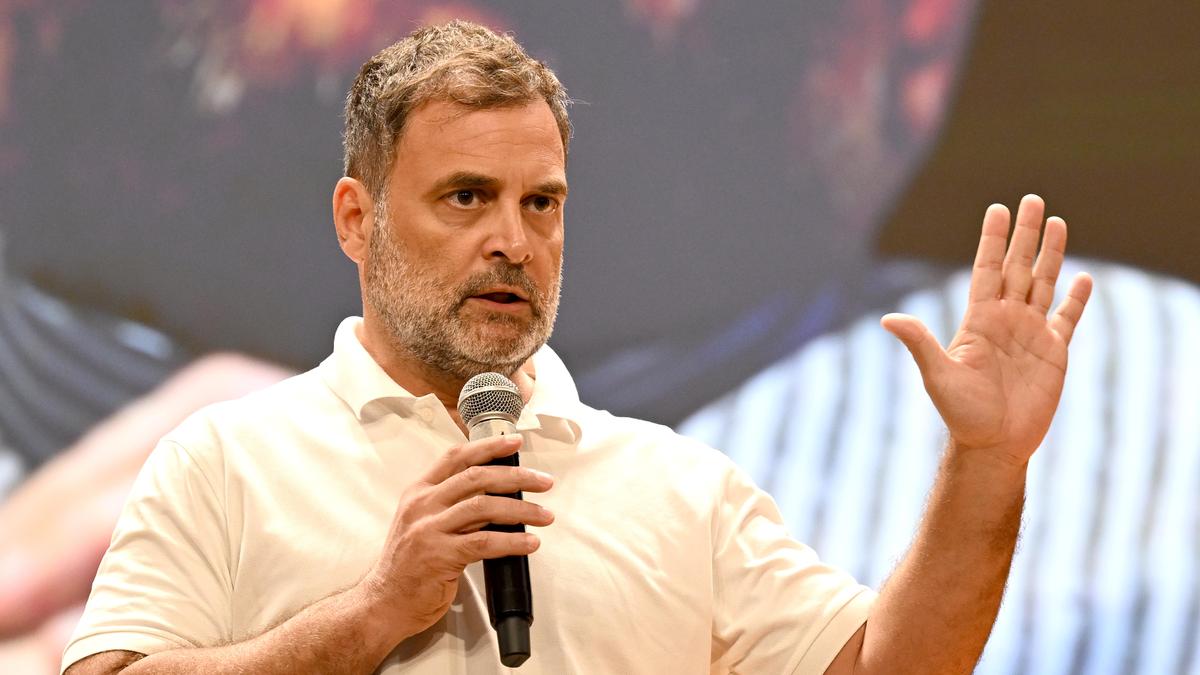
BJP leaders Bansuri Swaraj and Kangana Ranaut have criticized Rahul Gandhi for alleged misogyny and performative feminism. The controversy stems from Gandhi's 'smash the patriarchy' remarks and his support for actor Kriti Sanon regarding a recent advertisement.
The Intersection of Political Rhetoric and Cultural Commentary
The Indian political landscape has witnessed a sharp escalation in verbal sparring between the Bharatiya Janata Party (BJP) and Congress leader Rahul Gandhi, centered on the discourse surrounding women’s empowerment and the concept of 'patriarchy.' The controversy was ignited when BJP MP Bansuri Swaraj publicly accused the Leader of the Opposition of practicing hypocrisy, asserting that his recent political messaging is contradicted by his past conduct and the behavior of his party colleagues.
The Allegation of Hypocrisy
At the core of the BJP’s critique is the accusation of misogyny directed at Rahul Gandhi. Bansuri Swaraj specifically referenced an incident involving Sandeep Dikshit, alleging that Gandhi participated in disparaging remarks directed at the Prime Minister of Italy, Giorgia Meloni. By framing these comments as akin to 'boys talking in a local room,' the BJP aims to characterize Gandhi’s public stance on women’s rights as a superficial political tactic rather than a genuine ideological shift, labeling his recent 'smash the patriarchy' rhetoric in Pune as a diversionary tactic from these controversies.
Cultural Flashpoints and Performative Feminism
The debate moved from the floor of Parliament to the digital sphere when actor and BJP MP Kangana Ranaut entered the fray. The catalyst was a commercial for a jewellery brand featuring actor Kriti Sanon, which faced backlash regarding the appropriateness of her attire during the Raksha Bandhan festival. When Rahul Gandhi expressed support for Sanon, Ranaut utilized social media to mock his stance, posting a caricature that juxtaposed Gandhi’s call to 'smash the patriarchy' with a retort emphasizing 'Bharat Mata ki Jay.' This exchange highlights the growing trend of political leaders leveraging cultural flashpoints—such as advertising content and traditional values—to challenge their opponents' ideological consistency.
The Strategic Use of Social Media
Kangana Ranaut’s Instagram story serves as a prime example of how modern political actors use digital platforms to distill complex ideological debates into viral, bite-sized content. By framing Gandhi’s support for the advertisement as 'performative feminism,' Ranaut seeks to undermine his credibility with the electorate, particularly among voters who prioritize traditional cultural values. This digital confrontation underscores a broader shift in Indian politics, where social media engagement is now as critical as traditional parliamentary debate.
Broader Implications for Political Discourse
This incident reflects a deeper, ongoing struggle over the narrative of women’s empowerment in India. For the BJP, the strategy is to paint the Congress party as disconnected from national values, using the 'smash the patriarchy' slogan as a symbol of Westernized, performative politics. Conversely, the Congress party views these attacks as a deliberate attempt to distract from substantive policy criticisms. As both parties continue to weaponize cultural issues, the discourse is likely to remain polarized, with the definition of 'empowerment' becoming a primary battleground for the next election cycle.
Conclusion
The ongoing war of words between the BJP and Rahul Gandhi highlights the volatile intersection of celebrity culture, political ideology, and social media. While the immediate trigger was a commercial advertisement and a series of personal remarks, the underlying conflict is a fundamental disagreement over how gender issues should be addressed in the public square. As this narrative continues to evolve, it serves as a stark reminder of how quickly cultural symbols can be transformed into potent political ammunition.
Multiple Citing Sources
Verification Required?