BJP cites website to target Rahul Gandhi
Source Entity
India Latest News: Top National Headlines Today & Breaking News | The Hindu
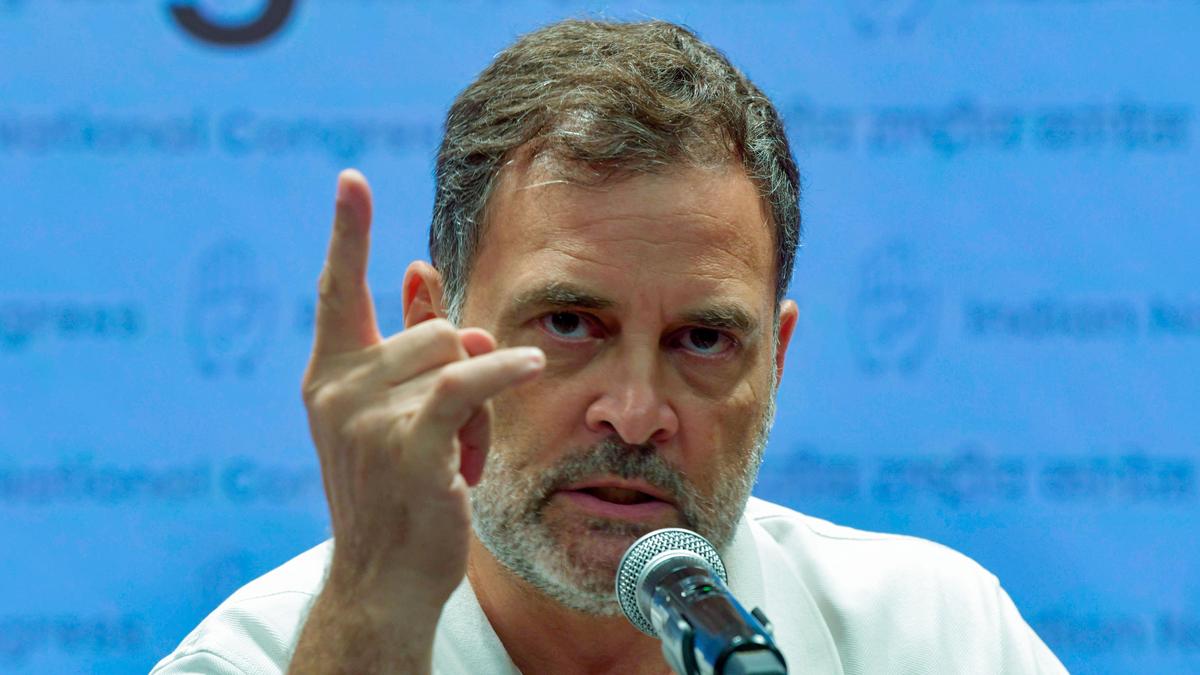
The BJP has launched a digital counter-offensive against Rahul Gandhi's 'Chhatron Ki Goonj' campaign. By utilizing a dedicated fact-checking website, the party aims to systematically challenge the Congress leader's statements regarding youth-related issues.
BJP Launches Digital Offensive Against Rahul Gandhi
The political landscape in India has witnessed a significant escalation in digital warfare as the Bharatiya Janata Party (BJP) officially launched a campaign targeting the statements made by Leader of the Opposition, Rahul Gandhi. Central to this strategy is a new website, dubbed 'Jhooth Ki Goonj,' which serves as a direct counter-narrative to Gandhi’s ongoing 'Chhatron Ki Goonj' (Echo of Students) campaign. This move marks a pivot toward systematic, data-driven political messaging aimed at neutralizing the opposition's outreach to the youth demographic.
The Mechanics of the Digital Counter-Narrative
By framing the website as a fact-checking mechanism, the BJP is attempting to shift the discourse from ideological debate to a contest over verifiable data. BJP MP Anil Baluni emphasized that the party intends to meet every claim made by the Congress leader with 'hard facts,' signaling a shift toward a more aggressive, evidence-based rebuttal strategy. This tactic is designed to erode the credibility of the opposition’s messaging before it can gain traction among student voters, who are a critical constituency for both parties.
Strategic Messaging and Party Positioning
Senior BJP figures, including Rajya Sabha MP Sudhanshu Trivedi and National Media Head Anil Baluni, have framed this initiative as a moral imperative to combat what they describe as 'propaganda.' By positioning the website as a tool for truth-seeking, the BJP is attempting to occupy the high ground in the digital information war. The rhetoric used by party officials suggests a long-term commitment to this strategy, implying that the BJP will continue to monitor and publicly audit Rahul Gandhi’s public addresses throughout the remainder of his campaign.
Implications for Political Communication
This development highlights a broader trend in Indian politics: the increasing reliance on dedicated, partisan digital platforms to shape public perception. By creating a 'mirror' campaign that mirrors the name of the opposition's initiative, the BJP is effectively hijacking the search and social media visibility associated with 'Chhatron Ki Goonj.' This ensures that users researching the Congress leader’s claims are immediately confronted with the BJP’s counter-arguments, thereby complicating the opposition's ability to control their own narrative.
Future Trends in Electioneering
Looking ahead, this strategy suggests that the next phase of Indian electioneering will be defined by rapid-response digital fact-checking. As political parties invest more in proprietary platforms to verify or debunk opposing claims, the digital space will become increasingly polarized. The success of the 'Jhooth Ki Goonj' website will likely serve as a blueprint for future digital campaigns, where the primary objective is not just to promote one's own agenda, but to systematically dismantle the opposition's credibility in real-time.
Verification Required?