Forget doorstep delivery: Delhi man shows he orders on Blinkit in Manali, then hikes 2 km to get it
Source Entity
Latest News: Today's Latest News Headlines from India & World | Hindustan Times | Hindustan Times
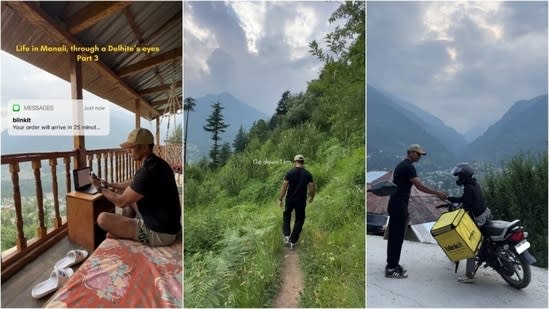
A Delhi man's attempt to use Blinkit in remote Manali resulted in a 2 km hike to meet the delivery rider at the nearest motorable road. The incident highlights the humorous gap between urban quick-commerce expectations and the geographical realities of mountain terrains.
The Paradox of Quick-Commerce in the Himalayas
The rapid ascent of quick-commerce in India has fundamentally altered the consumption patterns of urban dwellers, particularly in metropolitan hubs like Delhi. In these cities, the expectation of 'instant gratification' is codified by apps promising delivery within 10 to 25 minutes. However, a recent viral incident involving content creator Akhil Dhruv has highlighted the stark contrast between these urban logistics and the geographical constraints of the Himachal Pradesh mountains, specifically in Manali.
The 2-Kilometre 'Last Mile' Challenge
While staying at a secluded mountain cottage in Manali, Akhil attempted to utilize the Blinkit app to order essentials like milk and instant noodles. Despite the app's promise of a '25-minute delivery,' the physical reality of the terrain intervened. Unlike the paved streets of Delhi where riders can navigate directly to a doorstep, the rugged topography of Manali often limits vehicle access. In this instance, the 'last mile' of delivery was not a short stroll but a 2-kilometre hike from the remote stay to the edge of the nearest motorable road.
Digital Connectivity vs. Physical Infrastructure
This event underscores a fascinating intersection of technology and infrastructure. As noted in the account, the availability of a 5G signal allowed the order to be placed and processed seamlessly, proving that digital connectivity has penetrated even the most remote corners of the mountains. However, the physical infrastructure—the roads and paths—remains the primary bottleneck. The ability to 'tap a phone' provides the illusion of accessibility, but the actual handoff required 'sweat equity,' transforming a routine grocery run into a cardio-intensive fetch quest.
Urban Expectations in Rural Landscapes
There is a significant psychological shift that occurs when urban residents migrate to the mountains for work or leisure. The expectation of doorstep delivery, a staple of the Delhi lifestyle, clashes with the rustic reality of 'pahadon wala ghar' (mountain homes). Akhil's experience serves as a humorous yet telling case study on how the 'quick-commerce revolution' is interpreted differently depending on the altitude. In the city, 25 minutes is a benchmark for efficiency; in the mountains, it is merely the time it takes for a rider to reach the nearest accessible road.
The Logistics of High-Altitude Delivery
From a business perspective, the expansion of services like Blinkit into tourist hubs like Manali demonstrates an aggressive growth strategy to capture the 'work-from-mountain' demographic. However, the incident reveals the limitations of standardized delivery algorithms. When an app promises a specific timeframe without accounting for non-motorable paths, the burden of the 'final stretch' falls on the consumer. This creates a unique hybrid delivery model where the rider provides the transit and the customer provides the trek.
Future Trends in Remote Logistics
Looking forward, this incident suggests that for quick-commerce to truly succeed in mountainous regions, companies may need to pivot from 'doorstep delivery' to 'hub-based pickup' or integrate local knowledge into their routing. The reliance on 5G to enable these transactions is a start, but the physical gap remains. We may see a rise in localized delivery partnerships or specialized transport methods to bridge the gap between the motorable road and the remote cottage.
Conclusion: The Price of Convenience
Ultimately, Akhil Dhruv's experience is a reminder that while technology can shrink the perceived distance between a consumer and their needs, it cannot flatten a mountain. The successful handoff of the signature yellow Blinkit bag at the roadside symbolizes the current state of rural e-commerce: a blend of high-tech ordering and old-school physical effort. In the mountains, 'instant delivery' is possible, provided the customer is willing to walk for it.
Verification Required?