PM Modi flags off India’s first hydrogen train on Jind-Sonipat route
Source Entity
Anish Mondal
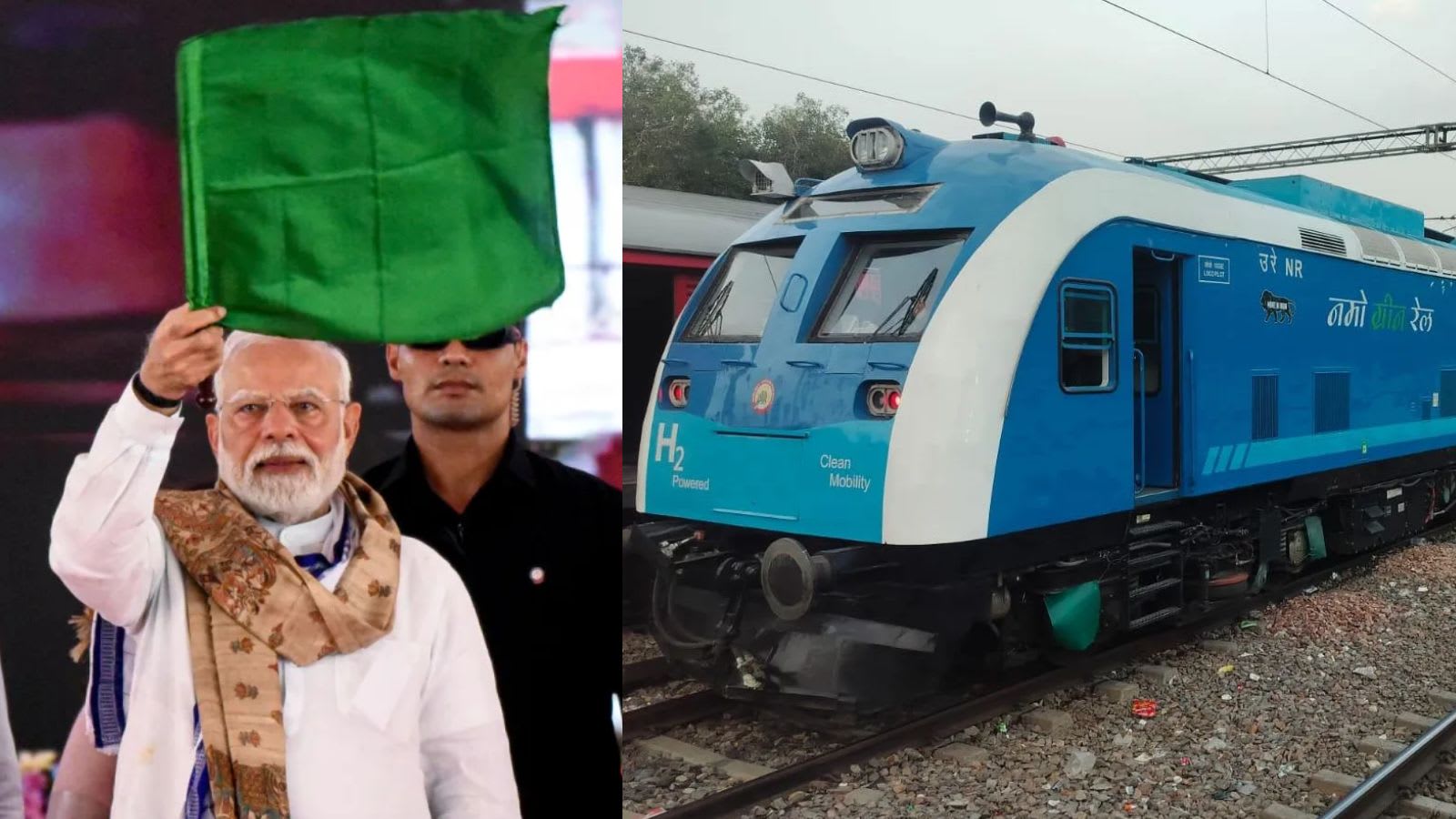
Prime Minister Narendra Modi has flagged off India's first hydrogen train, operating on a pilot route between Jind and Sonipat in Haryana. Developed by the Integral Coach Factory in Chennai, the project features an indigenous refueling facility at Jind.
India's Leap Toward Green Mobility: The Debut of the Hydrogen Train
In a landmark move toward sustainable transportation, Prime Minister Narendra Modi has officially flagged off India's first hydrogen-powered train. This initiative represents a pivotal shift in the country's approach to rail transport, moving away from carbon-intensive diesel engines toward zero-emission alternatives. The train is set to operate on a pilot route between Jind and Sonipat in Haryana, marking the beginning of a new era for the Indian Railways as it seeks to align its operational infrastructure with global environmental standards.
Indigenous Engineering and Development
One of the most significant aspects of this project is its origin. The train was developed by the Integral Coach Factory (ICF) based in Chennai. By utilizing indigenous expertise, India is not only reducing its reliance on foreign technology but also strengthening the 'Make in India' initiative within the high-tech transport sector. The development of a hydrogen-powered train-set requires sophisticated engineering to manage the storage and conversion of hydrogen into electricity, and the ICF's role underscores India's growing capability in advanced railway manufacturing.
Operational Framework and Infrastructure
The selected pilot route covers an 89-km stretch between Jind and Sonipat, falling under the jurisdiction of the Northern Railway’s Delhi Division. To ensure the train's viability, the Ministry of Railways has established an indigenous hydrogen storage and refueling facility specifically at Jind. The safety and regulatory compliance of this facility have been verified by the Petroleum and Explosives Safety Organisation (PESO), which granted the necessary licenses for the storage and dispensing of compressed hydrogen gas, ensuring that the pilot project adheres to strict safety protocols.
Environmental Implications and the Green Hydrogen Mission
The deployment of hydrogen trains is a strategic step toward reducing the carbon footprint of the Indian Railways, one of the largest rail networks in the world. Unlike traditional diesel locomotives, hydrogen trains emit only water vapor, eliminating the release of greenhouse gases and particulate matter. This project serves as a practical application of India's broader ambitions under the National Green Hydrogen Mission, aiming to position the country as a global hub for the production and utilization of green hydrogen to achieve net-zero emission targets.
Future Outlook and Scalability
As this is currently a pilot operation on the Jind-Sonipat section, the focus will likely remain on monitoring performance, energy efficiency, and the reliability of the indigenous refueling infrastructure. If the pilot proves successful, it is expected that the Ministry of Railways will scale this technology across other non-electrified routes where traditional electrification is geographically or financially challenging. The transition to hydrogen could eventually phase out diesel-hauled trains on regional and long-distance routes, drastically lowering the environmental impact of inland logistics.
Conclusion
The launch of the first hydrogen train is more than just a technological milestone; it is a statement of intent regarding India's commitment to green energy. By integrating indigenous manufacturing from the ICF with strategic infrastructure in Haryana, India is laying the groundwork for a cleaner, more efficient railway system. This pilot project provides the essential data and operational experience needed to transform the future of Indian mobility.