NDRF rescues 3-yr-old boy from deep borewell in Bihar’s Gaya district
Source Entity
Latest News: Today's Latest News Headlines from India & World | Hindustan Times | Hindustan Times
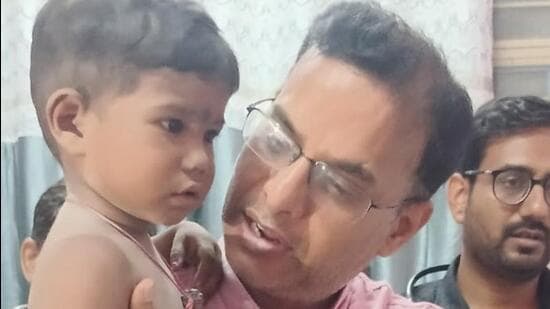
A three-year-old boy, Piyush Kumar, was successfully rescued from a deep irrigation borewell in Bihar's Gaya district. The operation was carried out by the NDRF and SDRF, who provided continuous oxygen to the child until his rescue at 2 am.
Successful Rescue Operation in Gaya: A Triumph of Coordination
In a harrowing incident that tested the agility of emergency response teams, a three-year-old boy named Piyush Kumar was rescued from a deep borehole in the Gaya district of Bihar. The child had fallen into an irrigation borehole while playing in the fields around 7:00 PM on Friday, while his mother was occupied with agricultural work nearby. This event highlights the persistent dangers posed by uncovered irrigation infrastructure in rural Indian landscapes, where children are particularly vulnerable to such accidents.
The Mechanics of the Rescue
The technical challenge of the operation was significant, as the borehole extended to a depth of 280 feet, with Piyush trapped approximately 30-35 feet below the surface. The rescue required a multi-agency approach, involving the National Disaster Response Force (NDRF) and the State Disaster Response Force (SDRF), who were mobilized from Patna. A critical component of the survival strategy was the immediate deployment of a medical team that supplied oxygen to the child through a pipe, preventing hypoxia—a primary cause of fatality in borewell entrapments.
Administrative Oversight and Resource Mobilization
The presence of District Magistrate (DM) Shashank Shubhankar at the site ensured that administrative hurdles were minimized and resources were allocated efficiently. The coordination between the local administration in Gaya and the specialized response units in Patna underscores the importance of a centralized disaster management framework. The operation lasted several hours, concluding around 2:00 AM when the child was safely pulled to the surface, demonstrating the endurance and precision required for such high-stakes extractions.
The Broader Context of Borewell Accidents in India
This incident is not an isolated case but part of a recurring pattern of accidents across rural India. Irrigation borewells are essential for farming but often remain uncapped or poorly secured, turning into lethal traps for toddlers. Historically, these incidents have sparked national debates on rural safety standards and the need for mandatory capping of all abandoned or active boreholes. The physiological stress on a child in such an environment—including limited space, lack of ventilation, and psychological trauma—makes the window for a successful rescue extremely narrow.
Implications for Rural Safety and Infrastructure
The success of this rescue emphasizes the necessity of specialized training for local first responders to stabilize victims before the NDRF arrives. While the outcome in Gaya was positive, the reliance on teams traveling from the state capital (Patna) suggests a need for more decentralized, district-level specialized rescue equipment. Future trends in rural safety will likely move toward stricter regulations regarding the sealing of irrigation holes and increased community awareness programs to educate parents on the hazards of open borewells.
Conclusion
The rescue of Piyush Kumar is a testament to the effectiveness of the NDRF and SDRF's specialized capabilities and the importance of rapid medical intervention. While the child's safe recovery is a relief, the incident serves as a stark reminder of the infrastructural gaps in rural areas. Ensuring that irrigation borewells are properly covered is a simple yet life-saving measure that could prevent similar tragedies in the future.
Verification Required?