Falkland poster row spills over: British govt seeks FIFA action against Argentina
Source Entity
TOI SPORTS DESK
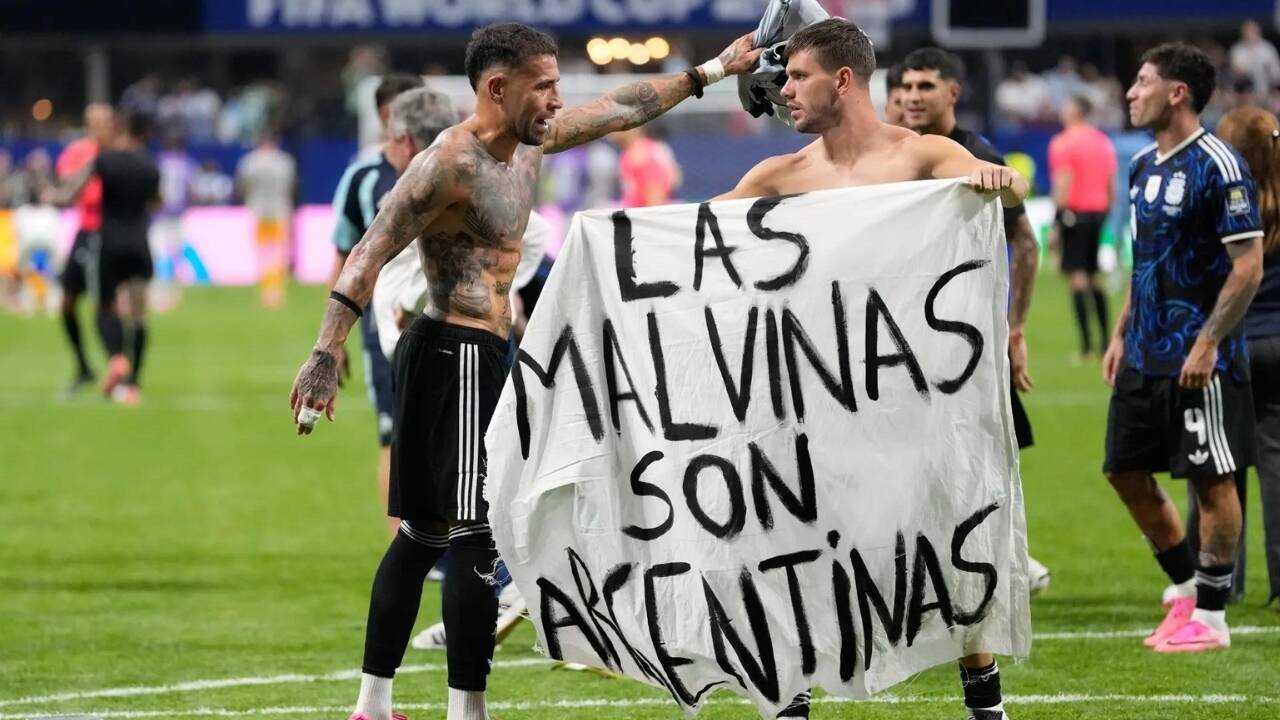
The British government has requested action from FIFA after Argentine players posed with a banner claiming the Falkland Islands (Islas Malvinas) following Argentina's 2-1 victory over England in the FIFA World Cup semifinal in Atlanta.
Geopolitical Tensions Erupt on the Football Pitch
The intersection of high-stakes international sports and deep-seated territorial disputes has once again come to the forefront. Following Argentina's 2-1 victory over England in the FIFA World Cup semifinal held in Atlanta, a moment of sporting triumph quickly transformed into a diplomatic confrontation. The catalyst was a celebratory gesture by the Argentine squad, who posed for photographs with a banner reading "Las Malvinas son Argentinas" ("The Malvinas are Argentine"). This act has prompted the British government to formally seek disciplinary action from FIFA, highlighting how a football match can serve as a proxy for long-standing national grievances.
The Incident and the Symbolic Banner
The match itself was a clash of titans, ending in a 2-1 win for Argentina, but the post-match celebrations overshadowed the athletic achievement. By posing with the banner handed to them by supporters, the Argentine players intentionally signaled a political stance on the sovereignty of the Falkland Islands. In Argentina, the claim to the "Islas Malvinas" is not merely a political position but a core element of national identity and education. The visibility of this message on a global stage like the World Cup semifinal ensures that the dispute remains in the international spotlight, transforming the pitch into a platform for political expression.
Historical Context: The Falklands/Malvinas Dispute
To understand the severity of the British government's reaction, one must look back to the 1982 Falklands War, a ten-week conflict between Argentina and the United Kingdom over these South Atlantic islands. The war resulted in significant casualties on both sides and left a legacy of bitterness and mistrust. While the islands remain a British Overseas Territory, Argentina continues to claim sovereignty, asserting that the islands were illegally seized. This historical trauma ensures that any public assertion of ownership, especially by national representatives like the football team, is viewed by the UK not as a harmless celebration, but as a provocative political statement.
The British Government's Appeal to FIFA
The UK's decision to involve FIFA is rooted in the organization's strict regulations regarding political neutrality. FIFA's statutes generally prohibit the display of political, religious, or personal slogans in match stadiums. The British government is leveraging these rules to argue that the Argentine players violated the spirit of the game by introducing a contentious territorial claim into the sporting arena. By seeking formal action, the UK aims to signal that such provocative gestures are unacceptable and should be met with institutional sanctions, thereby discouraging the use of sporting events for geopolitical posturing.
Implications for Sports Diplomacy and Future Trends
This incident underscores the fragility of "sports diplomacy," the idea that athletics can bridge divides between nations. Instead, this event demonstrates how sports can amplify existing frictions. Moving forward, it is likely that FIFA will face increasing pressure to police political expressions more rigorously as national teams become more emboldened to use their global platforms for activism. Furthermore, this row may lead to heightened security and stricter banner screenings in future encounters between England and Argentina, as both nations remain acutely aware of how easily a match can devolve into a diplomatic crisis.
Conclusion
What began as a competitive semifinal in Atlanta has evolved into a stark reminder of the unresolved tensions between the United Kingdom and Argentina. The "Malvinas" poster row illustrates that the ghosts of the 1982 conflict are still very much alive, capable of surfacing during the world's most popular sporting event. As the British government awaits FIFA's response, the event serves as a cautionary tale about the volatility of mixing nationalistic territorial claims with the passion of international football.