Canada Day video shows woman blaming Indians for trash, sparks debate
Source Entity
TOI WORLD DESK
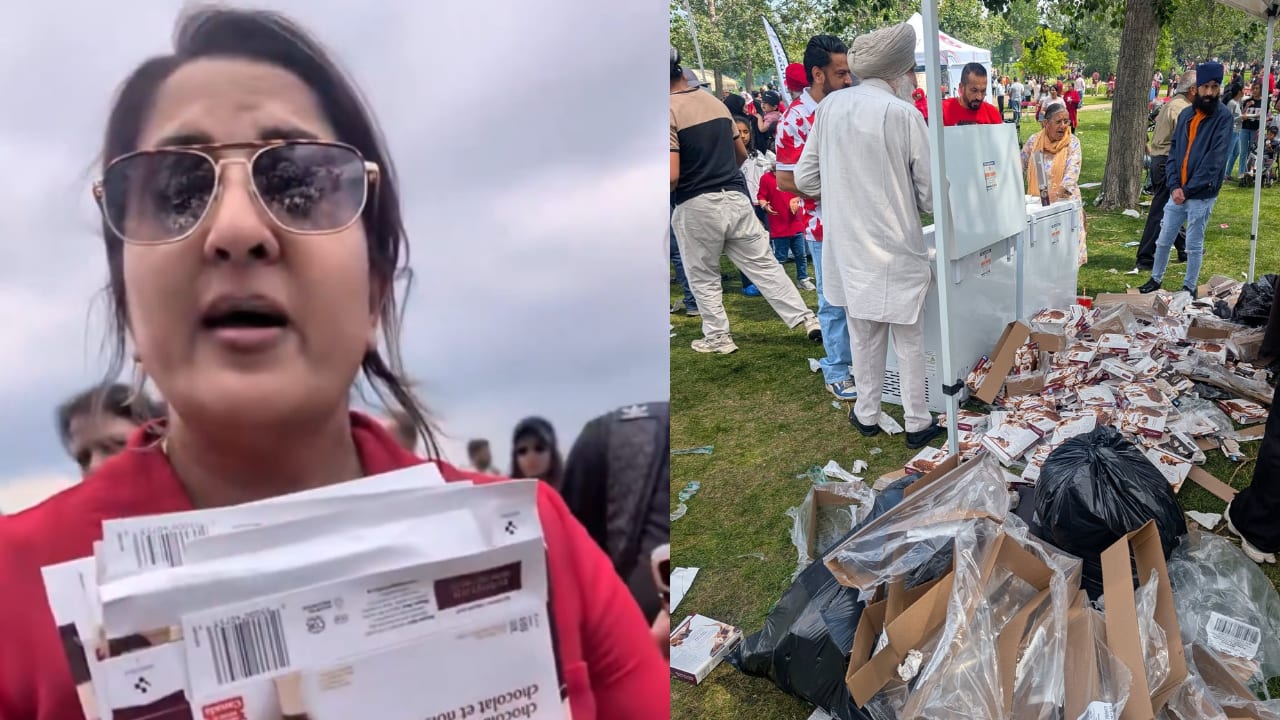
A viral video from Canada Day celebrations in Calgary has sparked a debate on racial profiling after a woman blamed Indian volunteers for littering in a public park. Despite the accusations, volunteers from the Guru Nanak Free Kitchen and the Ahmadiyya Muslim Community stayed to clean the area, later clarifying that the waste did not originate from their food stalls.
Racial Tension Amidst Celebration: Analysis of the Calgary Canada Day Incident
The incident occurring during Canada Day celebrations in Calgary serves as a poignant example of how national holidays, intended to foster unity and patriotism, can inadvertently become flashpoints for racial tension and xenophobia. The core of the conflict involved a woman confronting volunteers at a public park, explicitly blaming individuals of Indian descent for the accumulation of trash. This confrontation was not merely a dispute over civic cleanliness but an expression of racial profiling, where the presence of a specific ethnic group was conflated with the negative outcome of littering.
The Dynamics of Racial Profiling and Stereotyping
At the heart of this event is the mechanism of stereotyping. The woman's decision to target 'Indians' specifically suggests a preconceived bias, where the responsibility for public disorder is shifted onto immigrant communities or visible minorities. In the context of urban spaces, such interactions often stem from a perceived 'othering' of minority groups, where their contributions to society are overlooked, and their perceived failures are magnified. This incident highlights a recurring social friction in multicultural societies where the ideal of inclusivity clashes with deep-seated prejudices.
The Spirit of Seva and Community Resilience
Contrastingly, the response from the Guru Nanak Free Kitchen and the Ahmadiyya Muslim Community provides a powerful counter-narrative. In the Sikh tradition, the concept of Seva (selfless service) dictates a commitment to helping others and maintaining the environment without expectation of reward. By choosing to clean the park—despite the trash not originating from their stalls—these volunteers transformed a moment of hostility into an act of civic leadership. This response not only mitigated the physical mess but also challenged the accuser's narrative through a demonstration of superior civic responsibility.
Misidentification and the 'Blame Game'
One of the most critical aspects of this report is the clarification that the food service items were not from the volunteers' stalls. This detail exposes the fallacy of the accuser's logic; she associated the presence of the volunteers with the presence of the trash without evidence. This 'guilt by association' is a common trait in hate-speech incidents and racial confrontations, where the visual identity of a person is used as a proxy for evidence of wrongdoing. The subsequent sharing of photos by organizers showing a completely cleaned park served as a factual rebuttal to the accusations.
Digital Amplification and Public Discourse
The fact that this incident was captured on video and sparked a wider debate underscores the role of social media in documenting and amplifying racial micro-aggressions. While the physical event happened in a local Calgary park, the digital footprint converted it into a national conversation about the state of multiculturalism in Canada. Such videos often serve as catalysts for public discourse, forcing a society to confront the gap between its official policy of diversity and the lived experiences of its minority citizens.
Broader Implications for Canadian Multiculturalism
This event reflects a broader trend of increasing friction within multicultural urban centers. As Canada continues to grow through immigration, the 'mosaic' model of integration faces challenges from rising social tensions. When public celebrations like Canada Day become sites of conflict, it suggests a need for more robust community mediation and anti-racism initiatives. The incident underscores that true integration requires not just the presence of diverse groups, but the active dismantling of the prejudices that lead individuals to blame entire ethnicities for the actions of a few anonymous litterers.
Summary
In conclusion, the Calgary incident is a microcosm of the struggle between prejudice and community service. While the woman's actions highlighted the persistence of racial profiling, the selfless actions of the Guru Nanak Free Kitchen and the Ahmadiyya Muslim Community reaffirmed the values of civic duty and resilience. The event serves as a reminder that the path to a cohesive society involves both the courage to serve and the necessity of confronting bias in public spaces.