Chhattisgarh seeks expert help for ‘surgery’ to save over 500 damaged trees
Source Entity
Jayprakash S Naidu
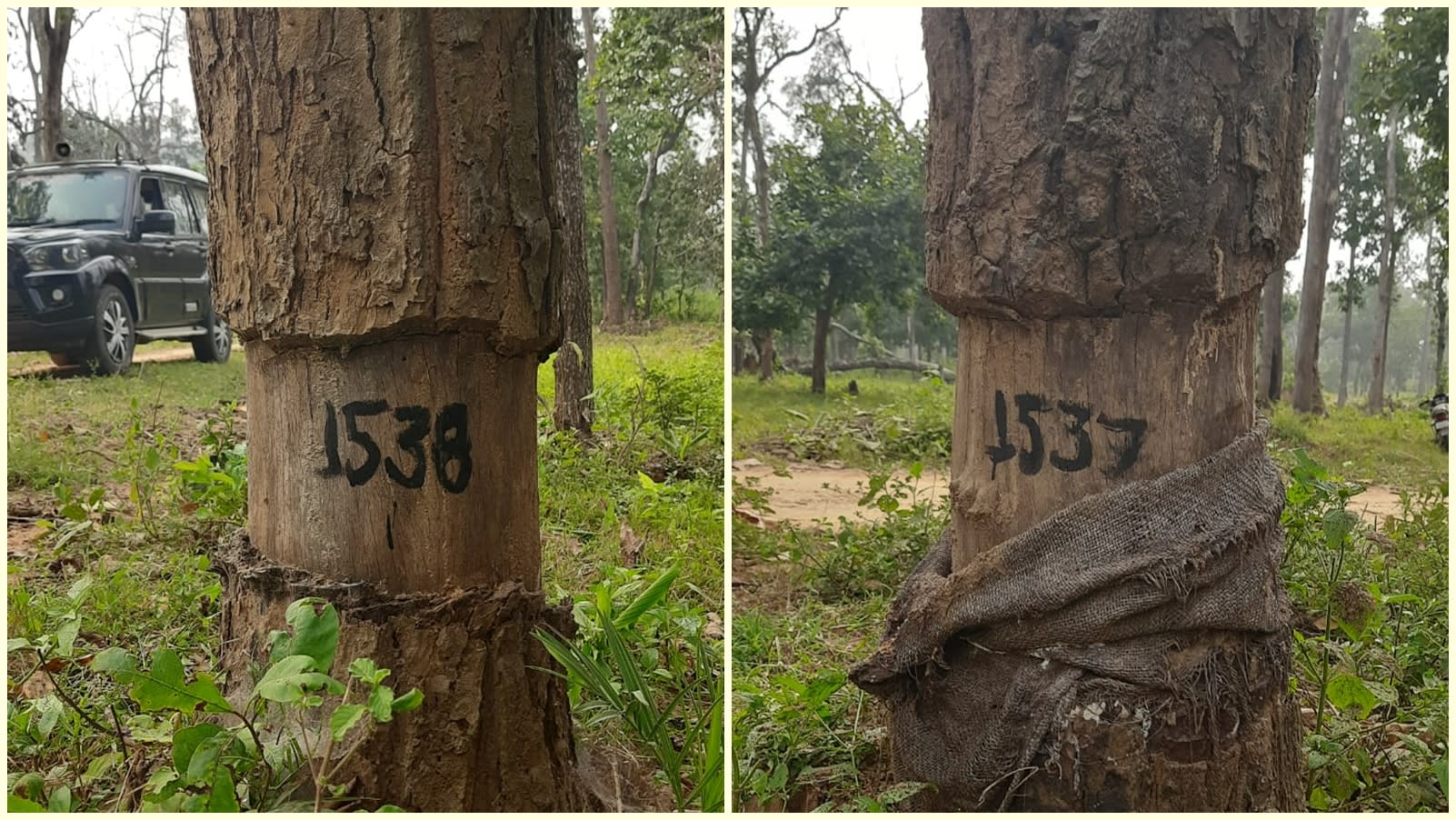
The Chhattisgarh forest department is employing bridge-grafting surgery to save over 500 trees in the Udanti Sitanadi Tiger Reserve. These trees were targeted by encroachers through girdling, a destructive practice that severs nutrient flow.
Emergency Arboricultural Intervention in USTR
The Chhattisgarh forest department has launched an urgent rescue operation within the Udanti Sitanadi Tiger Reserve (USTR) to save over 500 trees that have been critically damaged. The intervention involves a specialized 'surgery' known as bridge-grafting, a horticultural technique designed to restore the flow of water and nutrients in trees that have been subjected to girdling.
Understanding the Threat: The Mechanics of Girdling
Girdling is a deliberate act of environmental sabotage where the bark, including the phloem and cambium layers, is stripped from around the trunk of a tree. By severing these vital tissues, the perpetrators effectively cut off the tree's ability to transport sugars produced in the leaves to the roots, leading to a slow and agonizing decline. In the context of USTR, this malicious activity has targeted a significant number of native species, including Sal, Bija, and Tendu.
The Scale of Environmental Sabotage
Recent inspections within the reserve, which encompasses both the Dhamtari and Gariaband districts, revealed a staggering total of approximately 2,500 girdled trees. While the majority of these trees have already suffered extensive damage, the forest department has identified over 500 specimens that were freshly girdled. Because these trees remain biologically active, they offer a viable window of opportunity for the bridge-grafting process to be successful.
The Bridge-Grafting Solution
Bridge-grafting acts as a biological bypass, allowing nutrients to circumvent the damaged area of the trunk. By grafting scions—small branches or shoots—across the girdled gap, the department aims to bridge the severed vascular system, effectively 're-plumbing' the tree. This delicate surgical procedure is a testament to the desperate measures required to counteract human-led encroachment and habitat destruction in protected areas.
Broader Implications for Biodiversity
The Udanti Sitanadi Tiger Reserve is a critical ecological zone, and the loss of thousands of trees poses a severe threat to the local ecosystem. The targeted destruction of Sal, Bija, and Tendu trees not only affects the forest canopy but also disrupts the food web for wildlife dependent on these species. The department's proactive stance is a necessary response to protect the integrity of the reserve against encroachers who threaten both flora and the habitat of protected tiger populations.
Future Trends and Conservation Outlook
Moving forward, the success of this surgical intervention will depend on both the technical precision of the graft and the ability of the forest department to secure the area against further encroachment. If this rescue operation proves successful, it could serve as a model for forest management agencies nationwide to address localized environmental crimes. However, the incident highlights a persistent need for stricter surveillance and stronger enforcement of forest protection laws to prevent such large-scale damage before it occurs.