Chile community beats drought by restoring forests, soil and watershed
Source Entity
TOI WORLD DESK
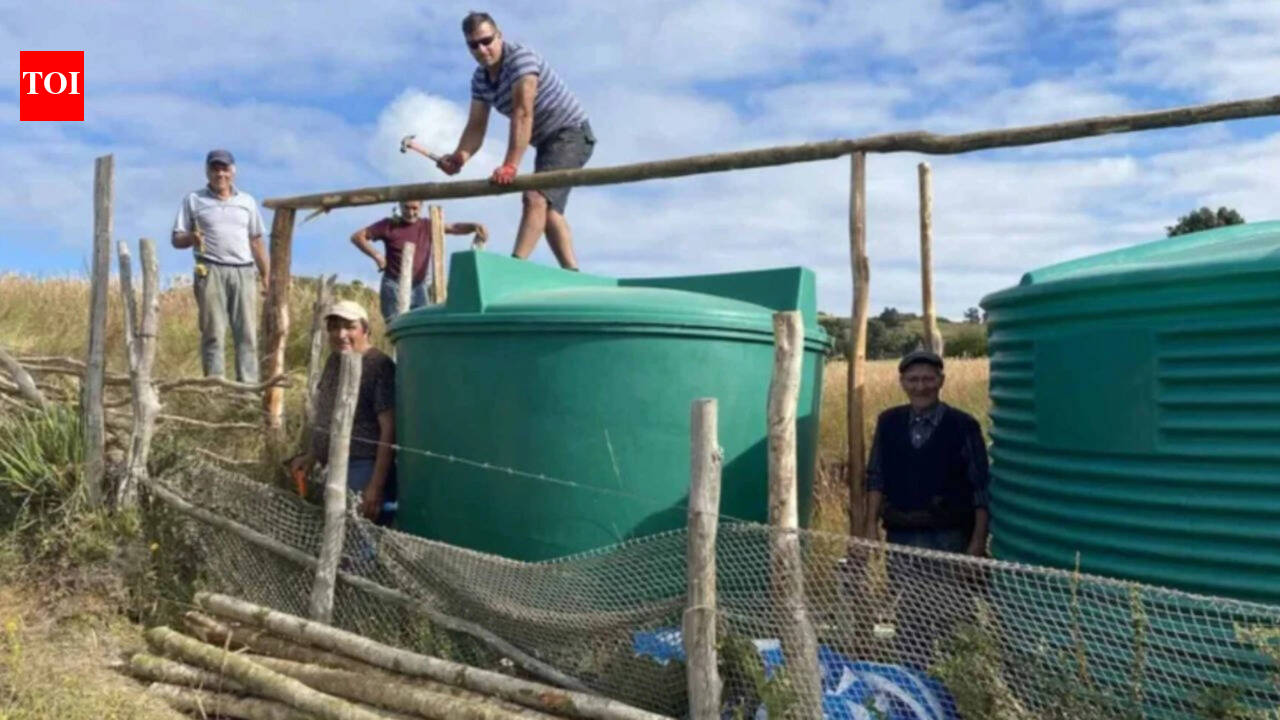
A rural community on Chile's Chiloé Island has successfully secured a sustainable water supply by restoring local forests and watersheds. This community-managed, gravity-fed system eliminates the need for emergency tanker trucks and serves as a scalable model for drought-stricken regions.
Restoring Resilience: The Chiloé Island Water Revolution
A Departure from Crisis Management
For years, the residents of a small rural community on Chile’s Chiloé Island existed in a state of precariousness, relying entirely on emergency water tanker trucks to meet their basic needs. Despite the island's reputation for being a rainy region, the degradation of local ecosystems had rendered traditional water sources unreliable, forcing the community into a cycle of dependency. This situation is a microcosm of the global water crisis, where local environmental mismanagement often exacerbates the impacts of changing climate patterns.
The Nature-Based Solution
Rather than relying solely on industrial infrastructure, the community, in collaboration with researchers and landowners, adopted a holistic approach centered on ecological restoration. By prioritizing the health of the watershed and the protection of local forests and wetlands, the project addressed the root cause of the water scarcity. This method proves that natural landscapes act as the most effective water storage and filtration systems, far surpassing the longevity and sustainability of purely mechanical solutions.
Engineering Through Gravity and Community
At the heart of this transformation is a gravity-fed water network, a design choice that minimizes energy consumption and mechanical complexity. The system’s efficiency is highlighted by its performance during the lowest summer flows, where the stream consistently provides approximately 6.3 gallons per minute. This reliability is not accidental; it is the result of meticulous planning and the integration of protective measures, such as wetland preservation, which ensures the high quality of the water reaching the households.
Empowerment Through Local Maintenance
Perhaps the most vital component of the project's success is the shift in governance. By involving local residents in the construction and ongoing maintenance of the infrastructure, the community has fostered a sense of ownership and accountability. This model of community management ensures that the system is not only built to last but is also continuously monitored by those who depend on it, effectively ending the seven-year reliance on external water deliveries.
A Scalable Blueprint for the Future
This initiative on Chiloé Island has transcended its local scope to become a recognized model for other rural areas facing similar shortages. As water scarcity becomes an increasingly common challenge globally, the success of this project suggests that integrating ecological restoration with community-led infrastructure is a viable, cost-effective, and sustainable path forward. The project serves as a compelling case study for policymakers and environmentalists looking to replicate success in regions where traditional utility models have failed.