Chirag and Upendra Kushwaha ask Election Commission to dispel confusion in minds of the people
Source Entity
India Latest News: Top National Headlines Today & Breaking News | The Hindu
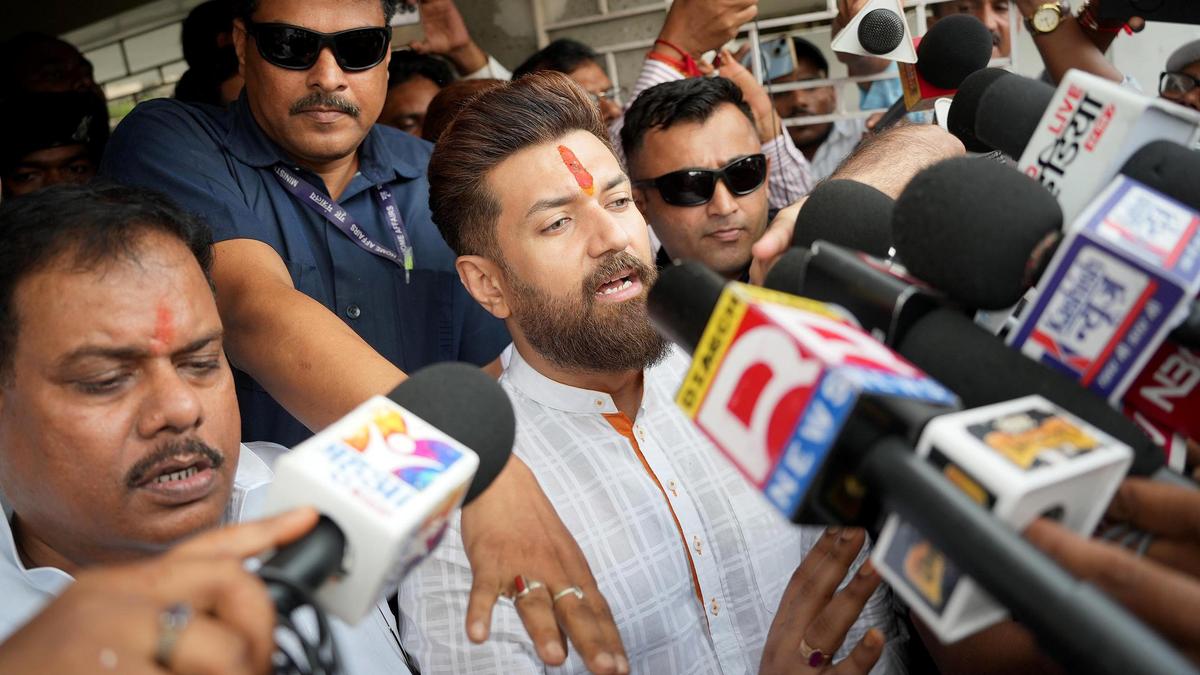
Union Minister Chirag Paswan has urged Chief Election Commissioner Gyanesh Kumar to address opposition allegations regarding the ECI's functioning to maintain public trust. This follows calls for resignation by Congress leader Rahul Gandhi and the postponement of a recent ECI event in Uttar Pradesh due to logistical factors.
The Integrity of the Electoral Process: Chirag Paswan’s Call for Transparency
In a significant development concerning the perceived neutrality of India’s electoral institutions, Union Minister and Lok Janshakti Party (Ram Vilas) chief Chirag Paswan has publicly urged Chief Election Commissioner (CEC) Gyanesh Kumar to address the growing chorus of criticism directed at the Election Commission of India (ECI). As political discourse intensifies, Paswan’s intervention highlights a crucial tension between the opposition's skepticism and the government's insistence on institutional stability.
The Opposition’s Stance and Institutional Scrutiny
The current controversy stems from demands by opposition figures, most notably Congress leader Rahul Gandhi, who has called for the resignation of CEC Gyanesh Kumar. These demands are predicated on reports of internal friction among the three Election Commissioners and broader concerns regarding the ECI’s operational transparency. Paswan, while dismissing the opposition's political motives as expected, acknowledged that the ECI must proactively counter these narratives to prevent voter skepticism from taking root in the democratic process.
Logistics vs. Perception: The UP Event Postponement
The ECI has recently faced additional scrutiny following the postponement of a scheduled event in Uttar Pradesh. The poll body attributed this change to 'scheduling factors,' emphasizing that such adjustments are common, routine, and driven by logistical and administrative necessities. However, in the current climate of heightened political alertness, even standard administrative shifts are being interpreted through a lens of potential institutional discord, complicating the ECI’s efforts to maintain a neutral image.
The Necessity of Public Confidence
At the heart of Paswan’s remarks is the fundamental requirement that the Indian electorate retains absolute faith in the fairness of the electoral process. By stating that the ECI must 'firmly present its side,' Paswan suggests that silence may be perceived as an admission of dysfunction. For an institution that serves as the bedrock of the world’s largest democracy, the ability to effectively communicate its internal processes is as vital as the administration of the elections themselves.
Future Implications for the ECI
Looking forward, the ECI faces a delicate balancing act. It must navigate the pressures of a highly polarized political environment while managing internal administrative challenges. If the commission fails to address allegations of internal differences or procedural delays with sufficient transparency, it risks a long-term erosion of public trust. The pressure exerted by leaders like Paswan indicates that even within the ruling coalition, there is an recognition that the ECI’s legitimacy is paramount to the stability of the Indian political system.
Conclusion
Ultimately, the call for the CEC to provide clarity reflects a broader anxiety regarding the health of democratic institutions. As the ECI continues its work, the challenge will be to reconcile administrative logistics with the necessity of appearing beyond reproach. Whether the Commission chooses to adopt a more communicative posture or maintains its traditional reserve will likely dictate how these concerns evolve in the coming political cycles.
Multiple Citing Sources
Verification Required?