Trump administration's head of AI safety agency resigns after 3 months on job
Source Entity
US Top News and Analysis
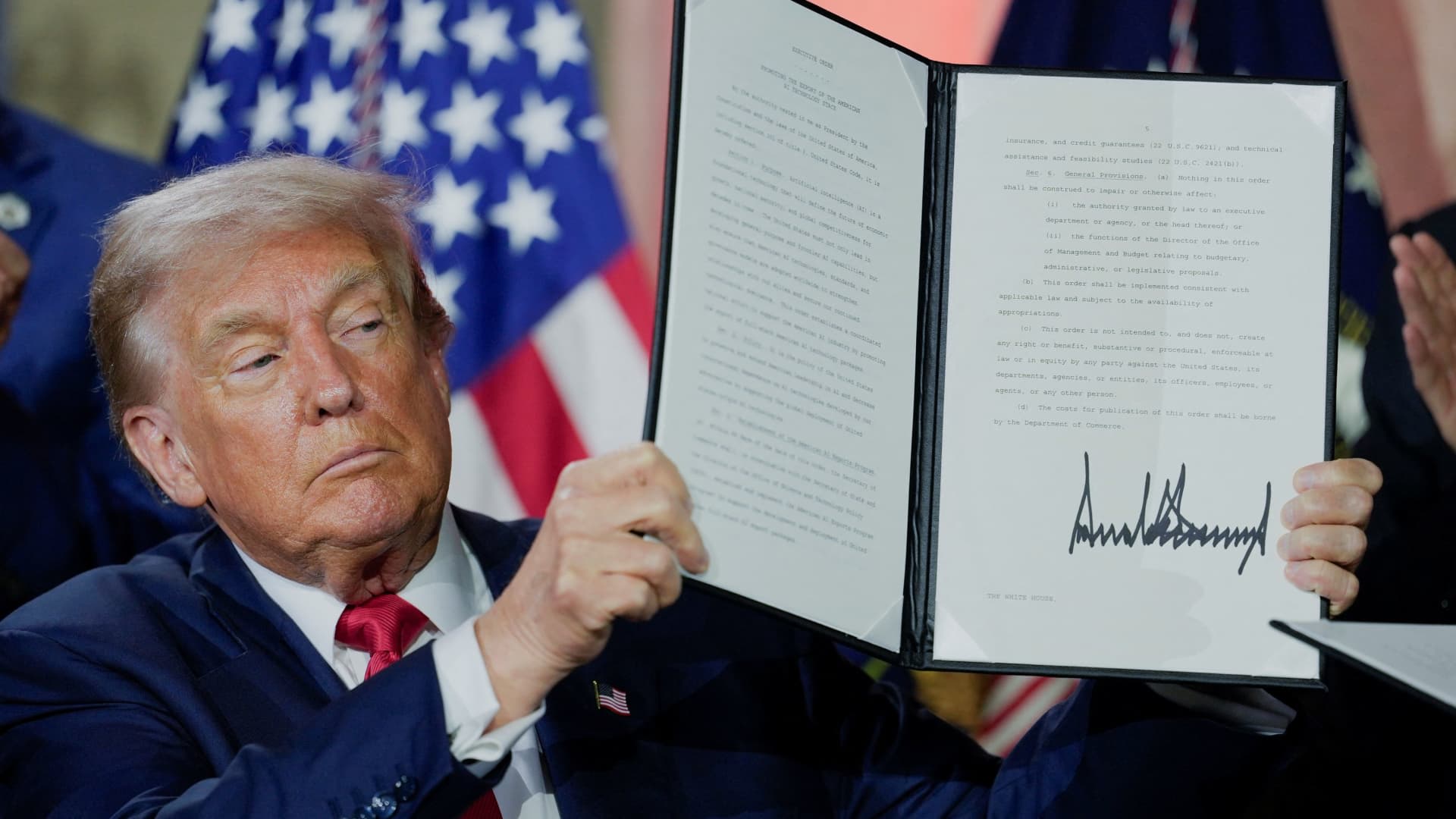
Chris Fall has resigned as director of the Center for AI Standards and Innovation (CAISI) after only three months in the role. This departure marks the latest instance of instability within the agency, which is now under the acting leadership of NIST director Arvind Raman.
Instability at the Helm of U.S. AI Oversight
The recent resignation of Chris Fall as the director of the Center for AI Standards and Innovation (CAISI) marks a significant moment of turbulence for the Trump administration's artificial intelligence policy apparatus. Serving only three months in the role, Fall’s departure underscores the volatile nature of leadership within this critical agency, which is tasked with facilitating the testing and collaborative research of commercial AI systems. As a former official within the Department of Energy’s Office of Science and the Office of Naval Research, Fall brought a wealth of technical experience to the position, yet his abrupt exit raises questions about the internal dynamics governing the nation's AI safety framework.
A Pattern of Rapid Turnover
Fall’s resignation is not an isolated incident but rather the latest in a series of leadership shuffles that have characterized CAISI since the departure of David Sacks. The agency’s history has been defined by a revolving door of appointees, most notably the short-lived tenure of Collin Burns. Burns, who was reportedly pushed out of the role in April after less than a week, faced scrutiny due to his professional ties to Anthropic—a company that has been a focal point of contention for the current administration. This context suggests that ideological alignment and industry vetting processes are playing a significant role in the instability currently hindering the agency's operational continuity.
The Mandate of CAISI
Operating under the jurisdiction of the U.S. Department of Commerce, CAISI is intended to serve as a cornerstone for federal AI policy, specifically regarding the safety and standardization of rapidly evolving commercial technologies. The agency was highlighted during the "Winning the AI Race" Summit in July 2025, where President Trump signed an executive order aimed at bolstering American competitiveness in the sector. However, the recurring leadership vacuum undermines these high-level policy goals, as constant turnover prevents the establishment of a long-term strategic roadmap for AI governance.
Moving Forward: The Role of NIST
In response to the current vacancy, the administration has appointed Arvind Raman, the director of the National Institute of Standards and Technology (NIST), to serve as the acting director of CAISI. By consolidating leadership under the head of NIST, the administration appears to be pivoting toward a more integrated approach to AI oversight. NIST is historically recognized for its technical rigor and standards-setting capabilities; therefore, leveraging its leadership could provide the necessary stability to bridge the gap between policy formulation and technical implementation.
Broader Implications for AI Policy
The inability to retain consistent leadership at CAISI carries broader implications for the U.S. technological landscape. As international competition in artificial intelligence intensifies, the government's ability to facilitate "testing and collaborative research" is paramount to maintaining a regulatory environment that promotes innovation while ensuring safety. Without a permanent, stable director, the agency risks becoming a bureaucratic bottleneck rather than a facilitator of progress. Future trends will likely depend on whether the administration can establish a sustained leadership tenure that balances technical expertise with political alignment, thereby restoring investor and public confidence in federal AI standards.
Multiple Citing Sources